Did Ram Really Abandon Sita? The Ancient Story Explained
Noopur Kumari | Sept 04, 2026, 11:00 IST
Ram and Sita’s separation is one of the most painful episodes in the Ramayana tradition. But calling it the “first divorce” may hide a much deeper story. The account of Sita’s banishment involves royal duty, public opinion, dharma and personal sacrifice. So what actually happened between Rama and Sita, and did they ever truly end their marriage?

Ram & Sita’s Separation the First Divorce
Image credit : ChatGPT(ai)
What if one of the most famous separations in Indian tradition was never described as a divorce at all?
The story of Rama and Sita has been told for generations as a story of love, sacrifice, duty and dharma. Yet their later separation raises a difficult question that feels surprisingly modern: Did Rama and Sita actually separate as husband and wife, or was Sita’s exile something different?
The answer becomes more complicated when we look closely at the Ramayana tradition.
In the Uttara Kanda, after Rama’s return to Ayodhya and coronation, rumours among some citizens questioned Sita’s purity because of her captivity in Lanka. Rama eventually sent the pregnant Sita away to the forest, where Valmiki gave her refuge.
But describing this simply as an ancient “divorce” can be misleading.
![Rama and Sita Returning to Ayodhya]()
The separation did not happen immediately after Ravana’s defeat. The Valmiki Ramayana’s narrative describes Sita being reunited with Rama after the war and the couple returning to Ayodhya together. Rama’s coronation then begins a new phase of their story. The later account of Sita’s banishment appears in the Uttara Kanda, after Rama has become king. This distinction matters because the separation was not presented as the straightforward ending of a marriage after the Lanka episode.
![The Shocking Curse Behind Sita’s Separation From Rama]()
The heartbreaking turn comes when rumours about Sita continue among people in Ayodhya. According to the Uttara Kanda tradition, Rama learns that some citizens question his acceptance of Sita after her captivity in Lanka. The story presents Rama facing a painful conflict between his personal feelings and his responsibilities as king. Eventually, he orders Lakshmana to take Sita away, while she is pregnant. The account makes the decision a crisis of royal duty, reputation and personal sorrow rather than a simple marital disagreement.
The most painful moment comes when Sita is taken away from Ayodhya. In the traditional account, she is not simply leaving because the marriage has been mutually ended. Lakshmana takes her toward the forest and leaves her there, where the sage Valmiki provides her refuge. Sita later gives birth to the twins Lava and Kusha. The episode is therefore better described as banishment or abandonment rather than using the modern legal term “divorce.” The emotional reality is still devastating, but the categories are not identical.
One detail often gets lost when the story is reduced to a simple headline. Rama’s separation from Sita is not presented as though he simply stopped caring about her. The later narrative continues to connect him with Sita and their sons. When Lava and Kusha eventually recite the Ramayana before Rama, the story forces him to confront the pain of what happened. This makes the episode far more tragic than a conventional breakup story. Rama remains king, but his personal life carries the consequences of the decision he made.
Sita’s sons, Lava and Kusha, become central to the next chapter. Raised at Valmiki’s hermitage, they learn the Ramayana and eventually recite the story before Rama. Their presence reveals the family connection and brings Sita back into the larger royal narrative. But the reunion does not become a simple restoration of family life. The story moves toward another profound moment in which Sita refuses to undergo another public test of her purity. Instead, she calls upon the Earth, her mother, and disappears into the earth according to the traditional account.
This is where the original question needs a careful answer. No, calling Rama and Sita’s separation the “first divorce” is not historically or textually precise. Divorce is a modern legal and social category that should not automatically be imposed on an ancient epic narrative. The Uttara Kanda describes Sita’s banishment and separation, but not a modern legal divorce proceeding. It is more accurate to call it a tragic separation or abandonment within the epic’s framework of kingship, dharma and social expectations.
Perhaps the most powerful lesson is not whether Rama and Sita experienced the “first divorce.” Their story asks something far harder: What happens when personal love comes into conflict with public duty? Different readers and traditions interpret Rama’s decision in different ways, and the episode remains deeply debated. Some scholarly traditions also regard the Uttara Kanda as a later addition to the core Ramayana, making textual history important when discussing the story. What remains unforgettable is the human tragedy at its centre: two people who began their journey together ultimately faced a separation that neither modern language nor a simple label can fully explain.
Unlock insightful tips and inspiration on personal growth, productivity, and well-being. Stay motivated and updated with the latest at My Life XP.
The story of Rama and Sita has been told for generations as a story of love, sacrifice, duty and dharma. Yet their later separation raises a difficult question that feels surprisingly modern: Did Rama and Sita actually separate as husband and wife, or was Sita’s exile something different?
The answer becomes more complicated when we look closely at the Ramayana tradition.
In the Uttara Kanda, after Rama’s return to Ayodhya and coronation, rumours among some citizens questioned Sita’s purity because of her captivity in Lanka. Rama eventually sent the pregnant Sita away to the forest, where Valmiki gave her refuge.
But describing this simply as an ancient “divorce” can be misleading.
Rama and Sita Were Reunited First
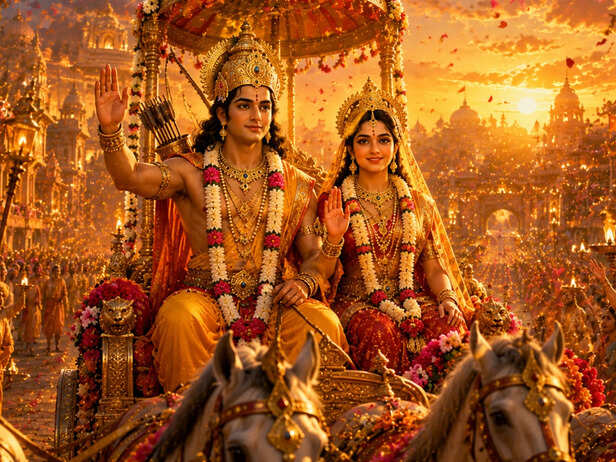
Rama and Sita Returning to Ayodhya
Image credit : ChatGPT (ai)
The separation did not happen immediately after Ravana’s defeat. The Valmiki Ramayana’s narrative describes Sita being reunited with Rama after the war and the couple returning to Ayodhya together. Rama’s coronation then begins a new phase of their story. The later account of Sita’s banishment appears in the Uttara Kanda, after Rama has become king. This distinction matters because the separation was not presented as the straightforward ending of a marriage after the Lanka episode.
Public Rumours Changed Everything
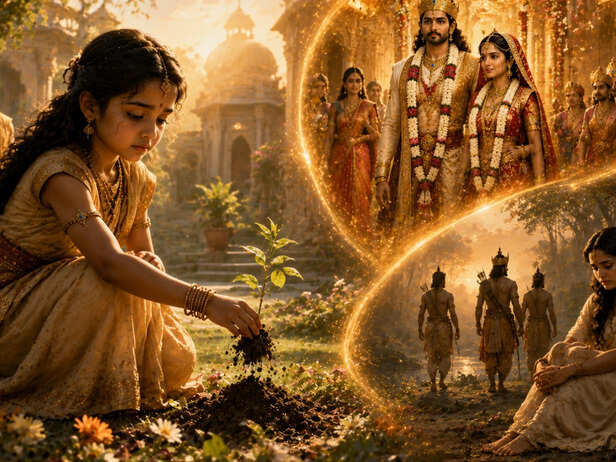
The Shocking Curse Behind Sita’s Separation From Rama
Image credit : chatgpt(ai)
The heartbreaking turn comes when rumours about Sita continue among people in Ayodhya. According to the Uttara Kanda tradition, Rama learns that some citizens question his acceptance of Sita after her captivity in Lanka. The story presents Rama facing a painful conflict between his personal feelings and his responsibilities as king. Eventually, he orders Lakshmana to take Sita away, while she is pregnant. The account makes the decision a crisis of royal duty, reputation and personal sorrow rather than a simple marital disagreement.
Sita Was Sent to the Forest
Rama Did Not Simply Forget Sita
Lava and Kusha Bring Them Together
So Was It Really a Divorce?
The Real Question Is Much Deeper
Unlock insightful tips and inspiration on personal growth, productivity, and well-being. Stay motivated and updated with the latest at My Life XP.