Did Lord Krishna Ever Cry in the Mahabharata?
Noopur Kumari | Jul 31, 2026, 16:11 IST
Did Lord Krishna remain completely emotionless after watching the deaths of His loved ones during the Mahabharata war? Or did He silently experience grief while teaching the eternal truth of the soul? The Bhagavad Gita offers profound wisdom on life, death, and detachment, but Krishna's own actions reveal an even deeper message. Discover what ancient scriptures say about Krishna's response to loss and why His teachings continue to guide millions facing pain, separation, and grief today.

Mahabharata was not just a war between two families.
Image credit : ChatGPT(AI)
The Mahabharata was not just a war between two families. It was a battlefield where countless warriors, friends, teachers, and loved ones lost their lives. Lord Krishna stood at the center of these events, guiding the Pandavas while witnessing immense destruction. But one question continues to intrigue devotees even today. Did Krishna ever cry for those who died? If He preached in the Bhagavad Gita that the soul is eternal, did He truly feel no sorrow? The answer is far deeper than many imagine and reveals one of the greatest spiritual lessons of Sanatan Dharma.
![Lord Krishna Watching the Battlefield]()
The Kurukshetra war claimed the lives of many great warriors, including people dear to Lord Krishna. Naturally, many devotees wonder whether He cried or mourned like ordinary human beings. While the Mahabharata describes Krishna expressing compassion and concern, it does not clearly describe Him breaking down in grief. His response reflected deep wisdom rather than emotional attachment, making this one of the most discussed spiritual questions in Hindu philosophy.
![Krishna Delivering the Bhagavad Gita]()
At the beginning of the Bhagavad Gita, Krishna tells Arjuna:
श्रीभगवानुवाच ।
अशोच्यानन्वशोचस्त्वं प्रज्ञावादांश्च भाषसे ।
गतासूनगतासूंश्च नानुशोचन्ति पण्डिता:
Bhagavad Gita 2.11)
Krishna explains that wise people do not grieve for the living or the dead because the soul is eternal. Bodies perish, but the true self is never born and never dies. This teaching became the foundation of Hindu philosophy on life and death.
Krishna never encouraged people to become heartless. Instead, He taught the difference between compassion and attachment. He cared deeply for His devotees and always stood beside those in pain. However, He also understood that every soul follows its own eternal journey. His calmness came from perfect spiritual knowledge, not from a lack of love or emotion.
The Mahabharata shows Krishna making difficult decisions for the protection of dharma. He understood that the war was necessary to restore righteousness, even though it brought painful losses. His steady mind reminds readers that accepting divine truth does not remove compassion. Instead, it gives strength to face life's greatest challenges without losing inner peace.
Every family experiences loss at some point in life. Krishna's message teaches that grief is natural, but despair should not control us forever. Remembering the eternal nature of the soul helps people find hope even during painful moments. Faith, prayer, and understanding spiritual wisdom can slowly transform sorrow into acceptance.
More than 5,000 years later, Krishna's words continue to inspire people facing uncertainty, loss, and fear. His teachings remind us that death is not the end but a transition in the soul's eternal journey. By understanding this truth, we learn to live with courage, perform our duties sincerely, and remain connected to the Divine through every stage of life.
Unlock insightful tips and inspiration on personal growth, productivity, and well-being. Stay motivated and updated with the latest at My Life XP
The Question That Still Puzzles Devotees
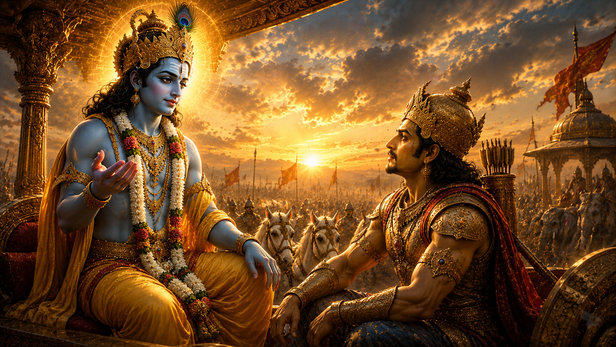
Lord Krishna Watching the Battlefield
Image credit : ChatGPT(AI)
The Kurukshetra war claimed the lives of many great warriors, including people dear to Lord Krishna. Naturally, many devotees wonder whether He cried or mourned like ordinary human beings. While the Mahabharata describes Krishna expressing compassion and concern, it does not clearly describe Him breaking down in grief. His response reflected deep wisdom rather than emotional attachment, making this one of the most discussed spiritual questions in Hindu philosophy.
The Gita's Timeless Teaching
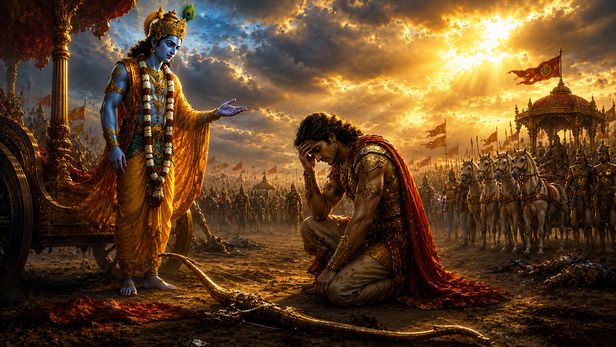
Krishna Delivering the Bhagavad Gita
Image credit : ChatGPT(AI)
At the beginning of the Bhagavad Gita, Krishna tells Arjuna:
श्रीभगवानुवाच ।
अशोच्यानन्वशोचस्त्वं प्रज्ञावादांश्च भाषसे ।
गतासूनगतासूंश्च नानुशोचन्ति पण्डिता:
Bhagavad Gita 2.11)
Krishna explains that wise people do not grieve for the living or the dead because the soul is eternal. Bodies perish, but the true self is never born and never dies. This teaching became the foundation of Hindu philosophy on life and death.
Compassion Is Not the Same as Attachment
Why Krishna Stayed Calm During Loss
The Mahabharata shows Krishna making difficult decisions for the protection of dharma. He understood that the war was necessary to restore righteousness, even though it brought painful losses. His steady mind reminds readers that accepting divine truth does not remove compassion. Instead, it gives strength to face life's greatest challenges without losing inner peace.
The Lesson Every Family Can Learn
Krishna's Greatest Gift to Humanity
Unlock insightful tips and inspiration on personal growth, productivity, and well-being. Stay motivated and updated with the latest at My Life XP