Did Parvati Really Get “Kidnapped”? The Story Explained
Noopur Kumari | Sept 13, 2026, 11:00 IST
Every year, women observe Hartalika Teej with fasting, mehendi, sindoor, bangles and traditional rituals, often praying for marital happiness and the well-being of their husbands. But the ancient story of Parvati and Shiva carries a deeper spiritual idea. Her tapasya was not simply about winning a person. It represents determination, inner discipline and the journey of becoming ready for the divine consciousness represented by Shiva.

Hartalika Teej
Image credit : chat gpt(ai)
What if the story behind Hartalika Teej is not really about getting a husband at all? The festival is closely associated with Goddess Parvati’s intense devotion to Shiva. According to the traditional story, Parvati wanted to marry Shiva, while her father had another marriage in mind for her. Her friends took her away to a secluded forest, where she performed severe penance with the single-minded desire to unite with Shiva.
But there is a deeper layer to this story. The question is not simply, “How did Parvati get Shiva?” It is: What did Parvati become through her tapasya? That changes the meaning of Hartalika Teej completely.
![Parvati Ji's Deep Devotion to Shiva]()
The name Hartalika is traditionally explained through harat, meaning taking away, and aalika, meaning female friend. In the popular legend, Parvati’s friends took her to a secluded forest because they knew she did not want the marriage being planned for her. There, away from the situation, Parvati continued her intense devotion to Shiva. The story is not presented as a modern kidnapping, but as an act by her companions to help her pursue the spiritual path she had chosen. This is where the festival gets its distinctive name and its connection with Parvati’s determination.
![Shiva and Parvati]()
Parvati’s tapasya is the heart of the Hartalika Teej story. She did not simply express a wish and wait for it to happen. Traditional accounts describe her undertaking severe penance and fasting with unwavering determination. Her desire for Shiva became a disciplined spiritual pursuit. That makes her story different from a simple tale of romance. Parvati represents Shakti, the divine feminine power, while Shiva represents a deeper spiritual principle. Her journey can therefore be understood as the movement from desire toward discipline, awareness and inner readiness. She did not merely ask for something. She transformed herself through the process of seeking it.
This is where the familiar story takes a more spiritual turn. Shiva is certainly worshipped as a deity and is traditionally described as Parvati’s divine husband. But Hindu philosophical traditions also use Shiva to refer to a deeper spiritual reality, consciousness and the auspicious principle beyond ordinary identity. So Parvati’s journey can be read on two levels. At the story level, she seeks union with Shiva. At a symbolic level, her tapasya represents the effort to become capable of recognising and embodying a higher state of awareness. The story therefore becomes less about possession and more about inner transformation.
There is a powerful lesson hidden in Parvati’s long penance. We often want results before we are ready for them. We want love without emotional maturity, success without discipline and peace without changing the habits that disturb us. Parvati’s tapasya reverses that approach. She first works on herself. Her patience, focus and determination become part of the journey. In that sense, Hartalika Teej can remind us that what we seek also asks something from us. Before asking whether something belongs in our life, we can ask whether we are prepared to hold it with wisdom.
Hartalika Teej is widely observed through fasting, prayers and traditional adornment. Married women may pray for the well-being and longevity of their husbands, while unmarried women may observe the vrat with hopes for a suitable life partner. These customs remain an important part of the festival for many families. But the symbolism can go beyond marital wishes. Fasting can become an exercise in restraint, prayer can create space for reflection, and traditional shringar can express devotion and celebration. The outer ritual may be visible to everyone, but its deeper meaning depends on what a person brings to it internally.
The most relatable part of Parvati’s story may be her clarity about what she wanted. She did not simply accept a path because someone else had chosen it for her. Her friends helped create the space in which she could follow her conviction. For a modern reader, this does not mean rejecting family or relationships. It means understanding your own values before making major choices. Love, marriage and partnership become healthier when they are built on clarity rather than fear or pressure. Parvati’s determination can therefore be read as a reminder to know yourself before asking another person to complete your life.
Perhaps the deepest lesson of Hartalika Teej is not simply “find the right person.” It is “become the person who is ready for the life you seek.” Parvati’s tapasya represents patience, devotion, discipline and self-discovery. Her eventual union with Shiva is traditionally understood as the meeting of Shakti and Shiva, the divine feminine and masculine principles. So while the festival continues to carry powerful traditions around marriage and marital well-being, its spiritual symbolism can speak to everyone. The journey begins with a desire, but it becomes meaningful through discipline, awareness and the courage to know yourself.
Hartalika Teej can be celebrated through beautiful traditions: green bangles, mehendi, sindoor, festive clothing, prayers and fasting. But beneath those visible rituals lies a story of Parvati’s determination.
She did not simply wait for her desired future.
She prepared herself for it.
That may be the most powerful way to understand her tapasya. Shiva is not merely someone Parvati wanted to marry. In the deeper spiritual reading, Shiva represents a state of consciousness that asks for awareness, discipline and inner growth.
So this Hartalika Teej, the question does not have to be only, “What do I want from life?”
It can also be:
“Who do I need to become to truly receive it?”
That is where the story of Parvati stops being an old legend and starts becoming a lesson for us.
Unlock insightful tips and inspiration on personal growth, productivity, and well-being. Stay motivated and updated with the latest at My Life XP
But there is a deeper layer to this story. The question is not simply, “How did Parvati get Shiva?” It is: What did Parvati become through her tapasya? That changes the meaning of Hartalika Teej completely.
Why Was Parvati Taken Into the Forest?
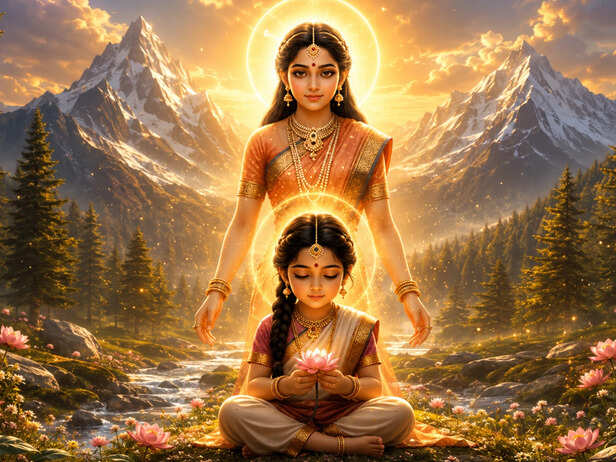
Parvati Ji's Deep Devotion to Shiva
Image credit : chatgpt(ai)
The name Hartalika is traditionally explained through harat, meaning taking away, and aalika, meaning female friend. In the popular legend, Parvati’s friends took her to a secluded forest because they knew she did not want the marriage being planned for her. There, away from the situation, Parvati continued her intense devotion to Shiva. The story is not presented as a modern kidnapping, but as an act by her companions to help her pursue the spiritual path she had chosen. This is where the festival gets its distinctive name and its connection with Parvati’s determination.
Parvati Chose Shiva With Complete Focus
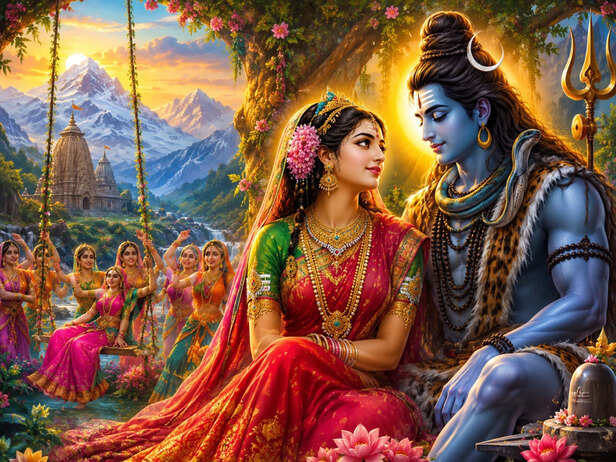
Shiva and Parvati
Image credit : chatgpt(ai)
Parvati’s tapasya is the heart of the Hartalika Teej story. She did not simply express a wish and wait for it to happen. Traditional accounts describe her undertaking severe penance and fasting with unwavering determination. Her desire for Shiva became a disciplined spiritual pursuit. That makes her story different from a simple tale of romance. Parvati represents Shakti, the divine feminine power, while Shiva represents a deeper spiritual principle. Her journey can therefore be understood as the movement from desire toward discipline, awareness and inner readiness. She did not merely ask for something. She transformed herself through the process of seeking it.
The Real Twist Is Hidden in “Shiva”
Tapasya Was About Becoming Ready
The Vrat Is More Than a Ritual
Parvati’s Story Speaks to Modern Women Too
Hartalika Teej Ultimately Points Within
The Meaning Behind the Ritual
She did not simply wait for her desired future.
She prepared herself for it.
That may be the most powerful way to understand her tapasya. Shiva is not merely someone Parvati wanted to marry. In the deeper spiritual reading, Shiva represents a state of consciousness that asks for awareness, discipline and inner growth.
So this Hartalika Teej, the question does not have to be only, “What do I want from life?”
It can also be:
“Who do I need to become to truly receive it?”
That is where the story of Parvati stops being an old legend and starts becoming a lesson for us.
Unlock insightful tips and inspiration on personal growth, productivity, and well-being. Stay motivated and updated with the latest at My Life XP