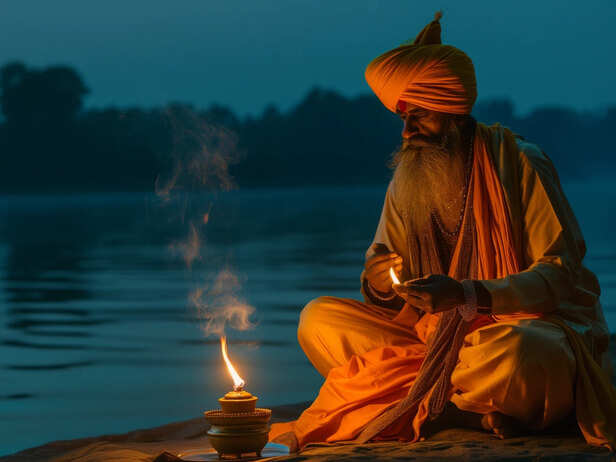
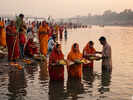
Stand at a ghat before the sun is fully up and you will see the work before you see the worship. A man with a long-handled broom clears yesterday's flower offerings from the lower steps. A boatman uncovers his vessel and checks the rope. A priest sets out a brass plate and a small oil lamp on the platform he has used every morning for as long as he can remember. The ghat has not opened, it has simply continued.
The Priest and His Platform
![Priest and His Platform]()
Priest and His Platform
Image credit : Freepik
The most visible keeper of a ghat is the panda or the ghat purohit, the ritual priest whose family holds the right to perform ceremonies on a particular stretch of steps. This right, called a seva adhikar in many traditions, passes from father to son across generations. It is not a government appointment. It is a custodial inheritance, recognised by the other priests and by the families who return to the same man each year for shraddha, mundan, or the immersion of ashes.
The panda keeps a genealogical register called a bahi. It is a handwritten ledger, sometimes centuries old, recording the names and home villages of every family that has ever come to him. When a family arrives after twenty years away, he can find their last visit in the bahi and pick up the thread. This record is also how the ghat remembers. The priest is not performing a service, he is maintaining a relationship that outlasts any single life.
The Boatman and the Current
![cremation ghat, the boatman often takes the ashes]()
cremation ghat, the boatman often takes the ashes
Image credit : Freepik
The nishad or mallah community has worked the river at ghats across the Gangetic plain for as long as the ghats themselves have existed. The boatman's knowledge is practical and precise: where the current runs fast in a given season, where the sandbanks shift, which stretch of water is safe for immersion and which pulls unpredictably. This knowledge is oral and local. It does not exist in any manual.
On a cremation ghat, the boatman often takes the ashes out to the correct point on the river for immersion. On a bathing ghat, he ferries pilgrims across to the opposite bank or holds his boat steady for an elderly person who cannot manage the steps alone. The river is his workplace and his inheritance in the same way the steps are the priest's.
The Dom and the Fire That Never Goes Out
On a cremation ghat, the most essential keeper is the Dom Raja and his community. The Dom family holds the right to tend the cremation fire, and in some of the oldest ghats this fire is said to have burned continuously for generations. Whether or not the flame is literally unbroken, the continuity it represents is real: the Dom community has maintained the right and the responsibility to oversee cremation at that ghat across centuries.
The Dom does not only tend the fire. He mediates the practical arrangements of a cremation, the wood, the timing, the sequence of ritual steps, and he receives a traditional fee for this work. His role is considered essential to the rite's completion. Without him, in the understanding of the tradition, the fire cannot be properly lit. He is not peripheral to the ghat's spiritual function. He is central to it.
The Flower Sellers and the Sweepers
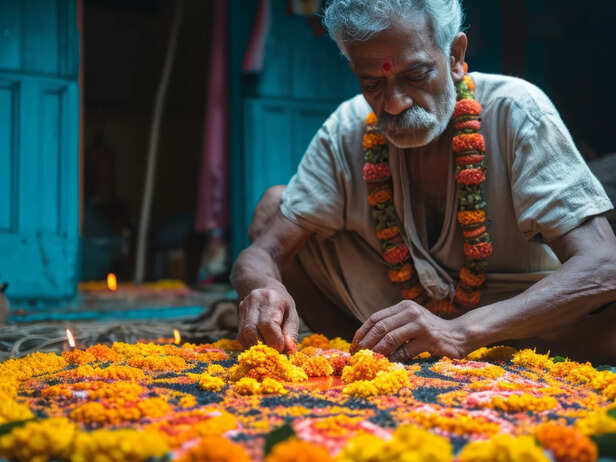
Below the level of hereditary right, a ghat sustains a daily economy of smaller keepers. The flower sellers who arrive before dawn with baskets of marigolds and loose jasmine are often from families that have worked the same spot for generations, though their claim is one of custom rather than formal right. They know which days bring the largest crowds, which festivals require which flowers, and which regulars want their puja thali assembled a particular way.
The sweepers who clear the steps between ceremonies occupy a position that is practically indispensable and socially marginalised in the same breath. The ghat's ritual purity, the quality that makes it a place where sacred acts can be performed, depends on its physical cleanliness. The person who maintains that cleanliness is rarely named in any account of how a ghat works. They are there before the priests arrive and after the last pilgrim leaves.
What the Ghat Holds Between the Ceremonies
A ghat is not only a place of ceremony. Between the morning aarti and the evening one, it is a place where fishermen dry their nets, where children swim, where old men sit and watch the water, where dhobis beat laundry on the lower stones. These uses are not separate from the ghat's sacred life, they are part of what makes it a living place rather than a monument.
The people who maintain a ghat are not employees of a temple or a municipality, though some ghats do have municipal oversight for cleaning. They are participants in a system of customary rights and responsibilities that has no single author and no founding document. Each keeper holds a piece of the whole: the fire, the water, the genealogical record, the flowers, the swept stone. The ghat works because all of them show up, most mornings, and do the thing their family has always done.
A ghat looks permanent because the stone is old. What is actually permanent is the network of people who have agreed, across generations, to keep it.
Unlock insightful tips and inspiration on personal growth, productivity, and well-being. Stay motivated and updated with the latest at
My Life XP.