Is Krishna Really the Reason Raksha Bandhan Began?
Noopur Kumari | Aug 23, 2026, 14:00 IST
The story begins with King Bali’s devotion and ends with a tradition that many devotees connect with Raksha Bandhan. After Vishnu’s Vamana incarnation, Bali is blessed by the Lord and eventually asks Him to remain in his kingdom. Lakshmi Devi then takes a unique approach to bring Vishnu back. Instead of demanding anything, she creates a relationship. She ties a raksha sutra to King Bali and accepts him as her brother. When Bali offers her a gift, Lakshmi asks for Vishnu’s return. But there is an important historical and scriptural detail readers should know before calling this the definitive origin of Raksha Bandhan.

Vishnu’s Vamana incarnation,
Image credit : ChatGPT (ai)
Every Raksha Bandhan, one popular story comes up again and again: Lord Krishna and Draupadi. But is that really the origin of Raksha Bandhan? According to a widely circulated Hindu devotional tradition, the story goes much further back, to the time of Lord Vishnu’s Vamana avatar, King Bali and Goddess Lakshmi. The story takes an unexpected turn when Lakshmi Devi finds herself in a difficult situation. Vishnu has granted King Bali a boon, and Bali asks for something extraordinary. He asks Vishnu Himself to stay with him. What happens next involves a sacred thread, a new brother-sister bond and a clever request from Goddess Lakshmi.
![Lord Vamana Meets King Bali]()
According to the Bhagavata Purana, Vishnu appears as Vamana, a dwarf Brahmin, before King Bali. Bali is performing a powerful ritual and offers Vamana whatever gift he desires. Vamana asks for three steps of land. Bali agrees, unaware of the divine scale of the request. Vamana then expands into the cosmic form and covers the worlds in two steps. With nowhere left for the third step, Bali offers his own head. The story is primarily about devotion, humility and surrender. Later devotional traditions connect Bali’s relationship with Vishnu to the story involving Lakshmi and the protective thread.
![King Bali Offers Himself to Vamana]()
King Bali’s relationship with Vishnu takes an unexpected turn after the Vamana episode. In popular devotional retellings, Bali’s devotion earns him a special connection with the Lord. The story then describes Bali asking Vishnu to remain with him. This creates a difficult situation because Lakshmi Devi wants Vishnu to return. Rather than confronting Bali directly, she chooses a more thoughtful path. She approaches him with the intention of establishing a bond of affection. This is where the raksha sutra enters the story. The thread becomes more than a ritual object. It becomes a symbol of trust, family and mutual protection.
In the popular version of the story, Lakshmi Devi ties a sacred thread around Bali’s wrist and accepts him as her brother. Bali, moved by the relationship, asks what gift she wants. Lakshmi then reveals her wish: she wants Vishnu to return with her. Bali accepts her request and allows Vishnu to leave. The emotional power of the story lies in its simplicity. Lakshmi does not use force. She creates a bond of affection and then makes her request as a sister. This is why many devotional storytellers connect the episode with the deeper meaning of Raksha Bandhan.
The story of Krishna and Draupadi is deeply associated with the idea of a protective bond. In the Mahabharata, Draupadi tears a piece of cloth and uses it to cover Krishna’s injured finger. Krishna later promises to protect her, and their relationship becomes one of the most remembered examples of devotion and affection. However, this episode should not automatically be described as the historical beginning of Raksha Bandhan. Different Hindu traditions preserve different stories about the festival. The Krishna-Draupadi episode explains the emotional idea behind a protective bond, while the Lakshmi-Bali story is commonly cited in some later devotional traditions as a Raksha Bandhan origin story.
Is This Really the First
Here is the important distinction. There is no single universally accepted scriptural statement saying, “Raksha Bandhan began with this one event.” The practice of tying protective threads has older and broader roots in Hindu ritual traditions. The term raksha sutra itself refers to a protective sacred thread used in different religious contexts. The festival known today as Raksha Bandhan developed through multiple cultural and regional traditions. Therefore, the Lakshmi-Bali story is best presented as a traditional devotional explanation associated with Raksha Bandhan, rather than an uncontested historical fact about the festival’s origin.
The power of Raksha Bandhan is not limited to the thread itself. Its deeper meaning lies in the relationship created through it. In the Lakshmi-Bali story, Lakshmi uses the raksha sutra to establish a bond of family and trust. In the Krishna-Draupadi tradition, affection becomes connected with a promise of protection. Both stories highlight a similar human idea: relationships create responsibilities. A small thread can therefore carry a much larger emotional message. It reminds people that protection is not only about physical strength. It can also mean standing beside someone, keeping a promise and offering support when they need it most.
Today, Raksha Bandhan is celebrated in many different ways across India and beyond. Brothers and sisters exchange rakhis, gifts and blessings, but the meaning can go beyond a traditional brother-sister relationship. At its heart, the festival celebrates a promise of care. The story of Lakshmi and Bali adds another beautiful layer to that idea. Lakshmi did not win through power. She created a bond through trust and affection. Whether one follows the Lakshmi-Bali tradition, the Krishna-Draupadi story or another regional tradition, the central message remains powerful: a relationship becomes meaningful when love is accompanied by responsibility.
So, was Krishna the reason Raksha Bandhan began?
Not necessarily.
The Krishna-Draupadi story is certainly one of the most beloved traditions connected with the festival, but the Lakshmi-Bali episode is also widely told in devotional traditions as an explanation for the rakhi’s protective symbolism.
The deeper truth is even more fascinating.
Raksha Bandhan is not just about who tied the first thread.
It is about what that thread represents.
Lakshmi used a simple sacred thread to create a bond with Bali. That bond eventually became the heart of a request rooted in trust, affection and family.
And perhaps that is why the rakhi remains so powerful even today.
A tiny thread can carry a promise that lasts far beyond the moment it is tied.
Unlock insightful tips and inspiration on personal growth, productivity, and well-being. Stay motivated and updated with the latest at My Life XP.
The Story Begins With Vamana
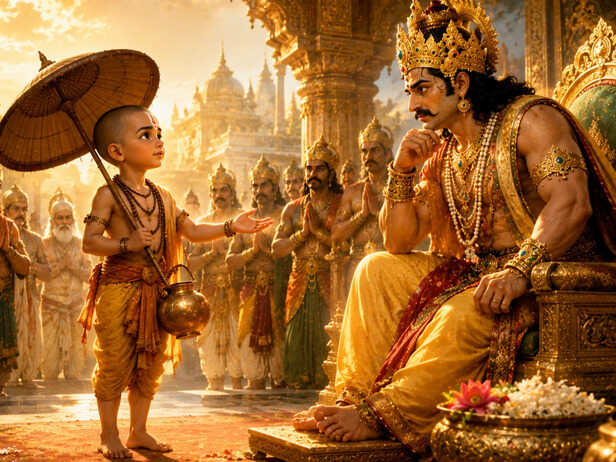
Lord Vamana Meets King Bali
Image credit : ChatGPT (ai)
According to the Bhagavata Purana, Vishnu appears as Vamana, a dwarf Brahmin, before King Bali. Bali is performing a powerful ritual and offers Vamana whatever gift he desires. Vamana asks for three steps of land. Bali agrees, unaware of the divine scale of the request. Vamana then expands into the cosmic form and covers the worlds in two steps. With nowhere left for the third step, Bali offers his own head. The story is primarily about devotion, humility and surrender. Later devotional traditions connect Bali’s relationship with Vishnu to the story involving Lakshmi and the protective thread.
Bali Makes an Unexpected Request
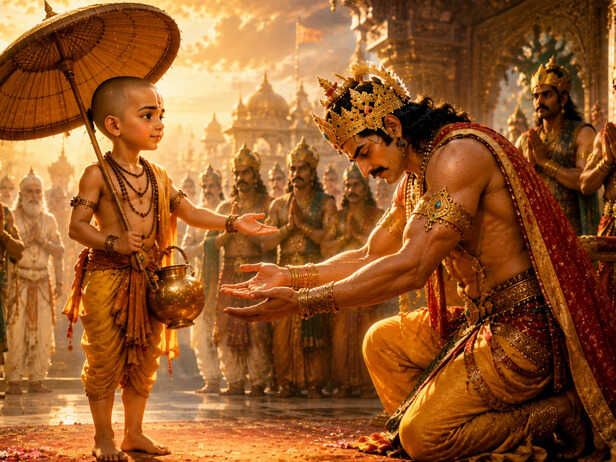
King Bali Offers Himself to Vamana
Image credit : ChatGPT(ai)
King Bali’s relationship with Vishnu takes an unexpected turn after the Vamana episode. In popular devotional retellings, Bali’s devotion earns him a special connection with the Lord. The story then describes Bali asking Vishnu to remain with him. This creates a difficult situation because Lakshmi Devi wants Vishnu to return. Rather than confronting Bali directly, she chooses a more thoughtful path. She approaches him with the intention of establishing a bond of affection. This is where the raksha sutra enters the story. The thread becomes more than a ritual object. It becomes a symbol of trust, family and mutual protection.
Lakshmi Turns a Thread Into a Bond
Why Krishna and Draupadi Are Often Mentioned
Is This Really the First Rakhi ?
The Deeper Meaning Behind the Thread
Why This Story Still Matters Today
The Rakhi Story May Be Older Than You Think
Not necessarily.
The Krishna-Draupadi story is certainly one of the most beloved traditions connected with the festival, but the Lakshmi-Bali episode is also widely told in devotional traditions as an explanation for the rakhi’s protective symbolism.
The deeper truth is even more fascinating.
Raksha Bandhan is not just about who tied the first thread.
It is about what that thread represents.
Lakshmi used a simple sacred thread to create a bond with Bali. That bond eventually became the heart of a request rooted in trust, affection and family.
And perhaps that is why the rakhi remains so powerful even today.
A tiny thread can carry a promise that lasts far beyond the moment it is tied.
Unlock insightful tips and inspiration on personal growth, productivity, and well-being. Stay motivated and updated with the latest at My Life XP.