Open the Mahabharata and look for Radha. She is not there. Search the Bhagavata Purana, one of the most important texts in Krishna devotion, composed roughly in the ninth or tenth century, she is still barely present, named only obliquely if at all, while the gopis of Vrindavan appear as a group. Radha's rise from absence to absolute centrality is one of the most striking movements in the history of any religious tradition, and it happened not through a single text but through centuries of poetry, theology, and devotion building on itself.
The Early Krishna and the Texts That Did Not Need Her
![Most devotees know about Radha Krishna]()
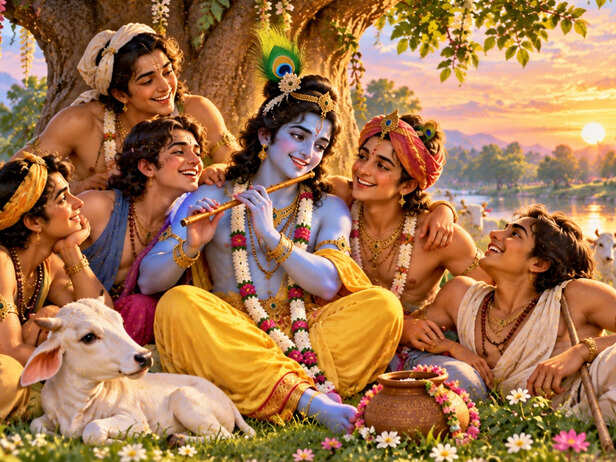
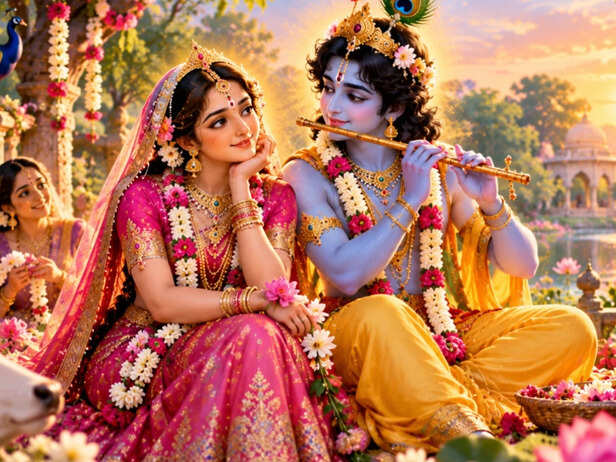
Most devotees know about Radha Krishna
Image credit : MyLifeXP Bureau
In the oldest layers of Krishna's story, he is many things at once. He is the charioteer and philosopher of the Gita, the warrior king of Dwarka, the divine child of Vrindavan who steals butter and defeats serpents. The Harivamsa, an appendix to the Mahabharata composed roughly in the third or fourth century, gives the Vrindavan childhood its earliest extended telling. The gopis, the cowherd women, appear here as devoted companions, but no single gopi is named above the others. The devotional relationship is collective, not particular. This made theological sense for what the tradition was doing at that moment: establishing Krishna's divinity through the breadth of his effect on people, not through one intimate bond.
Where Radha First Appears
The earliest clear naming of Radha as a distinct, significant figure comes in the Gita Govinda, the Sanskrit poem composed by Jayadeva in twelfth-century Bengal and Odisha. Jayadeva's Radha is not a minor character. She is Krishna's beloved, his equal in longing, the one whose separation from him is as painful as his from her. The poem moves between their union and their estrangement with an emotional intensity that earlier texts had not attempted. It was sung, danced, and memorised across eastern India and eventually far beyond. The Gita Govinda did not invent Radha from nothing, regional oral traditions almost certainly carried her before Jayadeva wrote, but it gave her a Sanskrit form that could travel.
The Theology That Made Her Necessary
![Rupa Goswami Writing About Radha Rani]()
Rupa Goswami Writing About Radha Rani
Image credit : CHATGPT(AI)
Radha's rise tracks a shift in how devotional communities understood the relationship between the worshipper and the divine. Earlier frameworks emphasised reverence, service, and awe, the devotee before a powerful god. What the bhakti movements of the medieval period increasingly wanted to express was something more intimate: longing, love, even the pain of separation as itself a form of closeness to the divine. Sanskrit and vernacular theologians, particularly in the Vaishnava traditions of Bengal and Vrindavan, developed this into a careful system. The highest form of devotion, they argued, was the love of Radha for Krishna, not the love of a servant, not even the love of a friend, but the love that is willing to risk everything, that feels the beloved's absence as a physical ache. Radha became the model devotee precisely because her love was unconditional and her longing was total. To worship Krishna through Radha was to approach the divine in the register of love rather than duty.
The Vrindavan Schools and What They Built
The Vrindavan theologians of the sixteenth century, figures like Rupa Goswami and Jiva Goswami, working in the tradition of Chaitanya Mahaprabhu, gave Radha a systematic theological position she had not had before. In their framework, Radha is not simply a devotee or a consort. She is the embodiment of Krishna's own devotional energy, the shakti through which he experiences love. This is a precise claim, not a poetic one: without Radha, in this theology, Krishna's capacity for love has no form. The two are inseparable not as a couple but as two aspects of one reality. This framework spread through the Gaudiya Vaishnava tradition and shaped how Radha is understood across a wide part of North Indian devotion today.
Regional Poetry and the Radha Who Preceded the Scholars
Before the theologians systematised her, Radha had been living in vernacular poetry for centuries. The Tamil Alvars of the sixth to ninth centuries sang of a gopi's love for Krishna in terms that anticipate the Radha tradition without naming her. In Rajasthan, Mirabai's sixteenth-century poetry frames the devotee's longing in exactly the emotional register that Radha represents, Mira herself as the lover who belongs only to Krishna. In Braj, the dialect of the Vrindavan region, the poetry of Surdas returns to Radha and the gopis with a tenderness and specificity that made her feel local, particular, someone whose grief at separation was recognisable. These traditions were not waiting for the Sanskrit theologians to authorise Radha. They were already there, and the scholars arrived to explain what the singers already knew.
Why the Absence Itself Matters
There is something worth sitting with in the fact that Radha is not in the oldest texts. It would be easy to read her late arrival as a sign that she was added, invented, grafted onto a tradition that originally had no place for her. The devotional tradition itself reads it differently. For Vaishnava theologians, the silence of the early texts is not an absence but a withholding, the tradition was not yet ready to speak about the most intimate relationship at the centre of the divine. Radha was always there; the words for her came later. Whether one accepts that reading or not, it points to something real about how traditions develop. They do not simply accumulate doctrine. They discover, over centuries of practice and longing, what they were trying to say from the beginning. Radha's journey from unnamed to indispensable is the story of a tradition finding the emotional language it needed, and finding it, in the end, in the figure of a woman who loved without condition and waited without certainty.
Unlock insightful tips and inspiration on personal growth, productivity, and well-being. Stay motivated and updated with the latest at
My Life XP.