With even the gods unable to contain the danger, Lord Shiva stepped forward to save the universe. This is the fascinating story of how a quest for immortality became one of Hindu mythology's most powerful tales of sacrifice, courage, and divine responsibility.
The Beginning of Samudra Manthan: Why Did the Gods Need the Ocean?
According to Hindu mythology, the gods, known as Devas, once found themselves losing their strength and influence. In a well-known account found in the Puranic tradition, the sage Durvasa's curse played a role in weakening their fortunes. With their power diminished, the Devas struggled to maintain their position against the Asuras, their powerful rivals.
Desperate for a solution, the gods approached Lord Vishnu for guidance. Vishnu advised them to churn the cosmic ocean to obtain Amrit, the nectar believed to grant immortality.
However, the task was so immense that the gods could not accomplish it alone. They needed the strength of the Asuras.
An extraordinary agreement followed. The Devas and Asuras would work together to churn the ocean, and the treasures that emerged would be part of this great cosmic undertaking.
To begin, Mount Mandara was chosen as the churning rod, while the serpent Vasuki served as the rope. The two groups pulled from opposite ends, setting the mountain in motion and churning the vast ocean.
But there was a problem. The mountain began sinking into the ocean.
To prevent the entire effort from collapsing, Lord Vishnu took the form of Kurma, the divine tortoise, and supported Mount Mandara on his back.
With the mountain stabilized, the great churning continued.
Neither side could have imagined what would emerge first.
The Terrifying Poison That Threatened All Creation
As the ocean churned, its depths began releasing extraordinary substances and divine treasures. But before the nectar of immortality appeared, something horrifying emerged.
It was Halahala, also known as Kalakuta in some traditional accounts, a deadly poison of immense destructive power.
The poison spread with such terrifying force that it threatened the gods, demons, and the entire universe. Its danger was unlike anything they had anticipated. The very process intended to bring immortality had unleashed a threat capable of destroying life itself.
The Devas and Asuras, who had joined forces to obtain the nectar, suddenly faced a common enemy they could not defeat.
Their strength was useless against the spreading poison. They needed help from a power greater than themselves.
In their desperation, they turned to Lord Shiva.
Why Did Lord Shiva Drink the Deadly Poison?
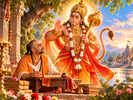
![Shiva Drinks the Cosmic Poison]()
Shiva Drinks the Cosmic Poison
Image credit : AI
When the gods approached Lord Shiva, they sought his intervention to protect creation from destruction.
Shiva understood the danger and made a decision that would become one of the most celebrated acts of sacrifice in Hindu mythology.
He took the Halahala poison into his mouth to prevent it from spreading further.
Goddess Parvati, concerned for the universe and for Shiva himself, intervened by holding his throat so that the poison would not descend into his body. As a result, the poison remained in his throat, which became blue.
This is the traditional explanation for Shiva's name Neelkanth, meaning the blue-throated one.
Rather than allowing the poison to destroy creation, Shiva contained it within himself.
The episode is more than a dramatic moment in a mythological story. It represents the willingness to accept suffering to protect others, the responsibility that accompanies great power, and the courage to face a danger that others cannot overcome.
Shiva's act transformed a moment of universal terror into a powerful symbol of compassion and selflessness.
The threat was contained, and the cosmic churning could continue.
The Final Struggle for Amrit
When Dhanvantari appeared with the pot of Amrit, the Asuras attempted to claim the nectar for themselves. The cooperation that had made the churning possible began to break apart.
Lord Vishnu intervened by taking the enchanting form of Mohini. According to a widely known version of the story, Mohini persuaded the Asuras to allow her to distribute the nectar.
Through this divine intervention, the Devas received the Amrit and regained their strength.
In another famous episode associated with the distribution, the Asura Rahu disguised himself to obtain the nectar. Surya, the Sun god, and Chandra, the Moon god, recognized him and alerted Vishnu. Vishnu severed Rahu's head, but because Rahu had already tasted the nectar, he became immortal in a distinctive form. This story is associated with the mythological explanation of eclipses.
Thus, the Samudra Manthan ended not simply with the discovery of immortality, but with further lessons about ambition, deception, divine intervention, and the consequences of desire.
What Is the Spiritual Meaning of Samudra Manthan?
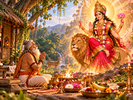
![Samudra Manthan Poison and Nectar]()
Samudra Manthan Poison and Nectar
Image credit : AI
The story of Samudra Manthan offers several interpretations that continue to resonate with devotees and readers.
The poison represents the dangers that can emerge when powerful forces are stirred into action. Even a noble goal can bring unexpected challenges, and progress does not always begin with something pleasant.
Shiva's sacrifice symbolizes the courage to accept responsibility when others are in danger. His act reminds readers that genuine strength is not merely the ability to defeat an enemy; it can also mean protecting others from harm.
The cooperation between the Devas and Asuras shows how opposing forces can sometimes work toward a shared objective, even when their interests eventually conflict.
Finally, the emergence of both poison and Amrit suggests that great transformations may bring hardship before their rewards become visible. This is a spiritual interpretation of the story, rather than a claim about literal events.
The Greatest Treasure Was More Than Immortality
The story of Samudra Manthan begins with a search for immortality but reveals something far more profound along the way.
Before Amrit appeared, the cosmic ocean released Halahala, a poison so dangerous that even the gods could not overcome it alone. At that critical moment, Lord Shiva stepped forward and contained the poison, earning the name Neelkanth and becoming an enduring symbol of sacrifice and compassion.
The divine treasures that followed made the churning legendary, but Shiva's intervention remains one of its most memorable moments.
Unlock insightful tips and inspiration on personal growth, productivity, and well-being. Stay motivated and updated with the latest at My Life XP