What Happens When You Chant the Shiv Tandav Stotram?
Noopur Kumari | Aug 16, 2026, 11:00 IST
Why did Ravana sing a hymn to Shiva after being crushed beneath Mount Kailash? And why has this ancient composition remained so powerful for devotees across generations? The Shiv Tandav Stotram is not simply a description of Shiva’s fierce dance. Beneath its dramatic imagery lies a deeper spiritual message about controlling the ego, remaining steady during hardship, and seeing beyond fear and attachment. Its verses move between Shiva’s terrifying power and his compassionate presence, creating a striking picture of divine strength. Here is the story, meaning, and spiritual significance behind this celebrated hymn.

Shiv Tandav Stotram
Image credit : ChatGPT(AI)
The Shiv Tandav Stotram is one of the most powerful devotional hymns associated with Lord Shiva. Traditionally attributed to Ravana, the hymn vividly describes Shiva’s cosmic Tandav, his matted locks carrying the Ganga, the crescent moon on his head, the serpent around his neck, and the blazing fire of his third eye. Its rhythm is intense, but its deeper message is about devotion, surrender, courage, and inner transformation. For devotees, chanting or listening to the stotram can become a way to focus the mind and connect with Shiva’s powerful yet deeply disciplined nature.
![Ravana’s Devotion Before Lord Shiva]()
According to a popular Hindu tradition, Ravana once attempted to lift Mount Kailash, the sacred abode of Lord Shiva. His act was driven by immense strength and pride. Shiva stopped him by pressing the mountain down with his toe, trapping Ravana beneath it. Instead of remaining consumed by anger, Ravana began praising Shiva with a powerful hymn. His devotion pleased Lord Shiva, who eventually released him and is traditionally said to have granted him the divine sword Chandrahas. The story carries an important lesson: even extraordinary strength must ultimately bow before something greater, and devotion can transform pride into surrender.
![Lord Shiva Performing the Tandav]()
The central image of the Shiv Tandav Stotram is Lord Shiva performing the Tandav. His matted hair moves with the flow of the Ganga, his damaru creates a powerful rhythm, serpents adorn his body, and fire shines from his forehead. The imagery presents Shiva as a force beyond ordinary human understanding. The Tandav is often interpreted through the idea of cosmic transformation, where creation and destruction are part of an eternal cycle. Spiritually, this reminds devotees that change is unavoidable. What ends may create space for something new, and accepting transformation can become a source of inner strength.
Several images in the stotram reveal the extraordinary form of Shiva. The Ganga flows through his matted locks, while the crescent moon rests upon his head. These symbols create a beautiful contrast between movement and stillness. Water represents flow and purification, while the moon suggests calmness, rhythm, and balance. Together, they portray Shiva as a deity who holds immense forces without being overwhelmed by them. This symbolism can also be understood as a lesson for everyday life. A person may experience powerful emotions and constant change, yet inner steadiness can help prevent those forces from controlling every decision.
The fiery third eye is among the most striking images associated with Shiva in the hymn. Traditional stories describe Shiva opening his third eye and burning Kamadeva, the deity associated with desire, to ashes. At a deeper level, the image can be understood as the power of awareness destroying illusion and uncontrolled attachment. The fire is not merely destructive. It represents transformation. When a person becomes more aware of their thoughts, desires, anger, and attachments, they gain greater control over their actions. The stotram therefore presents Shiva’s fierce energy as a reminder that inner clarity can be stronger than impulse.
One of the most profound ideas in the later verses is the desire to see beyond ordinary distinctions. The devotee asks when the mind will treat opposites with greater equality: comfort and discomfort, praise and criticism, friend and enemy, precious objects and ordinary things. This is a powerful spiritual idea because much of human suffering comes from constantly judging experiences as desirable or undesirable. The hymn encourages a steadier mind that is less controlled by external circumstances. Such balance does not mean becoming emotionless. It means developing enough inner stability to respond thoughtfully instead of being pulled around by every success, insult, loss, or temptation.
Devotees traditionally chant the Shiv Tandav Stotram as an expression of devotion to Lord Shiva. Its strong rhythm can encourage concentration, while its imagery gives the mind a powerful object of contemplation. Many devotees associate regular chanting with greater confidence, courage, focus, and spiritual discipline. It is better to understand these as devotional and personal benefits rather than guaranteed supernatural results. Chanting can become especially meaningful when it is performed with attention instead of speed. Even listening carefully to the hymn can create a reflective pause in a busy day. The value lies not only in the words, but also in the sincerity behind the practice.
The Shiv Tandav Stotram ultimately presents a fascinating picture of Shiva: fierce yet compassionate, destructive yet transformative, powerful yet deeply still. Its message goes beyond simply asking for blessings. It encourages devotees to develop courage without arrogance, strength without cruelty, and devotion without attachment to ego. The story of Ravana also reinforces this lesson. His extraordinary power could not overcome Shiva, but sincere praise opened the way to grace. This is why the hymn continues to attract devotees. Its rhythm may stir the senses, but its deeper purpose is to turn attention inward and remind us that true strength begins with mastery over oneself.
The Shiv Tandav Stotram is more than a dramatic hymn describing Shiva’s cosmic dance. Its imagery brings together fire, Ganga, the moon, serpents, the damaru, the third eye, and the powerful movement of the Tandav. Together, these symbols create a picture of divine energy held within perfect awareness.
For devotees, chanting the stotram can become a meaningful spiritual practice. Its greatest lesson may be simple: power becomes truly meaningful when it is guided by devotion, awareness, and self-control.
Unlock insightful tips and inspiration on personal growth, productivity, and well-being. Stay motivated and updated with the latest at My Life XP.
The Story Behind the Stotram
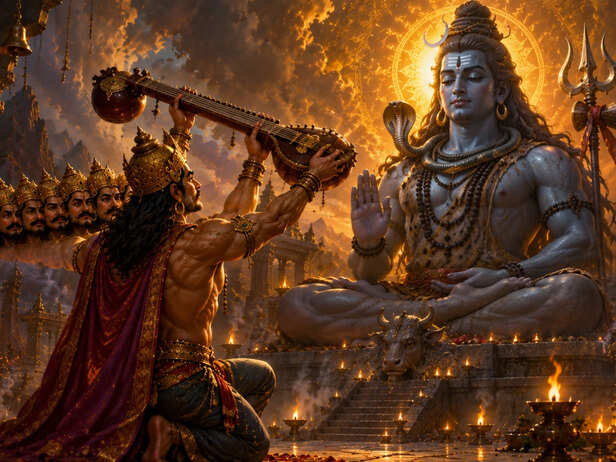
Ravana’s Devotion Before Lord Shiva
Image credit : ChatGPT(AI)
According to a popular Hindu tradition, Ravana once attempted to lift Mount Kailash, the sacred abode of Lord Shiva. His act was driven by immense strength and pride. Shiva stopped him by pressing the mountain down with his toe, trapping Ravana beneath it. Instead of remaining consumed by anger, Ravana began praising Shiva with a powerful hymn. His devotion pleased Lord Shiva, who eventually released him and is traditionally said to have granted him the divine sword Chandrahas. The story carries an important lesson: even extraordinary strength must ultimately bow before something greater, and devotion can transform pride into surrender.
Shiva’s Cosmic Dance
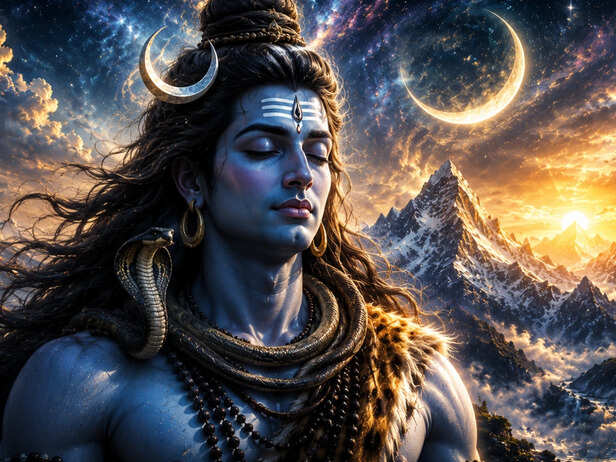
Lord Shiva Performing the Tandav
Image credit : CHATGPT(AI)
The central image of the Shiv Tandav Stotram is Lord Shiva performing the Tandav. His matted hair moves with the flow of the Ganga, his damaru creates a powerful rhythm, serpents adorn his body, and fire shines from his forehead. The imagery presents Shiva as a force beyond ordinary human understanding. The Tandav is often interpreted through the idea of cosmic transformation, where creation and destruction are part of an eternal cycle. Spiritually, this reminds devotees that change is unavoidable. What ends may create space for something new, and accepting transformation can become a source of inner strength.
The Ganga and Crescent Moon
The Fire of Shiva’s Third Eye
Seeing Beyond Friend and Foe
What Chanting Can Inspire
The Deeper Message of Shiva
A Powerful Hymn With a Deeper Lesson
For devotees, chanting the stotram can become a meaningful spiritual practice. Its greatest lesson may be simple: power becomes truly meaningful when it is guided by devotion, awareness, and self-control.
Unlock insightful tips and inspiration on personal growth, productivity, and well-being. Stay motivated and updated with the latest at My Life XP.