What Really Happens To The Soul After Death?
Noopur Kumari | Jul 22, 2026, 15:00 IST
According to Hindu philosophy, only the physical body dies, while the subtle body and causal body continue their journey. Whether a soul moves toward another birth, remains attached to the earthly world, or attains Moksha depends on deeper spiritual principles. This article explains these concepts in simple language while reflecting traditional beliefs found in Sanatan Dharma.

Soul Get Stuck After Death
Image credit : ChatGPT
Death has always been one of humanity's greatest mysteries. Does the soul immediately take another birth? Can a soul really wander after death? Or is there something much deeper happening beyond what we can see? Sanatan Dharma offers a profound explanation that goes beyond the physical body. According to ancient spiritual teachings, death is not the end of existence but the beginning of another journey. Understanding this process helps us look at life, karma, and liberation from a completely different perspective.
![Soul Leaving The Physical Body]()
According to Sanatan Dharma, death marks the end of the physical body, not the soul. The body made from the five elements returns to nature, while consciousness continues its journey. Ancient scriptures describe death as a transition rather than destruction. Just as a person changes old clothes for new ones, the soul is believed to move beyond the body while carrying the impressions created during life.
![Three Bodies In Hindu Philosophy]()
Hindu philosophy explains that every human being consists of three bodies: the physical body, the subtle body, and the causal body. The physical body is visible, while the subtle body includes the mind, life energy, and emotions. The causal body carries deeper karmic impressions. At death, only the physical body ends. The subtle and causal bodies continue the soul's spiritual journey according to traditional beliefs.
Traditional Hindu beliefs suggest that some souls remain emotionally attached to the earthly world after death. Unfulfilled desires, sudden death, or deep karmic attachments are believed to prevent the subtle body from moving forward immediately. These teachings describe such situations as temporary spiritual states rather than permanent conditions. The emphasis remains on attachment, not fear, as the reason for delayed progress.
The Meaning Of
Moksha is considered the highest goal in Sanatan Dharma. It is the complete liberation of the soul from the endless cycle of birth and rebirth. Spiritual teachings explain that when ignorance, attachment, and karmic bondage are completely dissolved, the soul no longer needs another earthly life. Moksha is described as a state of eternal peace, pure consciousness, and union with the Divine.
According to Hindu philosophy, karma plays a central role in determining the soul's next experience. Every thought, word, and action leaves an impression that influences future spiritual progress. Positive actions, selfless service, and spiritual discipline help purify the mind, while attachment and ignorance strengthen karmic bonds. The journey after death is therefore seen as a natural continuation of the life one has lived.
Sanatan Dharma teaches that Moksha is not achieved by death alone but through conscious living. Daily meditation, devotion, selfless action, truthfulness, and self-awareness gradually free the mind from attachment. The purpose of spiritual practice is to transform one's inner nature while still alive. Liberation becomes possible when the individual recognises the eternal Self beyond the temporary body and worldly identity.
One of the deepest teachings of Hindu philosophy is that destiny is not imposed from outside. Every action, intention, and spiritual effort gradually shapes the soul's future. Whether one continues the cycle of rebirth, remains attached through unresolved desires, or progresses toward liberation depends on the karmic path created throughout life. The future is not decided by chance but by conscious choices made every day.
Unlock insightful tips and inspiration on personal growth, productivity, and well-being. Stay motivated and updated with the latest at My Life XP.
Death Is Not The End
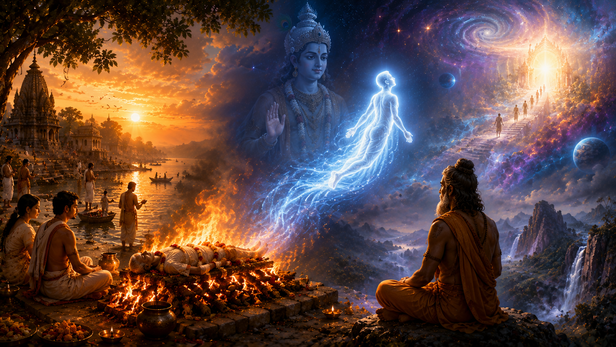
Soul Leaving The Physical Body
Image credit : ChatGPT (AI)
According to Sanatan Dharma, death marks the end of the physical body, not the soul. The body made from the five elements returns to nature, while consciousness continues its journey. Ancient scriptures describe death as a transition rather than destruction. Just as a person changes old clothes for new ones, the soul is believed to move beyond the body while carrying the impressions created during life.
The Three Layers Of Existence
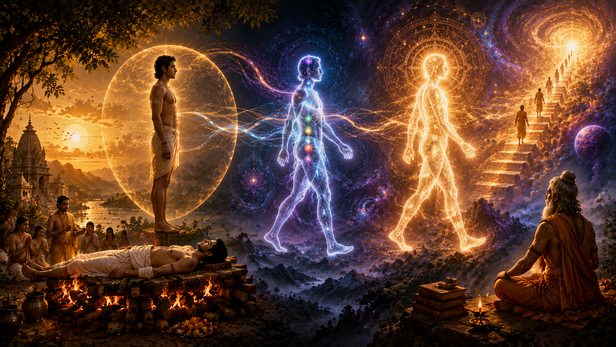
Three Bodies In Hindu Philosophy
Image credit : ChatGP(ai)
Hindu philosophy explains that every human being consists of three bodies: the physical body, the subtle body, and the causal body. The physical body is visible, while the subtle body includes the mind, life energy, and emotions. The causal body carries deeper karmic impressions. At death, only the physical body ends. The subtle and causal bodies continue the soul's spiritual journey according to traditional beliefs.
Why Some Souls Do Not Move Forward
The Meaning Of Moksha
How Karma Shapes The Journey
Liberation Begins While Living
The Final Choice Is Created By You
Unlock insightful tips and inspiration on personal growth, productivity, and well-being. Stay motivated and updated with the latest at My Life XP.