What Were Hanuman’s First Words? The Answer Is Shocking
Noopur Kumari | Sept 13, 2026, 08:56 IST
Hanuman’s first major appearance in the Kishkindha Kanda reveals a side of his character that is easy to miss. When Sugriva panicked after seeing Rama and Lakshmana, Hanuman did not respond with force. He responded with clarity. His first advice was to abandon fear and agitation. This small moment reveals why Hanuman’s greatest strength was not only physical power, but control over the mind.

Hanuman’s greatest introduction in the Valmiki Ramayana
Image credit : ChatGPT(ai)
what if Hanuman’s greatest introduction in the Valmiki Ramayana had nothing to do with lifting a mountain, crossing the ocean or defeating an army? Before the world saw Hanuman as the mighty warrior, Sugriva saw something else in him: a calm mind that could stand firm when everyone else was afraid. When Rama and Lakshmana approached the region, Sugriva became frightened and began looking for safety. Hanuman did not panic with him. Instead, he gave him a simple instruction:
“संभ्रमस्त्यज्यतामेष” Give up this fear and agitation. Those words came before many of the famous feats associated with Hanuman. And that changes how we understand his strength.
![Hanuman Ji Carry Ram and Sita in His Heart]()
Sugriva saw Rama and Lakshmana approaching with weapons and immediately became alarmed. The Valmiki Ramayana describes him as disturbed and unable to remain settled in one place. But Hanuman did not mirror Sugriva’s fear. He observed the situation calmly and understood that panic was already controlling the king’s thinking. That is when Hanuman spoke. His first advice was not about fighting, escaping or displaying strength. It was about removing fear from the mind first. That is a very different kind of power.
![Hanuman Ji Sit at Rama’s Feet]()
Hanuman says, “संभ्रमस्त्यज्यतामेष सर्वैर्वालिकृते महान्”, asking Sugriva to give up the great agitation caused by fear of Vali. He then reminds him that they are on Mount Malaya, where Vali poses no immediate danger. The word sambhrama carries the sense of agitation, confusion or disturbance.
So Hanuman’s message was more than “Do not be scared.” It was closer to: Do not allow fear to disturb your judgment. That distinction makes his first lesson even more powerful.
Sugriva was a king, surrounded by powerful vanaras, yet fear had made him restless. This is one of the most relatable moments in the story. Fear does not always care about how strong, successful or experienced a person is. A person can have everything under control and still panic when something unexpected enters life. A new job. A difficult conversation. A major decision. A sudden change. The mind begins jumping from one possibility to another. Hanuman’s response gives a simple lesson: do not make your next decision while your mind is running in fear. First become still, then act.
Most people remember Hanuman for the ocean crossing, the search for Sita, his devotion to Rama and the mountain he carried to Lanka. Those moments show his extraordinary abilities. But his earlier interaction with Sugriva reveals another kind of strength. Hanuman could remain composed when another person was overwhelmed. Later, Sugriva himself would experience the effect of Hanuman’s words. After hearing him, Sugriva’s fear of Rama was removed, and he became free from that distress. That is why Hanuman’s introduction does not need a dramatic battle scene. His words already show what kind of person he is.
The Ramayana gives us a powerful image through Sugriva: a mind that keeps moving because it is afraid of what might happen next.
We often experience the same thing. One thought leads to another. A small problem becomes ten imagined problems. Before taking one step, we start worrying about the tenth. This is where the symbolism of Hanuman becomes meaningful.
Hanuman does not tell Sugriva to run faster.
He tells him to stop being overwhelmed.
When the mind becomes restless, the first step is not always action. Sometimes it is simply calm down, observe what is actually happening, and then decide.
There is another layer to this scene. Rama and Lakshmana are approaching, but Sugriva does not yet know who they are or why they have come. His fear fills the gap between what he knows and what he imagines.
That happens in real life too.
A new opportunity can look dangerous before we understand it. A difficult conversation can feel like rejection before it even happens. A new responsibility can feel impossible before we begin.
Hanuman teaches Sugriva to separate fear from fact.
Before deciding that something is dangerous, first ask: What do I actually know?
That single question can stop many unnecessary fears.
The most beautiful part of Hanuman’s first message is that it does not promise Sugriva that life will never become difficult.
It simply asks him not to surrender his mind to fear.
That lesson still works.
When fear rises, pause before reacting. Take a few slow breaths. Separate facts from assumptions. Ask what needs to be done now instead of imagining everything that could go wrong later.
This is not about pretending that fear does not exist.
It is about refusing to let fear make every decision.
That is the Hanuman lesson hidden inside those first powerful words.
Hanuman’s greatness did not begin when he lifted a mountain.
It began when he could stand calmly beside a frightened king and tell him to let go of agitation.
“संभ्रमस्त्यज्यताम” is powerful precisely because it is simple: leave the panic behind.
The next time your mind starts running ahead of you, remember this scene.
You may not need more strength at that moment.
Because when the mind becomes calm, the next step becomes visible. And perhaps that is why Hanuman’s first lesson remains as powerful as his greatest feats: where fear takes over, bring awareness first. Then act.
Textual note: The quoted Sanskrit comes from Kishkindha Kanda, Sarga 2, where Hanuman addresses frightened Sugriva. The commonly cited wording is “संभ्रमस्त्यज्यतामेष…”, rather than treating “संभ्रमः त्यजताम” as a standalone two-word sentence.
Unlock insightful tips and inspiration on personal growth, productivity, and well-being. Stay motivated and updated with the latest at My Life XP.
“संभ्रमस्त्यज्यतामेष” Give up this fear and agitation. Those words came before many of the famous feats associated with Hanuman. And that changes how we understand his strength.
Hanuman Entered the Story When Sugriva Was Afraid
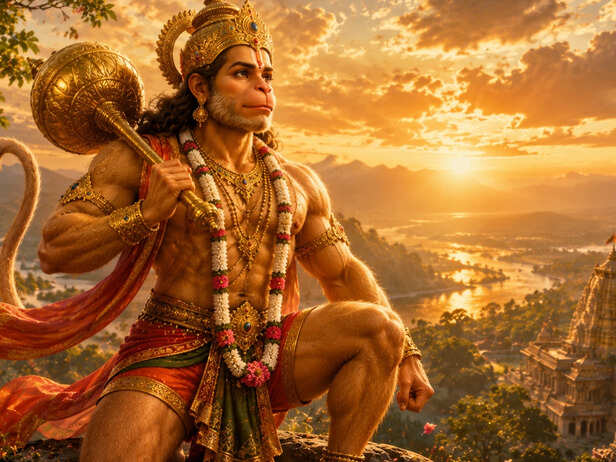
Hanuman Ji Carry Ram and Sita in His Heart
Image credit : chatgpt(ai)
Sugriva saw Rama and Lakshmana approaching with weapons and immediately became alarmed. The Valmiki Ramayana describes him as disturbed and unable to remain settled in one place. But Hanuman did not mirror Sugriva’s fear. He observed the situation calmly and understood that panic was already controlling the king’s thinking. That is when Hanuman spoke. His first advice was not about fighting, escaping or displaying strength. It was about removing fear from the mind first. That is a very different kind of power.
His First Advice Was Surprisingly Simple
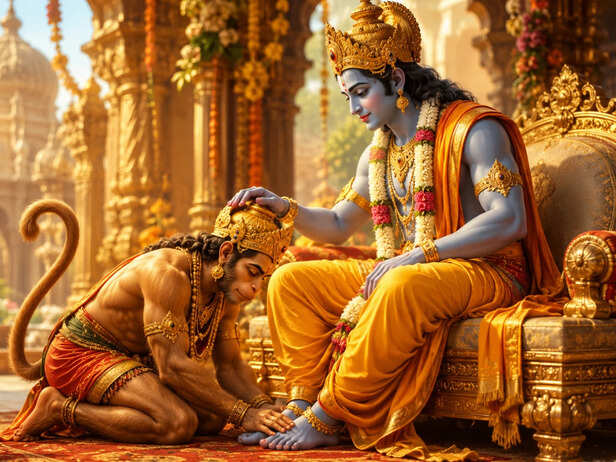
Hanuman Ji Sit at Rama’s Feet
Image credit : chatgpt(ai)
Hanuman says, “संभ्रमस्त्यज्यतामेष सर्वैर्वालिकृते महान्”, asking Sugriva to give up the great agitation caused by fear of Vali. He then reminds him that they are on Mount Malaya, where Vali poses no immediate danger. The word sambhrama carries the sense of agitation, confusion or disturbance.
So Hanuman’s message was more than “Do not be scared.” It was closer to: Do not allow fear to disturb your judgment. That distinction makes his first lesson even more powerful.
Fear Can Make Even a King Lose His Judgment
Hanuman’s Real Strength Appeared Before His Famous Feats
The “Monkey Mind” Needs a Hanuman
We often experience the same thing. One thought leads to another. A small problem becomes ten imagined problems. Before taking one step, we start worrying about the tenth. This is where the symbolism of Hanuman becomes meaningful.
Hanuman does not tell Sugriva to run faster.
He tells him to stop being overwhelmed.
When the mind becomes restless, the first step is not always action. Sometimes it is simply calm down, observe what is actually happening, and then decide.
Rama’s Arrival Can Feel Like a Threat at First
That happens in real life too.
A new opportunity can look dangerous before we understand it. A difficult conversation can feel like rejection before it even happens. A new responsibility can feel impossible before we begin.
Hanuman teaches Sugriva to separate fear from fact.
Before deciding that something is dangerous, first ask: What do I actually know?
That single question can stop many unnecessary fears.
Hanuman’s First Lesson Still Speaks to Us
It simply asks him not to surrender his mind to fear.
That lesson still works.
When fear rises, pause before reacting. Take a few slow breaths. Separate facts from assumptions. Ask what needs to be done now instead of imagining everything that could go wrong later.
This is not about pretending that fear does not exist.
It is about refusing to let fear make every decision.
That is the Hanuman lesson hidden inside those first powerful words.
What Hanuman’s First Words Really Teach
It began when he could stand calmly beside a frightened king and tell him to let go of agitation.
“संभ्रमस्त्यज्यताम” is powerful precisely because it is simple: leave the panic behind.
The next time your mind starts running ahead of you, remember this scene.
You may not need more strength at that moment.
You may simply need more stillness.
Textual note: The quoted Sanskrit comes from Kishkindha Kanda, Sarga 2, where Hanuman addresses frightened Sugriva. The commonly cited wording is “संभ्रमस्त्यज्यतामेष…”, rather than treating “संभ्रमः त्यजताम” as a standalone two-word sentence.
Unlock insightful tips and inspiration on personal growth, productivity, and well-being. Stay motivated and updated with the latest at My Life XP.