Sometimes, the most fascinating parts of a film are not found in its dialogues but hidden in the smallest details. The
Ramayana trailer appears to offer several such moments, from the design of Indra’s weapon to the placement of characters during Ram and Sita’s wedding. These visual choices invite viewers to look beyond the surface and explore the mythology, symbolism and storytelling behind each frame. Once you notice them, some scenes may take on a completely different meaning.
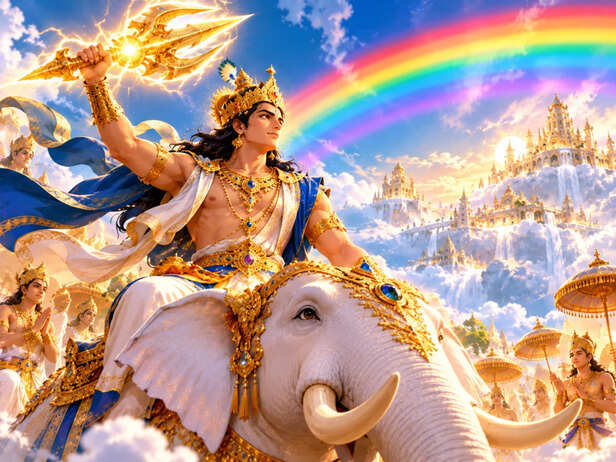
Indra’s Vajra and the Fading Rainbow
![Indra’s Vajra and the Power of the Rainbow]()
Indra’s Vajra and the Power of the Rainbow
Image credit : chatgpt(ai)
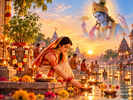
In Hindu mythology, Indra’s vajra is traditionally associated with the sage Dadhichi, whose sacrifice made the divine weapon possible. The trailer’s apparent rib-cage-inspired design offers an interesting visual interpretation of this legendary origin. The rainbow appearing during Indra’s attack, followed by its fading when he falls, can also be read as a visual way to suggest a shift in power. Whether intentional symbolism or cinematic storytelling, the contrast makes the battle more expressive than a simple exchange of blows.
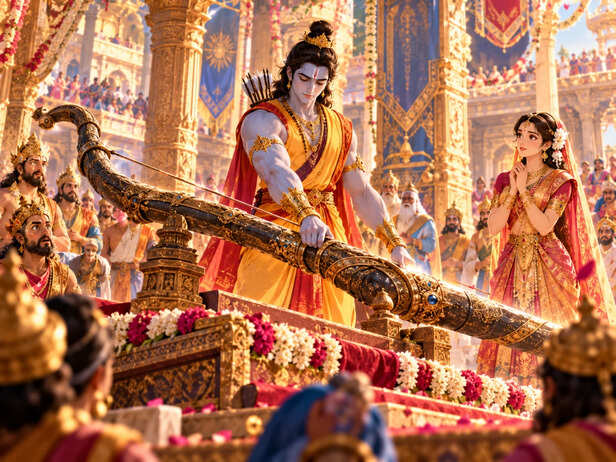
Why Shiva’s Bow Is Shown on Wheels
![The Mighty Shiva Dhanush at Sita’s Swayamvar]()
The Mighty Shiva Dhanush at Sita’s Swayamvar
Image credit : chatgpt(ai)
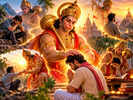
The Shiva Dhanush is not an ordinary bow in the Ramayana tradition. Its immense size and power make it a defining challenge at Sita’s swayamvar, where Ram demonstrates his extraordinary strength. The trailer’s depiction of the bow being transported on a wheeled platform appears to echo descriptions of the weapon’s great weight in traditional tellings. This detail helps communicate its scale visually, allowing viewers to understand why lifting the bow was such a remarkable feat rather than an ordinary test of strength.
The Symbols Beside Mata Sita
The trailer appears to place a sun symbol near Sita and Garuda imagery around her throne. These details invite an interpretation connected to Ram’s identity: he belongs to the Suryavansha, or Solar Dynasty, while Lord Vishnu is traditionally associated with Garuda as his divine vehicle. Their presence around Sita may visually connect her with Ram’s royal and divine world. However, the exact intention behind the production design cannot be confirmed from the imagery alone. The symbols are still interesting clues for viewers familiar with Hindu mythology.
Why Elephants Appear Across Ayodhya
Elephants have long been associated with royalty, prosperity, ceremonial life and royal processions in Indian art and tradition. Their repeated appearance in the trailer’s portrayal of Ayodhya may help establish the kingdom’s grandeur and cultural identity. When elephant motifs appear on clothing, pillars and walls, they also make the setting feel visually connected rather than randomly decorated. Instead of serving only as background elements, these repeated designs can help build a consistent world around Ram’s royal family and the events leading to his wedding.
Character Placement at Ram and Sita’s Wedding
A character’s position in a scene can tell a story even before anyone speaks. In the wedding sequence described in the trailer, the placement of the princes and their mothers appears to emphasise family relationships. Kaikeyi is positioned behind Bharat, while Kaushalya stands behind Ram. Sumitra’s association with Lakshman and Shatrughna also reflects their shared maternal bond. Such arrangements can help audiences understand the family structure at a glance, making the scene feel carefully composed rather than simply crowded with royal characters.
Manthara’s Expression Changes the Mood
One of the most intriguing storytelling techniques is placing a troubled character within an otherwise joyful scene. In the coronation sequence described in the trailer, the royal family appears happy as preparations are made for Ram, while Manthara stands apart and watches Kaikeyi. This contrast can create suspense because viewers familiar with the Ramayana know that Manthara will play a significant role in the events that change Ram’s future. Her presence introduces unease into a moment of celebration without needing an explicit warning or dramatic dialogue.
Why Sita Is Shown on Ram’s Left
The trailer reportedly places Sita on Ram’s left side in several scenes. In Hindu traditions, the term vamanga can refer to the left side of a husband, particularly in symbolic discussions of marriage and the wife’s place beside him. The left side is also associated with Shakti in certain religious representations, including forms of Ardhanarishvara, although symbolism varies by context. Sita’s repeated placement beside Ram may therefore invite viewers to think about their bond as more than a royal marriage: it represents companionship, duty and a shared spiritual journey.
Unlock insightful tips and inspiration on personal growth, productivity, and well-being. Stay motivated and updated with the latest at My Life XP