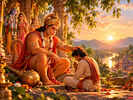
Ayodhya is remembered as the birthplace of Lord Ram, but the story of this sacred city begins long before his birth. Ancient Hindu texts describe a royal lineage that stretches back through Surya Dev, Vaivasvata Manu and King Ikshvaku. But who was the king associated with the beginning of the dynasty to which Lord Ram belonged? The answer reveals a fascinating connection between the origins of the Suryavansh, the ancient traditions of Ayodhya and the idea that a ruler's greatest duty is to protect his people.
The Story Begins Before Lord Ram
![Lord Ram and His Ancient Lineage]()
Lord Ram and His Ancient Lineage
Image credit : chatgpt(ai)
Whenever Ayodhya is mentioned, Lord Ram is often the first figure who comes to mind. Yet the Ramayana places his life within a much older royal history. He belonged to the Ikshvaku dynasty, also known as the Suryavansh or Solar Dynasty. According to traditional accounts, generations of rulers came before him, shaping the identity of this celebrated lineage. Understanding Lord Ram's ancestry adds another dimension to his story: he was not only a revered figure but also an heir to a tradition associated with duty, self-discipline and responsible kingship.
From Brahma to Sage Marichi
![Radiant Solar Dynasty of Rama]()
Radiant Solar Dynasty of Rama
Image credit : chatgpt(ai)
The traditional genealogy begins with Brahma, the creator in Hindu cosmology. Sage Marichi is described as one of Brahma's mind-born sons and among the revered sages known as the Saptarishis in many traditional accounts. Marichi's son was Kashyapa, a prominent sage associated with the ancestry of several divine and living beings. This part of the story reaches beyond royal history into Hindu cosmology, connecting the origins of a famous dynasty with the larger narrative of creation. It establishes the spiritual background from which the Solar Dynasty's ancestry is traced.
Surya Dev and Vaivasvata Manu
According to the traditional genealogy, Kashyapa and Aditi were the parents of Vivasvan, another name for Surya Dev. Surya's son was Vaivasvata Manu, who is revered in Hindu texts as an ancestor of humanity and a lawgiver. This connection explains the name Suryavansh, which means the Solar Dynasty. The lineage links the Sun God with the rulers who followed Manu, creating a family history that combines divine ancestry with ideals of social order and righteous conduct. It is one of the most recognisable genealogies in Hindu epic tradition.
. King Ikshvaku and the Royal Line
Vaivasvata Manu's son Ikshvaku occupies a central place in the story of Lord Ram's ancestry. Ancient Hindu genealogies remember him as the founder of the Ikshvaku dynasty, which became known as the Suryavansh. Ikshvaku is also closely associated with Ayodhya in traditional accounts. His importance lies not simply in being an ancestor of Lord Ram, but in representing the beginning of a royal line that produced many celebrated kings. Later generations would carry this lineage forward until it reached Dasharatha and his son, Lord Ram.
How Ayodhya Became So Important
Ayodhya is described in the Valmiki Ramayana as the capital of the kingdom ruled by the Ikshvaku line. The city later became inseparable from Lord Ram's life and legacy. Although popular retellings often say that King Ikshvaku founded Ayodhya, ancient texts and later traditions do not always present every detail of the city's origins in exactly the same way. What remains central is the connection between Ayodhya and the Solar Dynasty. Its significance comes from its place in the Ramayana as the home of a royal family associated with righteous rule and the protection of its people.
The Generations Before Lord Ram
Lord Ram was not the first celebrated ruler of his dynasty. Traditional genealogies name many kings before him, including Sagara, Bhagiratha, Raghu, Aja and Dasharatha. Their stories are associated with different aspects of royal duty, devotion and leadership. The dynasty is also sometimes called the Raghuvamsha because of the prominence of King Raghu and his descendants. Claims that exactly 75 to 80 generations ruled before Lord Ram should be treated cautiously, as genealogical lists and their interpretations vary across texts and retellings. The broader point is that Lord Ram's story stands within a long and respected lineage.
The Legacy That Reached Lord Ram
The story that begins with ancient sages and Surya Dev eventually reaches Lord Ram, one of Hindu tradition's most revered figures. His life is remembered through ideals of dharma, responsibility, courage and respect for others. The Suryavansh's significance therefore goes beyond a list of ancestors: it provides the setting for a story about how power should be used and what a ruler owes to his people. King Ikshvaku marks an important beginning in this traditional genealogy, while Lord Ram's life gave the dynasty a legacy that continues to inspire millions.
Unlock insightful tips and inspiration on personal growth, productivity, and well-being. Stay motivated and updated with the latest at My Life XP