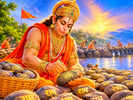
There was a warrior who stood against Lord Krishna in the Mahabharata war, yet Krishna gave five sacred days of Kartik in his name. That warrior was Bhishma Pitamah. Their encounter on the battlefield revealed a bond that went beyond promises, weapons and victory. Even more fascinating is the tradition of offering something different to Lord Vishnu on each of these five days, beginning at his feet and ending at his head. Known as Bhishma Panchak, these five days hold a special place in the Kartik month.
The Warrior Who Made Krishna Break His Promise
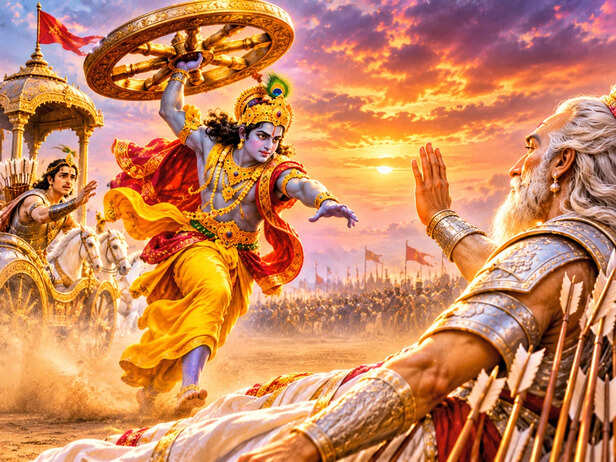
![Krishna Charges Through the Sunset Battlefield]()
Krishna Charges Through the Sunset Battlefield
Image credit : CHATGPT(AI)
The Mahabharata describes a remarkable encounter between Bhishma Pitamah and Lord Krishna. Before the war, Krishna had promised not to take up weapons, while Bhishma had vowed to make him break that promise. On the ninth day, Bhishma's fierce attack left Arjuna struggling to defend himself. Seeing this, Krishna jumped from the chariot, picked up a broken chariot wheel and rushed towards Bhishma. The great warrior immediately lowered his bow and folded his hands, ready to accept death at the hands of his beloved Lord.
Why Krishna Honoured Bhishma
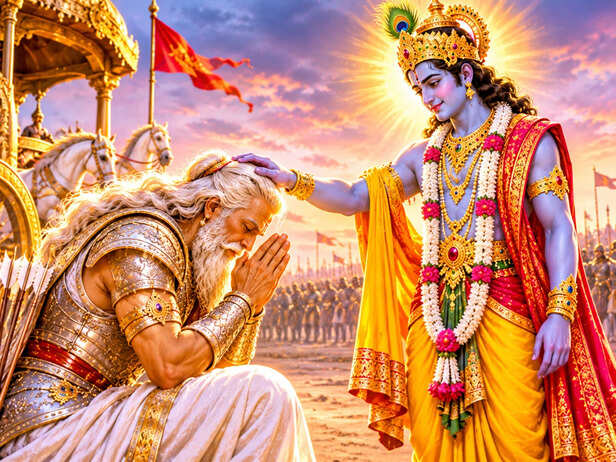
![Krishna Blesses Bhishma at Sunset]()
Krishna Blesses Bhishma at Sunset
Image credit : CHATGPT(AI)
Bhishma was not an ordinary warrior. He was a great devotee of Lord Krishna, despite fighting for the Kauravas because of his commitment to the throne of Hastinapur. When Krishna rushed towards him with the wheel, Bhishma welcomed the moment as a blessing. After the war, Bhishma lay on a bed of arrows and shared his knowledge of dharma with the Pandavas. According to the traditional account of Bhishma Panchak, these five days are associated with Bhishma's devotion and his final spiritual journey.
What Is Bhishma Panchak?
Bhishma Panchak refers to the final five days of the Kartik month, beginning with Dev Uthani Ekadashi and ending on Kartik Purnima. These days are also known as Vishnu Panchak and are dedicated to the worship of Lord Vishnu. According to religious traditions, Bhishma observed this sacred period while preparing for his final journey. It is believed that devotees who could not observe the Chaturmasya vows can seek the spiritual merit associated with those observances by following Bhishma Panchak with devotion.
Day One: Offer Lotus Flowers at His Feet
The first day begins on Kartik Shukla Ekadashi. Devotees traditionally offer lotus flowers at the feet of Lord Vishnu. The lotus represents purity, devotion and complete surrender. Just as Bhishma remained devoted to Krishna despite the circumstances of the battlefield, devotees are encouraged to approach the Lord with a sincere heart. Begin the day with a bath, prayers and remembrance of Bhishma Pitamah. Offering a lotus becomes a symbolic expression of seeking the Lord's protection and guidance.
Day Two: Offer Bilva Leaves
On the second day, Kartik Dwadashi, devotees offer Bilva leaves to the Lord, traditionally at his knees or thighs, depending on the textual tradition followed. These body parts symbolically represent support and strength. The offering reminds devotees to seek the strength to remain steady during life's difficult moments. Bilva leaves are also closely associated with Lord Shiva, making this offering familiar in Hindu worship. Devotees should follow the ritual instructions of their family or temple tradition.
Day Three: Offer Fragrance at the Navel
On Kartik Trayodashi, the third day, devotees offer gandha, or fragrant sandalwood paste, at the navel of Lord Vishnu. In Hindu tradition, the navel of Vishnu is associated with the cosmic lotus from which Lord Brahma emerged and creation began. This offering therefore carries a connection with the origin of the universe. Devotees can apply sandalwood paste during worship while remembering Lord Vishnu and praying for wisdom, peace and spiritual understanding.
Day Four: Offer Hibiscus at His Shoulders
On Kartik Chaturdashi, devotees traditionally offer Java flowers, commonly identified with hibiscus, at the shoulders of Lord Vishnu. The shoulders can be understood as a symbol of the strength to carry responsibilities and protect devotees. This offering reminds worshippers of the Lord's compassion and his role as the protector of the universe. It also brings to mind Bhishma's extraordinary strength and his unwavering commitment to his principles.
Day Five: Offer Malati Flowers at His Head
The fifth and final day falls on Kartik Purnima. On this day, devotees offer Malati flowers at the head of Lord Vishnu. This completes the symbolic journey that began at the Lord's feet on Ekadashi and gradually moved towards his head. The offering represents complete surrender and devotion. With this worship, Bhishma Panchak comes to an end. Devotees also offer prayers, perform charity and remember Bhishma Pitamah's devotion to Lord Krishna.
How to Observe the Five-Day Bhishma Panchak Vrat
Devotees traditionally begin their mornings with a bath, offer water to Bhishma Pitamah as part of his remembrance, light a ghee lamp and chant Lord Vishnu's name. Some observe a fast and avoid grains, choosing fruits and roots according to their capacity and family tradition. The level of fasting varies, and strict observances should be undertaken with proper guidance. Charity, feeding those in need and reading the Bhagavad Gita or Vishnu-related scriptures are also meaningful ways to observe these days.
Unlock insightful tips and inspiration on personal growth, productivity, and well-being. Stay motivated and updated with the latest at
My Life XP.