Before Diwali, something special happens in the courtyards of Bihar. Instead of decorating only their homes with lights and flowers, young girls create tiny houses with their own hands. Made from mud, bamboo sticks and lime, these little structures are called Gharaunda. But they are not just miniature houses. Inside them, small clay pots called Kulhiya and Chukiya are filled with puffed rice and sugar sweets. Behind this childhood activity lies a beautiful wish for prosperity, happiness and a home that never runs out of food. But why is this tradition connected to Lord Rama's return to Ayodhya?
What Is the Gharaunda Tradition?
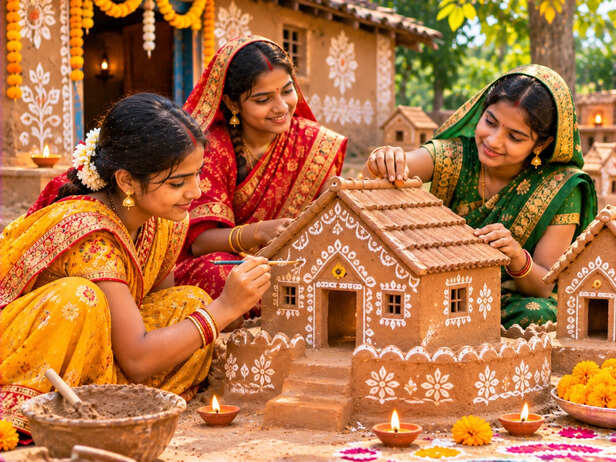
![Traditional Gharaunda Houses Made Before Diwali in Bihar]()
Traditional Gharaunda Houses Made Before Diwali in Bihar
Image credit : CHATGPT(AI)
Gharaunda is a traditional Diwali activity practised in several parts of Bihar, particularly among young girls. Before the festival, they build miniature houses in their courtyards using mud, bamboo sticks and other simple materials. Once the structure is ready, they decorate it with a coating of lime and give it the appearance of a real home. For many families, making Gharaunda is a cherished childhood tradition passed down through generations. It is not simply about creating a beautiful miniature house but also about expressing hopes for a happy and prosperous family life.
Why Do Girls Build These Little Houses?
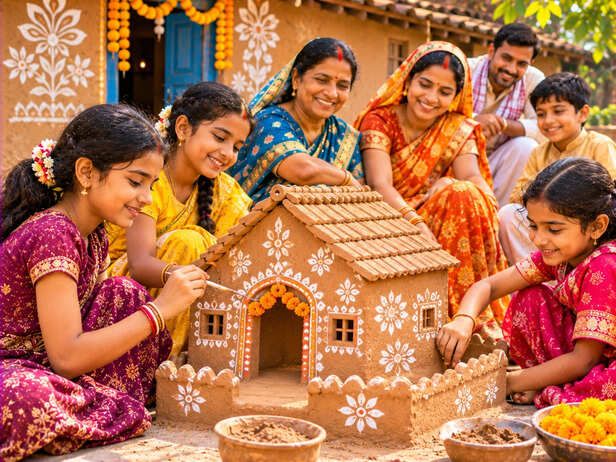
![Girls Decorating Their Handmade Gharaunda Houses]()
Girls Decorating Their Handmade Gharaunda Houses
Image credit : CHATGPT(AI)
The most beautiful part of this tradition is that girls often make these houses with their own hands. They collect mud, shape the walls, prepare the roof and decorate every corner with care. What begins as a simple activity becomes a special family memory. The little house represents the dream of having a happy home filled with love, peace and prosperity. In traditional beliefs, Gharaunda is also associated with the wish for a daughter's future home to remain blessed with happiness and abundance. Every little decoration carries a heartfelt wish.
The Special Meaning of Kulhiya Chukiya
Once the Gharaunda is ready, the next important step is arranging Kulhiya and Chukiya. These are tiny clay pots that are filled with Khil, or puffed rice, and Batasha, traditional sugar sweets. Their presence is not just decorative. According to local beliefs, filling these little pots symbolises a home where food is always available and no family member ever has to go hungry. The sight of these small vessels filled with sweets makes the entire Gharaunda look like a miniature household ready to welcome happiness and prosperity.
The Connection With Lord Rama's Return
Diwali is traditionally celebrated to mark Lord Rama's return to Ayodhya after 14 years of exile. According to the Ramayana tradition, the people of Ayodhya welcomed him with lamps and celebrations. This story is also connected with the Gharaunda tradition through popular local beliefs. The little houses symbolise the joy of rebuilding a home and welcoming prosperity after a long period of separation. Girls create these miniature homes as a symbolic expression of that happiness. Although the exact historical origin of this ritual is not firmly established, its connection with the Ramayana remains an important part of its cultural meaning.
Why Are Khil and Batasha Offered to Brothers?
The celebration does not end after decorating the Gharaunda. The following day, the Khil and Batasha kept in the Kulhiya and Chukiya are shared with brothers. This small ritual adds another layer of affection to the celebration. The sweets become a way of expressing love, family bonding and good wishes. For children, it is also one of the most enjoyable parts of the festival. What starts with building a little house together ends with sharing sweets and creating memories that remain special long after Diwali is over.
A Childhood Memory That Deserves to Stay Alive
Today, ready-made Gharaunda houses are easily available in markets. They may save time, but they cannot fully replace the joy of collecting mud, shaping tiny walls and decorating a house with your own hands. For those who grew up in Bihar, the smell of wet soil and the sight of Kulhiya Chukiya can bring back memories of childhood Diwali celebrations. This tradition reminds us that festivals are not only about expensive decorations and gifts. Sometimes, their sweetest moments come from the simplest things we create together.
The Beautiful Wish Behind Every Gharaunda
There is a beautiful blessing associated with this tradition: may your home always remain as full and happy as this little Gharaunda. The mud house may be small, but the wishes placed inside it are big. It represents a future where there is enough food for everyone, happiness in every corner and love among family members. That is what makes this Bihar Diwali tradition so special. Long after the clay pots are empty and the decorations are gone, the memories of building that little home continue to live in the hearts of those who made it.
Unlock insightful tips and inspiration on personal growth, productivity, and well-being. Stay motivated and updated with the latest at
My Life XP.