Hanuman carried a mountain to save Lakshmana, yet a village associated with that very mountain is known for a tradition of not worshipping him. Why would people honour the mountain but refuse to celebrate the deity who carried it? The answer lies in the story of Dronagiri, the Sanjeevani herb and a local belief connected with the mountain’s removal. Another fascinating thread links the story to Lord Shiva and the demon king Jalandhara. Together, these traditions raise a deeper question about devotion, power and the importance of respecting what belongs to others.
The Mountain That Connects Two Powerful Stories
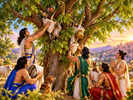
![Hanuman Meditating on Gandhamadan Mountain]()
Hanuman Meditating on Gandhamadan Mountain
Image credit : chatgpt(ai)
The Dronagiri story begins with a fascinating connection between Lord Shiva and two very different figures: Jalandhara and Hanuman. In the traditional narrative shared here, both are associated with Shiva, but their actions and intentions differ greatly. Jalandhara represents the destructive use of power, while Hanuman represents devotion, service and selflessness. The mountain becomes the link between their stories. To understand why Dronagiri holds such a special place in this legend, we first need to look at the battle in which Jalandhara allegedly removed the mountain from its place.
Why Jalandhara Took Away Dronagiri
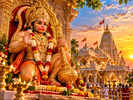
![Hanuman Ji Resting After the Lanka Battle]()
Hanuman Ji Resting After the Lanka Battle
Image credit : chatgpt(ai)
According to the version of the story described here, Jalandhara was fighting the gods when he noticed that the defeated devas kept returning to life. When he asked his guru, Shukracharya, for an explanation, he was told about the life-restoring herbs associated with Dronagiri. Jalandhara then lifted the mountain and threw it into the sea, interrupting the battle. The episode presents the mountain as more than a piece of land: it holds the power to restore life. This account should be treated as a traditional narrative rather than a verified historical event.
How Shiva Restored the Cosmic Balance
The story continues with Lord Shiva defeating Jalandhara and restoring order. In the version presented here, Dronagiri is returned to its place after the conflict. The mountain’s journey does not end there, however. Much later, during the Treta Yuga, another crisis brings it into the Ramayana tradition. This time, the mountain is connected with Hanuman’s mission to save Lakshmana. The two episodes create an interesting parallel: one figure removes the mountain during a conflict, while another carries it to protect a life. Their motives become central to the story’s moral meaning.
Why Hanuman Carried the Mountain
During the battle in Lanka, Lakshmana is gravely wounded, and Hanuman is sent to find the life-restoring herb known as Sanjeevani. Unable to identify the exact herb, he carries the mountain so that the needed medicinal plant can be found. His decision comes from urgency and devotion: he must save Lakshmana, and he cannot afford to return with the wrong plant. In popular retellings, Hanuman later returns the mountain to its place. The episode celebrates his strength, but its emotional centre is his willingness to do whatever is necessary to help someone in danger.
The Shiva Connection Behind Both Figures
The story draws a symbolic connection between Jalandhara and Hanuman through Lord Shiva. Hanuman is widely revered as a form or manifestation of Rudra, while Jalandhara’s origin is also connected with Shiva in Hindu mythology. Their characters, however, are very different. Hanuman uses his strength in the service of dharma, while Jalandhara’s story involves conflict and opposition to the gods. The contrast suggests that power alone does not determine whether an action is righteous. Intention, responsibility and the way strength is used matter just as much. This is a thematic interpretation, not a universal scriptural explanation for who could lift Dronagiri.
Why Dronagiri Village Remembers Hanuman Differently
Dronagiri village in Uttarakhand’s Chamoli district is associated with a local tradition in which some villagers refrain from worshipping Hanuman. According to a widely shared explanation, the mountain is sacred to the community, and Hanuman’s act of carrying it away is remembered as a loss because he did not seek permission. This is generally described as a matter of local belief and cultural memory, not hatred towards Hanuman. Customs can differ among families and residents, so the practice should not be attributed to every villager without verification. The tradition offers a different perspective on a story usually told only as a heroic feat.
The Lesson Hidden in the Dronagiri Story
Hanuman’s journey is celebrated for saving Lakshmana, while Dronagiri village’s tradition draws attention to the mountain’s connection with its community. Both perspectives can be understood without dismissing either devotion or local belief. The story reminds us that an act can serve an urgent purpose while still raising questions about what is taken, who is affected and whether permission was possible. In everyday life, strength is most meaningful when it is guided by compassion and responsibility. The enduring appeal of Dronagiri lies in this contrast: a mountain can represent both the power to save a life and the importance of respecting what others hold sacred.
Power Means More Than Strength
The legends of Jalandhara, Hanuman and Dronagiri bring together Shiva’s mythological connections, the healing power of Sanjeevani and a village’s distinctive religious tradition. Hanuman’s journey to save Lakshmana remains one of the best-known examples of devotion and courage in the Ramayana. The local Dronagiri tradition adds another perspective by remembering the mountain as part of the community’s sacred landscape. Together, these stories invite us to think beyond physical strength. True power is not simply the ability to lift a mountain; it is the wisdom to understand why an action matters, whom it affects and how it can serve a greater good.
Unlock insightful tips and inspiration on personal growth, productivity, and well-being. Stay motivated and updated with the latest at My Life XP.