Why Did Bhishma Accept Death at Shikhandi’s Hands? The Untold Story
Noopur Kumari | Aug 15, 2026, 11:00 IST
Bhishma did not die because Shikhandi was stronger than him. According to the Mahabharata, Bhishma recognised Shikhandi as the person who had been Amba in a previous life and refused to fight someone whom he regarded as a woman. Arjuna used this situation to shoot his arrows at Bhishma while Shikhandi stood before him. Yet the story goes much deeper than a battlefield strategy. Bhishma's own decisions involving Amba had helped create a chain of events that eventually brought Shikhandi before him. His fall therefore carries themes of destiny, personal vows, consequences and the complicated relationship between duty and justice.

Bhishma Accept Death at Shikhandi’s Hands
Image credit : ChatGPT (ai)
Bhishma Pitamah was one of the greatest warriors of the Mahabharata, yet even he could not escape the consequences of choices made long before the Kurukshetra war. His fall raises a fascinating question: Was Bhishma’s death at the hands of Shikhandi truly destined? The answer is closely connected with Amba, Bhishma’s vow, the complicated succession of Hastinapura and the chain of events that eventually led to the great war. Shikhandi did not simply appear as an ordinary warrior on the battlefield. His identity carried the unresolved story of Amba, whose humiliation and determination became central to Bhishma’s final defeat.
![Bhishma Takes His Terrible Vow]()
Bhishma's life changed when he took his famous vow to remain unmarried and give up his claim to the throne so that his father, Shantanu, could marry Satyavati. The vow earned him the name Bhishma, but it also created complicated consequences for the Kuru dynasty. Later, Bhishma brought the princesses Amba, Ambika and Ambalika to Hastinapura for the marriage of his half-brother Vichitravirya. Amba, however, had already chosen King Salwa. Her life was suddenly caught between royal duty, Bhishma's decision and circumstances beyond her control.
![ChatGPT Image Aug 14, 2026, 09_51_18 PM]()
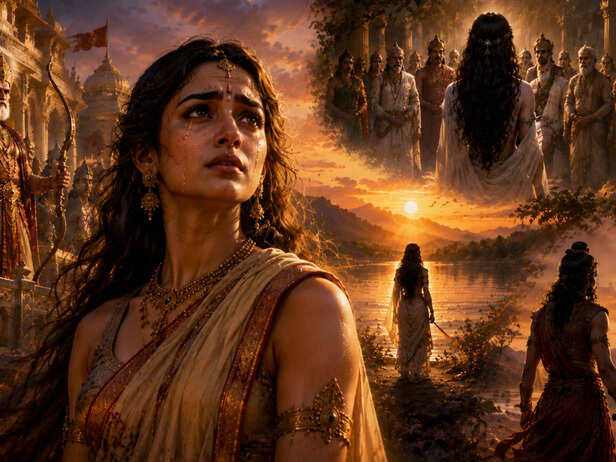
Amba wanted to return to Salwa after revealing her previous choice, and Bhishma allowed her to leave. But Salwa refused to accept her because she had been taken away by Bhishma. Amba then returned to Bhishma and asked him to marry her, but his vow prevented him from doing so. Her situation became increasingly desperate. She eventually held Bhishma responsible for the destruction of her future and developed a powerful desire for revenge. Her determination became so intense that it continued beyond her lifetime, eventually connecting her story with Shikhandi.
In the Mahabharata tradition, Amba performed severe austerities seeking a means to defeat Bhishma. She eventually received a divine assurance that she would become the cause of his death. She later died and was reborn as Shikhandi, born in the family of King Drupada. Shikhandi's story is unusual and complex, involving gender identity, destiny and a transformation that allowed the promise associated with Amba to be fulfilled. By the time of the Kurukshetra war, Shikhandi stood on the Pandava side. For Bhishma, however, Shikhandi represented the unresolved past he had never escaped.
Bhishma was one of the most formidable warriors in the Kuru army, but he had a specific reason for refusing to fight Shikhandi. He knew Shikhandi's connection with Amba and regarded Shikhandi as someone he should not attack. This decision became crucial during the tenth day of the war. The Pandavas understood that Bhishma's refusal created an opening. Arjuna stood behind Shikhandi and released his arrows, while Bhishma did not raise his weapons against Shikhandi. Thus, Shikhandi became the means through which Bhishma could finally be brought down.
Strictly speaking, saying that Shikhandi alone killed Bhishma oversimplifies the Mahabharata account. Shikhandi stood in front of Bhishma, but Arjuna fired the arrows that struck him. Bhishma chose not to fight Shikhandi, allowing Arjuna to attack without facing Bhishma's full resistance. Bhishma eventually fell onto a bed of arrows, but he did not immediately die. Because of his boon of choosing the time of his death, he remained alive until he decided to leave his body. Shikhandi was therefore central to Bhishma's fall, but Arjuna was the warrior whose arrows brought him down.
The Mahabharata rarely presents destiny as something completely separate from human action. Bhishma's fall can be understood through several connected causes: his vows, Amba's suffering, her determination, Shikhandi's later role and the decisions made during the war. Calling it simply “fate” misses the complexity of the story. Bhishma himself understood that his life was connected to the larger destiny of the Kuru dynasty. His strength could protect the kingdom for years, but he could not prevent every consequence created by the choices of those around him, including his own.
Bhishma's fall is one of the most powerful moments in the Mahabharata because it does not portray him simply as a hero or a victim. He was bound by extraordinary vows and devoted to the Kuru throne, yet some of his decisions contributed to circumstances that later became impossible to control. Shikhandi's presence on the battlefield brought Amba's unresolved story back into the heart of the war. In that sense, Bhishma's defeat was not merely a military event. It represented the return of an old consequence at the moment when the entire Kuru family's past was finally catching up with them.
Yes, in the Mahabharata's narrative, Shikhandi became the crucial instrument of Bhishma's fall, but the actual death blow came through Arjuna's arrows.
Bhishma recognised the connection between Shikhandi and Amba and chose not to fight. Arjuna used that opportunity to attack him. Bhishma then lay upon his bed of arrows and waited for the time he considered appropriate to leave his body.
The deeper message is even more fascinating. Shikhandi did not defeat Bhishma through greater physical strength. Shikhandi became the answer to an unresolved story from Bhishma's past.
And that is what makes Bhishma's fall one of the most haunting moments of the Mahabharata: the warrior who seemed almost impossible to defeat was ultimately brought down by a consequence he had been carrying with him for years.
The Vow That Changed Bhishma’s Life
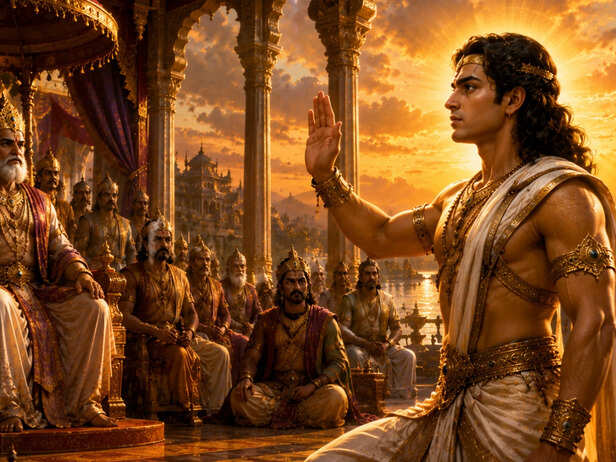
Bhishma Takes His Terrible Vow
Image credit : CHATGPT(AI)
Bhishma's life changed when he took his famous vow to remain unmarried and give up his claim to the throne so that his father, Shantanu, could marry Satyavati. The vow earned him the name Bhishma, but it also created complicated consequences for the Kuru dynasty. Later, Bhishma brought the princesses Amba, Ambika and Ambalika to Hastinapura for the marriage of his half-brother Vichitravirya. Amba, however, had already chosen King Salwa. Her life was suddenly caught between royal duty, Bhishma's decision and circumstances beyond her control.
Amba’s Life Was Shattered
ChatGPT Image Aug 14, 2026, 09_51_18 PM
Image credit : ChatGPT (AI)
Amba wanted to return to Salwa after revealing her previous choice, and Bhishma allowed her to leave. But Salwa refused to accept her because she had been taken away by Bhishma. Amba then returned to Bhishma and asked him to marry her, but his vow prevented him from doing so. Her situation became increasingly desperate. She eventually held Bhishma responsible for the destruction of her future and developed a powerful desire for revenge. Her determination became so intense that it continued beyond her lifetime, eventually connecting her story with Shikhandi.
From Amba to Shikhandi
Why Bhishma Would Not Fight Shikhandi
Was Shikhandi Really Bhishma’s Killer?
Was His Death Written by Destiny?
The Final Lesson of Bhishma’s Fall
So, Was Bhishma’s Death at Shikhandi’s Hands Destined?
Bhishma recognised the connection between Shikhandi and Amba and chose not to fight. Arjuna used that opportunity to attack him. Bhishma then lay upon his bed of arrows and waited for the time he considered appropriate to leave his body.
The deeper message is even more fascinating. Shikhandi did not defeat Bhishma through greater physical strength. Shikhandi became the answer to an unresolved story from Bhishma's past.
And that is what makes Bhishma's fall one of the most haunting moments of the Mahabharata: the warrior who seemed almost impossible to defeat was ultimately brought down by a consequence he had been carrying with him for years.