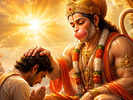
Why Did Kannappa Offer Meat to Lord Shiva? The Truth
Noopur Kumari | Aug 25, 2026, 12:00 IST
The story of Kannappa is remembered in South Indian Shaiva tradition as an extraordinary example of unconditional devotion. Known earlier as Thinnan, the hunter had no formal knowledge of worship, yet he treated the Shiva Linga as his beloved Lord. His offerings did not follow conventional temple customs, but his devotion was absolute. When Lord Shiva tested his faith through the miraculous bleeding of the Linga's eyes, Kannappa was ready to sacrifice even himself. The story ultimately reveals why sincere devotion is considered greater than outward appearance or ritual knowledge.

Kannappa’s Unbelievable Sacrifice for Lord Shiva
Image credit : ChatGPT(ai)
What would you offer your God if you knew nothing about rituals, mantras or temple traditions? A flower? Milk? Fruits? The story of Kannappa takes devotion in a completely unexpected direction. According to a beloved Shaiva tradition, Kannappa was a hunter who worshipped Lord Shiva with whatever he had, even offering food he had tasted himself. But his greatest test came when he saw blood flowing from the eyes of the Shiva Linga. What he did next was so extraordinary that Lord Shiva himself appeared before him. His story asks a powerful question: Is devotion measured by ritual, or by the love behind it?
![Kannappa Finds the Shiva Linga]()
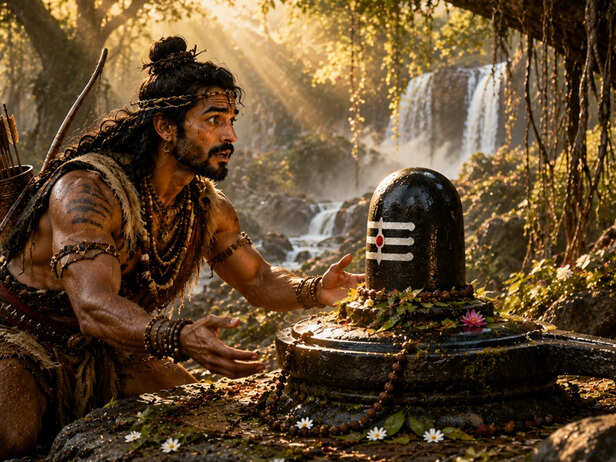
According to the traditional story, Thinnan was a hunter who lived in the forests around Kalahasti. He did not know Sanskrit mantras or formal methods of worship. One day, he discovered an ancient Shiva Linga and felt an immediate connection with Mahadev. From then on, he began visiting it every day. His way of worship was simple and unconventional. He carried water from the river in his mouth and poured it over the Linga. He also offered the best portion of the meat from his hunt. For Thinnan, these were not careless acts. They were gifts offered with genuine love.
![Kannappa’s Unconventional Shiva Puja]()
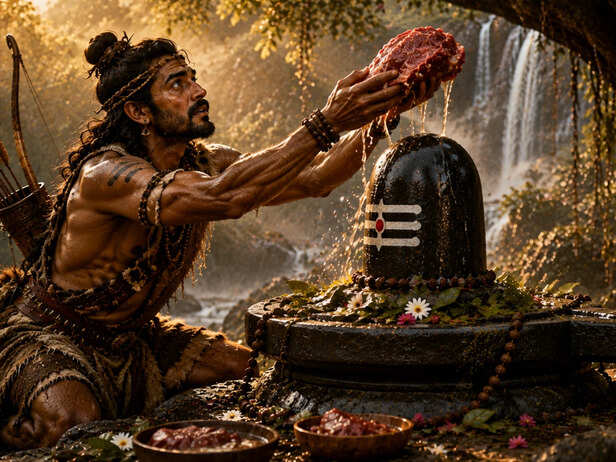
To a person familiar with temple rituals, Kannappa's worship might have seemed completely wrong. He did not bring flowers or traditional offerings. Yet the story places emphasis on his intention rather than his knowledge of ritual procedure. He treated Shiva as someone deeply close to him and wanted to give the very best he had. This creates the central tension in his story: Can devotion exist without perfect ritual? The Kannappa tradition answers this through his actions. His worship was unconventional, but his surrender was complete.
The story then takes a dramatic turn. To reveal Kannappa's extraordinary devotion, Lord Shiva is said to have tested him. One day, Kannappa noticed blood flowing from one of the eyes of the Shiva Linga. He was terrified. He did not stop to debate what had happened or wonder whether it was an illusion. He saw his beloved Lord in pain and immediately wanted to help. His response showed the intensity of his devotion. What happened next would turn this simple hunter into one of the most remembered devotees in Shaiva tradition.
Believing that Shiva's eye was injured, Kannappa decided to offer his own eye. According to the traditional account, he removed one of his eyes and placed it where the Linga's eye was bleeding. The bleeding stopped. But then blood appeared from the other eye of the Linga. Kannappa now faced an even greater challenge. He needed to locate the second spot despite having already lost one eye. He placed his foot as a marker and prepared to offer his remaining eye. At that moment, Lord Shiva appeared and stopped him.
Lord Shiva, moved by Kannappa's complete surrender, is traditionally said to have restored his eyes and blessed him. He was then known as Kannappa, a name associated with the devotee's extraordinary sacrifice. The deeper meaning of the story is not that devotees should imitate such physical sacrifice. Rather, it illustrates the Shaiva ideal of ananya bhakti, devotion without selfish calculation. Kannappa did not worship Shiva to gain wealth, status or recognition. He simply could not bear to see his beloved Lord in pain. His love was portrayed as instinctive, fearless and unconditional.
Kannappa's story remains powerful because it challenges the idea that spirituality is only about knowing every rule. Rituals have an important place in Hindu traditions, but devotional stories often emphasise the intention behind worship as well. Kannappa represents the devotee whose heart comes before formal knowledge. His story can inspire a simple lesson for modern life: sincerity matters. Whether someone prays through a mantra, meditation, service or quiet remembrance, genuine devotion is ultimately about the relationship they cultivate with the divine.
Kannappa is closely associated with Srikalahasti, an important Shaiva pilgrimage centre in Andhra Pradesh. His story has been preserved through South Indian devotional traditions and is particularly connected with the temple's sacred history. Rather than focusing only on the dramatic act of sacrifice, devotees remember Kannappa for the quality behind it: complete surrender to Shiva. His journey from a forest hunter to a revered devotee carries a lasting spiritual message. True devotion, the story suggests, is not about impressing the world. It is about offering the heart without conditions.
Unlock insightful tips and inspiration on personal growth, productivity, and well-being. Stay motivated and updated with the latest at My Life XP
A Hunter Finds Lord Shiva
Kannappa Finds the Shiva Linga
Image credit : ChatGPT (ai)
According to the traditional story, Thinnan was a hunter who lived in the forests around Kalahasti. He did not know Sanskrit mantras or formal methods of worship. One day, he discovered an ancient Shiva Linga and felt an immediate connection with Mahadev. From then on, he began visiting it every day. His way of worship was simple and unconventional. He carried water from the river in his mouth and poured it over the Linga. He also offered the best portion of the meat from his hunt. For Thinnan, these were not careless acts. They were gifts offered with genuine love.
His Worship Followed No Rules
Kannappa’s Unconventional Shiva Puja
Image credit : ChatGPT(ai)
To a person familiar with temple rituals, Kannappa's worship might have seemed completely wrong. He did not bring flowers or traditional offerings. Yet the story places emphasis on his intention rather than his knowledge of ritual procedure. He treated Shiva as someone deeply close to him and wanted to give the very best he had. This creates the central tension in his story: Can devotion exist without perfect ritual? The Kannappa tradition answers this through his actions. His worship was unconventional, but his surrender was complete.
Shiva Decides to Test His Devotion
Kannappa Makes an Unthinkable Sacrifice
Shiva Reveals the Power of True Bhakti
Why Kannappa’s Story Still Matters
The Legacy of Kannappa Lives On
Unlock insightful tips and inspiration on personal growth, productivity, and well-being. Stay motivated and updated with the latest at My Life XP