What would you do if you were so hungry that even the person you were sent to chase escaped? Kirtimukha faced exactly this strange situation. Created by Lord Shiva in a moment of anger, this terrifying being chased Rahu but was left without a target when Shiva forgave him. Then came an unexpected command: eat yourself. Kirtimukha obeyed, and his story took a turn that made him one of the most recognisable guardian faces in Hindu temple architecture.
Who Was Kirtimukha?
![Rahu Approaches Lord Shiva During Meditation]()
Rahu Approaches Lord Shiva During Meditation
Image credit : chatgpt(ai)
Kirtimukha is a mysterious figure in Hindu tradition, known for his terrifying face and unusual origin. His name is commonly understood as “glorious face” or “face of glory”. Unlike ordinary demons in mythological stories, Kirtimukha is not remembered only for destruction. He is closely associated with Lord Shiva and is often seen as a guardian figure. His story is especially interesting because he did not become important through a victory in battle, but through an extraordinary act of obedience.
Rahu Angers Lord Shiva
![Shiva Faces the Crowned Warrior]()
Shiva Faces the Crowned Warrior
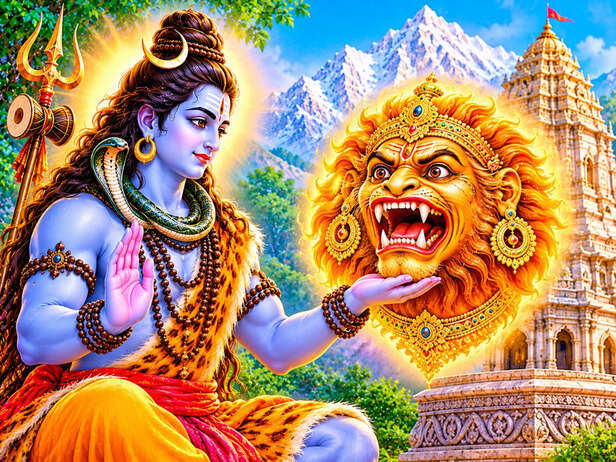
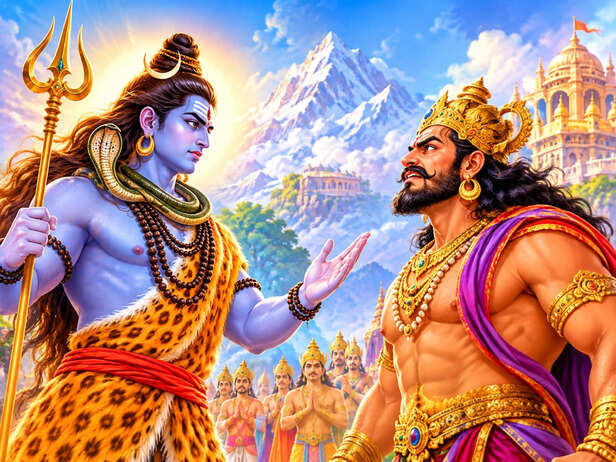
According to a popular Shaiva legend, Lord Shiva was deep in meditation when Rahu disturbed the crescent moon resting on his head. Rahu's action angered Shiva, and his divine power took a fierce form. From Shiva's third eye emerged a terrifying being, later known as Kirtimukha. His purpose was clear: pursue Rahu and punish him for his actions. The story begins with a moment of divine anger, but its most unusual lesson comes after the chase ends.
Shiva Creates a Fearsome Being
The being created by Shiva was unlike anything Rahu expected. Kirtimukha had an enormous appetite and a frightening appearance. As soon as he emerged, he began chasing Rahu, determined to devour him. Rahu realised that he could not escape the creature's power. Terrified, he turned back to Shiva and begged for forgiveness. What began as a punishment was about to become a lesson in mercy, because Shiva was ready to forgive the very being Kirtimukha had been sent to attack.
Rahu Receives Shiva's Forgiveness
Rahu quickly approached Shiva and asked him to spare his life. Shiva, known as Bholenath for his forgiving nature, accepted Rahu's apology. The chase was over, but Kirtimukha was still there, burning with hunger. He had followed Shiva's command and was ready to eat Rahu. Now that Rahu had been forgiven, he had no target left. Kirtimukha turned to Shiva with a simple question: if he could not eat Rahu, what was he supposed to eat?
Shiva Gives Him an Unusual Command
Kirtimukha told Shiva that he was still hungry and needed something to satisfy his appetite. Shiva then gave him an astonishing instruction: eat your own body. Kirtimukha did not question the command. He began consuming himself, starting with his body and continuing until only his face remained. The creature that had been created to destroy another being ended up consuming itself. This strange moment became the central part of the Kirtimukha legend.
The Demon Receives a Divine Boon
Shiva was pleased with Kirtimukha's obedience and granted him a special boon. According to the legend, his face would be placed above doorways and entrances, where it would serve as a guardian. It would consume negative influences and protect the space beneath it. This is why Kirtimukha is often associated with temple entrances. His frightening appearance is not meant only to inspire fear; it represents a protective force watching over a sacred space.
Why Is Kirtimukha Seen on Temples?
Look above the entrance of many traditional Hindu temples, and you may notice a fierce face with wide eyes, prominent teeth and a gaping mouth. This motif is often identified as Kirtimukha. In temple art, it is used as a protective symbol and is also known as a face of glory. Its placement marks the transition into a sacred space. The story offers a deeper way to understand this image: a being once driven by hunger became a guardian through Shiva's blessing.
Kirtimukha's story is unusual because it does not end with a demon being defeated. It ends with a frightening creature receiving a place of honour. His transformation from a hungry being into a guardian carries a simple message: even fierce energy can find a purpose when guided by divine wisdom. The next time you see Kirtimukha above a temple entrance, remember the legend behind that face. It is not just a decoration; it is a symbol of protection, obedience and transformation.
Unlock insightful tips and inspiration on personal growth, productivity, and well-being. Stay motivated and updated with the latest at
My Life XP.