What if Rama's victory over Ravana was not the end of the battle? What if another, even more powerful Ravana was still alive? The Adbhuta Ramayana tells a fascinating story about a thousand-headed Ravana, a battle that leaves Lord Rama unconscious, and Goddess Sita revealing a form of divine power that nobody in the royal court expected. It begins with an unexpected moment: Sita laughing during Rama's coronation. Her laughter holds a secret that changes how we understand her role in the story.
Why Did Sita Laugh During Rama's Coronation?
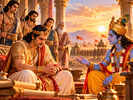
![Sita's Unexpected Laughter in Rama's Royal Court]()
Sita's Unexpected Laughter in Rama's Royal Court
Image credit : chatgpt(ai)
After Rama returned to Ayodhya and preparations began for his coronation, the sages gathered to praise his victory over the ten-headed Ravana. Everyone celebrated Rama's courage, but Sita suddenly began to laugh. Her reaction surprised the entire assembly. Sage Vashishtha asked her why she was laughing at such a moment. Sita explained that the praise was incomplete because Rama had defeated only one Ravana. Another, far more powerful enemy was still alive. Her words left the court astonished and opened the door to a story that few readers encounter in the familiar Ramayana narrative.
The Secret of the Thousand-Headed Ravana
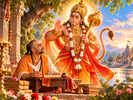
![Ravana’s Golden Confrontation]()
Ravana’s Golden Confrontation
According to the Adbhuta Ramayana, the second Ravana had a thousand heads and possessed immense strength. Unlike the ten-headed Ravana who abducted Sita, this formidable enemy remained undefeated. Sita explained that as long as he lived, complete peace could not be established. Rama understood that another battle awaited him. He gathered his army and travelled in the Pushpaka Vimana towards the enemy's realm. The story shifts from the celebration of victory to a new challenge, reminding readers that even a great triumph may not bring an end to every struggle.
Rama Faces a Battle Beyond His Strength
Rama arrived on the battlefield with his army and began attacking the thousand-headed Ravana with a shower of arrows. However, the enemy proved extraordinarily powerful. He launched a fierce counterattack, striking Rama so forcefully that the prince lost consciousness and fell from the Pushpaka Vimana onto the battlefield. When news of Rama's condition reached Ayodhya, the situation changed completely. The warrior who had defeated the ten-headed Ravana now lay unconscious before a new enemy. This time, the answer would not come from another display of Rama's strength alone.
Sita Steps Onto the Battlefield
Upon hearing that Rama had fallen unconscious, Sita decided to go to the battlefield herself. As she approached the enemy, her gentle appearance began to give way to a fierce and powerful form. The goddesses and divine attendants associated with Shakti, including yoginis, dakinis and matrikas, arrived and joined the battle against the demons. Sita was no longer presented simply as the queen waiting for her husband to return. In this account, she became the force that the battlefield needed. Her transformation prepares the reader for the most striking moment of the story.
Sita Reveals Her Fierce Bhadrakali Form
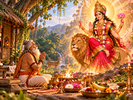
Sita manifested her fierce Bhadrakali form and confronted the thousand-headed Ravana directly. With her sword, she struck down the mighty demon, ending his reign of terror. As Ravana fell, his army was also defeated. The woman whose laughter had puzzled the sages now stood as the central force behind the victory. This episode from the Adbhuta Ramayana gives Sita a powerful role in the battle against evil. Her strength is not limited to patience, sacrifice or devotion. She also embodies the fierce energy required to confront a threat that appears impossible to overcome.
Why Did Sita's Victory Shake the Earth?
After defeating the thousand-headed Ravana, Sita, in her fierce Bhadrakali form, began to dance in celebration of the victory. Her dance became so intense that the earth itself seemed to tremble. At that moment, Rama regained consciousness and witnessed a sight he had never seen in this way before: his gentle Janaki manifesting the fierce power of the Goddess. He understood the meaning behind her laughter in the royal court. The victory over Ravana was not simply a story of a single warrior's strength. It was also a story of the divine power embodied by Sita, which had played a decisive role in ending the threat.
The Deeper Meaning of Rama and Sita's Story
After witnessing Sita's fierce form, Rama began reciting the Sahasranama, the thousand names of Sita, acknowledging her divine power. Gradually, she returned to her gentle form. The episode offers a deeper understanding of the relationship between Rama and Sita. In the story's spiritual interpretation, Rama represents consciousness, while Sita represents Shakti, or divine energy. Neither should be understood in isolation from the other. The tale invites readers to look beyond familiar roles and recognise the power, courage and strength that may remain hidden beneath a gentle appearance.
Unlock insightful tips and inspiration on personal growth, productivity, and well-being. Stay motivated and updated with the latest at
My Life XP.