Why Did Vishnu Take the Vaman Avatar? The Hidden Story
Noopur Kumari | Sept 12, 2026, 12:00 IST
Why did Lord Vishnu appear as a dwarf Brahmachari before King Mahabali when Bali was known as a generous and righteous ruler? The answer lies in a promise that seemed incredibly small but changed everything. According to the Bhagavata Purana, Vaman asked for three steps of land, only for those three steps to reveal the true meaning of humility, devotion and keeping one’s word.

he most powerful king in the three worlds was defeated not by a great
Image credit : ChatGPT(ai)
What if the most powerful king in the three worlds was defeated not by a great warrior, but by a small Brahmachari asking for only three steps of land? This is the fascinating story behind Lord Vishnu’s Vaman Avatar and King Mahabali. Mahabali was known for his generosity, truthfulness and devotion to his word. Yet his growing power began to disturb the balance between the worlds. What happened next became one of the most memorable stories in Hindu tradition, and it is also closely connected with the festival of Onam.
![King Mahabali in His Royal Court]()
The story begins with King Mahabali, a powerful ruler from the Asura lineage. According to the Bhagavata Purana, he was known for his generosity and strong sense of duty. Anyone who came to his door seeking something was rarely turned away. Over time, Bali’s influence expanded greatly, and he gained control over the three worlds. His growing power eventually created concern among the Devas. Yet Bali was not portrayed simply as a cruel king. His generosity and devotion were important parts of his character, making what happened next far more meaningful than an ordinary battle between good and evil.
![Mahabali Ruling the Three Worlds]()
As Mahabali’s influence continued to grow, the Devas became concerned about losing their position. They approached Lord Vishnu for help, and Vishnu chose an unusual solution. Instead of appearing as a warrior and fighting Bali directly, he took the form of Vaman, a young Brahmachari. This choice is central to the story. Vaman did not arrive with an army or demand that Bali surrender his kingdom. He simply approached the king during a sacrificial ceremony and asked for three steps of land. Bali, true to his reputation as a generous ruler, agreed without hesitation.
The request sounded almost too small for a king as powerful as Mahabali. Three steps of land seemed insignificant compared with the vast kingdom under his control. Yet Vaman’s request carried a purpose that Bali could not see at first. Once the king granted the promise, Vaman revealed his cosmic form. With his first step, he covered the Earth. With his second, he reached across the heavens. Suddenly, there was nowhere left for the third step. The simple request had become a moment that tested Bali’s character, wisdom and commitment to his word.
The most powerful moment of the story comes when Vaman asks where he should place his third step. Mahabali understood that he had made a promise and could not take it back. He bowed before Vaman and offered his own head as the place for the final step. In this moment, the story shifts from power to character. Bali had lost his kingdom, but he refused to break his word. Vishnu was pleased with this devotion and integrity. Rather than treating Bali as an ordinary defeated enemy, he granted him an important place in the divine order.
After accepting Bali’s surrender, Lord Vishnu granted him the kingdom of Sutala, described in Hindu tradition as a magnificent realm. Bali was also blessed with the presence and protection of Vishnu. The ending is significant because the story does not simply portray Bali as someone who was defeated and punished. Instead, his willingness to honour his promise became the reason for divine grace. The story therefore carries a deeper lesson about humility and devotion. Sometimes, losing power does not mean losing honour. Bali’s actions allowed him to remain remembered as a ruler whose word mattered more than his pride.
The story of Mahabali is closely connected with Onam, especially in Kerala. According to popular tradition, Mahabali is believed to return once each year to see his people. Onam celebrations honour this memory through elaborate flower arrangements, traditional feasts, cultural events and community gatherings. The festival therefore carries more than a festive atmosphere. It remembers a king whose people were said to have loved him deeply. While different traditions tell the story in their own ways, Mahabali’s association with Onam has become an important part of Kerala’s cultural identity and religious heritage.
The Vaman Avatar story leaves behind a powerful question: what makes a person truly great? Mahabali possessed enormous wealth and power, yet the moment remembered most strongly is when he willingly offered his own head rather than break his promise. Vaman’s three steps transformed the story from a tale of conquest into a lesson about humility, devotion and surrender. It also explains why Mahabali continues to hold a special place in Hindu tradition and in the cultural memory of Onam. His story reminds us that true greatness is not always measured by how much we possess, but by the values we refuse to abandon.
Unlock insightful tips and inspiration on personal growth, productivity, and well-being. Stay motivated and updated with the latest at My Life XP.
King Bali Was Known for Giving
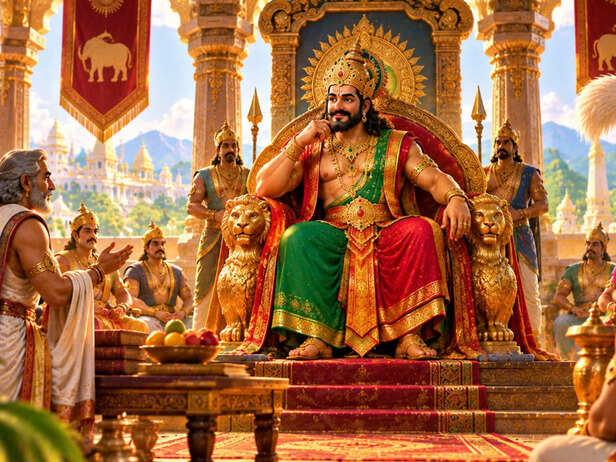
King Mahabali in His Royal Court
Image credit : ChatGPT(ai)
The story begins with King Mahabali, a powerful ruler from the Asura lineage. According to the Bhagavata Purana, he was known for his generosity and strong sense of duty. Anyone who came to his door seeking something was rarely turned away. Over time, Bali’s influence expanded greatly, and he gained control over the three worlds. His growing power eventually created concern among the Devas. Yet Bali was not portrayed simply as a cruel king. His generosity and devotion were important parts of his character, making what happened next far more meaningful than an ordinary battle between good and evil.
His Power Changed the Balance
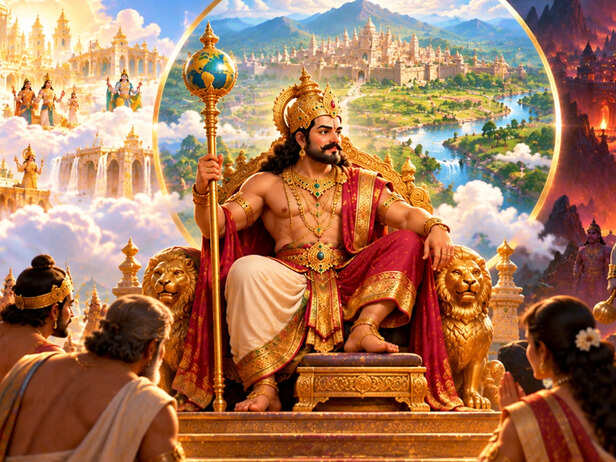
Mahabali Ruling the Three Worlds
Image credit : ChatGPT (ai)
As Mahabali’s influence continued to grow, the Devas became concerned about losing their position. They approached Lord Vishnu for help, and Vishnu chose an unusual solution. Instead of appearing as a warrior and fighting Bali directly, he took the form of Vaman, a young Brahmachari. This choice is central to the story. Vaman did not arrive with an army or demand that Bali surrender his kingdom. He simply approached the king during a sacrificial ceremony and asked for three steps of land. Bali, true to his reputation as a generous ruler, agreed without hesitation.
Vaman Asked for Three Steps
Bali Offered His Own Head
Vishnu Gave Bali a New Kingdom
Why Bali Is Linked With Onam
The Real Meaning of Vaman’s Three Steps
Unlock insightful tips and inspiration on personal growth, productivity, and well-being. Stay motivated and updated with the latest at My Life XP.