Imagine seeing someone lie flat on the road, get up, take a few steps and repeat the same movement all the way to a Chhath ghat. Why would anyone choose such a physically demanding way to reach a place of worship? This practice is not simply an unusual sight during Chhath Puja. Known in some communities as Bhui Pari or Kashti Pratha, it is an expression of devotion and gratitude. For many devotees, it is a promise fulfilled after a heartfelt wish comes true.
What Is the Bhui Pari Tradition?
![Devotees Follow the Bhui Pari Ritual]()
Devotees Follow the Bhui Pari Ritual
Image credit : chatgpt(ai)
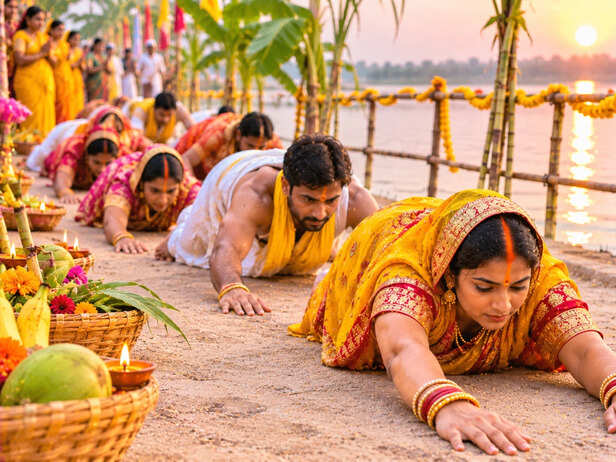
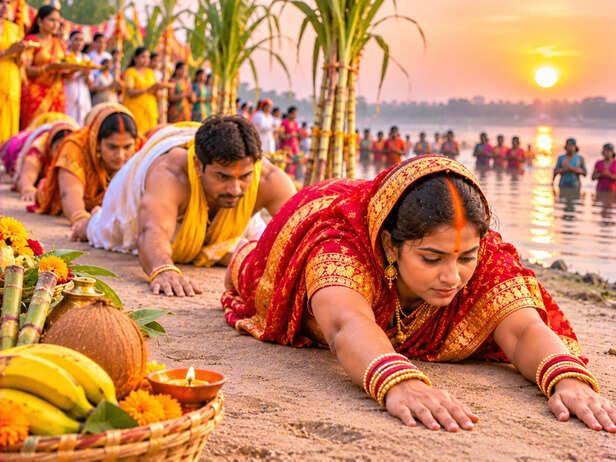
During Chhath Puja, some devotees follow a demanding ritual in which they repeatedly lie flat on the ground and move forward towards the ghat. This practice is known in some regions as Bhui Pari or Kashti Pratha. The devotee lies down, marks the distance reached, gets up and repeats the movement. The journey may cover a considerable distance, depending on where the devotee begins. For those who follow this tradition, every movement is an expression of faith and a fulfilled religious vow.
Why Do Devotees Make This Difficult Journey?
![Devotional Chhath Ritual at Sunset]()
Devotional Chhath Ritual at Sunset
Image credit : chatgpt(ai)
The practice is often connected with a mannat, or a heartfelt wish made to Chhathi Maiya. A person may promise to perform this ritual if a wish is fulfilled, such as the recovery of a loved one or the well-being of their family. Once the wish comes true, they fulfil their promise by undertaking the journey to the ghat. The physical effort becomes a personal expression of gratitude. It is not a compulsory ritual for every Chhath devotee, but a practice followed by some families and communities.
Standing in Water Is Another Important Vow
One of the most recognised parts of Chhath Puja is offering arghya to the Sun while standing in water. Devotees enter a river, pond or other water body and offer prayers during sunset and sunrise. Some people undertake this observance as part of their regular Chhath fast, while others may connect it with a personal vow. The ritual is performed with offerings such as fruits, sugarcane and traditional prasad. It expresses devotion to the Sun God and gratitude for the energy and life that sunlight supports.
Why Do Some Devotees Perform Chhath by Begging?
Another lesser-known practice is performing Chhath after seeking alms. Some devotees who have made a particular vow choose to collect food or other offerings from people rather than arrange everything themselves. The practice is connected with humility, surrender and gratitude. It is not followed by everyone, and customs can differ between communities. For those who undertake it, the act is a way of fulfilling a promise made to Chhathi Maiya after receiving a blessing.
The Tradition of Offering a Child's First Haircut
When parents pray for a child, they may make a vow to Chhathi Maiya for the child's well-being. In some families, after the wish is fulfilled, the child's first haircut, known as mundan, is offered as part of their thanksgiving. The ceremony may take place during Chhath or be associated with the family's chosen religious occasion. For parents, it is an emotional moment that connects their child's growth with their faith and gratitude. The custom varies across regions and households.
The Meaning Behind These Chhath Rituals
These practices may look different, but they share a common feeling: gratitude. Whether someone undertakes Bhui Pari, stands in water for worship, seeks alms or fulfils a child's mundan vow, each ritual reflects a personal connection with Chhathi Maiya. Chhath is also known for its focus on the Sun, nature and the elements that sustain life. These traditions are passed down through families, keeping local beliefs and community bonds alive across generations.
Why Chhath Is More Than a Festival
Chhath Puja is not only about fasting and offering arghya. It is also about promises, family prayers and the effort people make to express their gratitude. The sight of devotees travelling towards the ghat through Bhui Pari reflects how deeply personal faith can be. At the same time, these physically demanding practices should never be treated as compulsory. Devotion can be expressed in different ways, and anyone undertaking a strenuous ritual should consider their health and safety.
Unlock insightful tips and inspiration on personal growth, productivity, and well-being. Stay motivated and updated with the latest at
My Life XP.