Why Do Hindu Puranas Tell Different Stories About God
Noopur Kumari | Aug 19, 2026, 15:00 IST
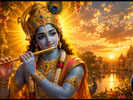
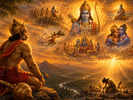
The different stories found in the Puranas can be understood through several traditional concepts, including different perspectives, devotional focus, the three gunas and kalpa-bheda. Each Purana often places a particular deity or principle at the centre of its narrative, allowing the reader to focus deeply on that path. Traditional classifications also associate the major Puranas with sattva, rajas and tamas. Meanwhile, the concept of different kalpas offers a framework for understanding variations in descriptions of cosmic events. Together, these ideas suggest that the Puranic tradition is far more layered than a simple question of “which story is correct?”

Puranas, Different Stories
Image credit : ChatGPT(AI)
Have you ever wondered why different Hindu Puranas sometimes describe the same divine event in completely different ways?
If the Puranas are traditionally associated with Maharshi Ved Vyasa, why do their stories appear to disagree? Why does one text place Vishnu at the centre, while another gives Shiva or Devi the highest position?
At first, this can look like a contradiction.
But there is another way to understand these traditions.
Imagine standing outside a magnificent palace with several windows. One person sees the garden, another sees the grand entrance, while a third sees the foundation. Are any of them necessarily wrong?
The ancient tradition offers a similar way of looking at the many Puranic narratives.
![A grand palace viewed through different windows]()
Think about three people looking at the same enormous palace from different windows. One notices the garden. Another sees the central hall. The third sees the foundations. Their descriptions sound different, but each person is describing something they genuinely observed. The Puranic tradition can be approached in a similar way. The divine is presented as vast and difficult to capture through a single narrative. Different texts highlight different aspects of that reality. This does not necessarily mean every detail should be treated as historically identical. Rather, the stories can carry different theological, devotional and symbolic purposes.
![Shiva and Vishnu represented in devotional traditions]()
One of the most striking features of the Puranas is that different texts may present different deities as supreme. A Shaiva text naturally gives special prominence to Shiva, while Vaishnava traditions place Vishnu or his manifestations at the centre. This can be understood as a devotional focus. If a person is studying Shiva through the Shiva Purana, the narrative repeatedly directs attention toward Shiva's qualities, stories and teachings. The same principle works in Vaishnava traditions centred on Vishnu. Rather than viewing this only as competition, it can be understood as a way of developing deep devotion through a chosen form of the divine.
Hindu philosophy describes three fundamental qualities, known as sattva, rajas and tamas. Sattva is associated with clarity and harmony, rajas with activity and desire, and tamas with inertia and darkness. Traditional Puranic classifications sometimes group texts according to these qualities. However, these classifications vary across traditional sources, so they should not be treated as a simple modern ranking system. The deeper idea is that spiritual teachings can be approached through different temperaments and paths. Just as people differ in personality and inclination, religious literature can speak to different needs, questions and forms of devotion.
Another fascinating concept is kalpa-bheda, or differences associated with cosmic cycles. Hindu cosmology describes creation through enormous cycles involving kalpas, manvantaras and yugas. Within this framework, variations between accounts can sometimes be understood as belonging to different cosmic contexts. This is one traditional way of approaching apparent differences between Puranic narratives. It is important, however, to distinguish traditional cosmological belief from scientifically established history. The Puranas are sacred literature with theological, philosophical and cultural significance, and their accounts should not automatically be treated as modern historical records.
The answer depends on what we mean by “contradiction.” Some passages across Hindu texts genuinely present different versions of events, genealogies or theological claims. Scholars therefore study them as products of a long and complex literary tradition rather than assuming every account must match word for word. At the same time, devotees may understand these differences through concepts such as divine perspective, kalpa-bheda and the supremacy of one's chosen deity. Both approaches can exist as long as we recognise the difference between theological interpretation and historical-critical analysis.
Perhaps the most useful question is not simply, “Which Purana is right?” A deeper question is, “What is this story trying to teach?” One narrative may explore devotion, another the nature of dharma, another the power of divine grace, and another the cycles of creation. When read thoughtfully, these stories can become more than competing versions of mythology. They become different doors into Hindu thought. The reader can appreciate the tradition while also recognising that the Puranas developed across different periods and communities, carrying layers of theology, symbolism and cultural memory.
The Puranas were never simply a collection of identical stories repeated eighteen times. They represent a vast and diverse body of Hindu sacred literature, with different theological emphases, traditions and narrative purposes. That is why reading them only as competing history books can miss much of their meaning. The palace analogy brings the idea back to something simple. Different windows can reveal different parts of something far greater than the window itself. The real challenge is not forcing every story into one narrow explanation, but understanding the tradition with curiosity, context and respect.
Unlock insightful tips and inspiration on personal growth, productivity, and well-being. Stay motivated and updated with the latest at My Life XP.
If the Puranas are traditionally associated with Maharshi Ved Vyasa, why do their stories appear to disagree? Why does one text place Vishnu at the centre, while another gives Shiva or Devi the highest position?
At first, this can look like a contradiction.
But there is another way to understand these traditions.
Imagine standing outside a magnificent palace with several windows. One person sees the garden, another sees the grand entrance, while a third sees the foundation. Are any of them necessarily wrong?
The ancient tradition offers a similar way of looking at the many Puranic narratives.
One Reality, Many Perspectives
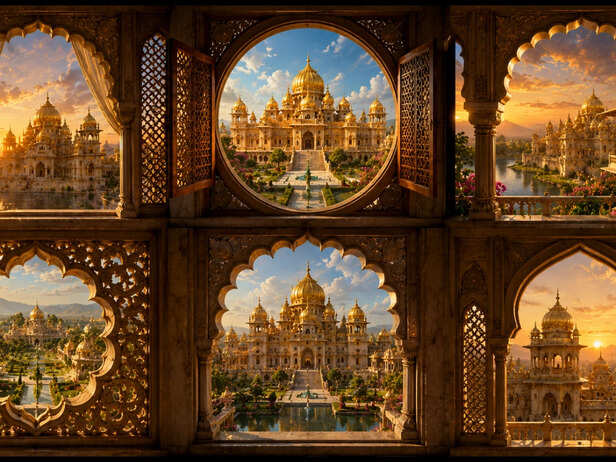
A grand palace viewed through different windows
Image credit : CHATGPT(AI)
Think about three people looking at the same enormous palace from different windows. One notices the garden. Another sees the central hall. The third sees the foundations. Their descriptions sound different, but each person is describing something they genuinely observed. The Puranic tradition can be approached in a similar way. The divine is presented as vast and difficult to capture through a single narrative. Different texts highlight different aspects of that reality. This does not necessarily mean every detail should be treated as historically identical. Rather, the stories can carry different theological, devotional and symbolic purposes.
Why One Deity Becomes Supreme
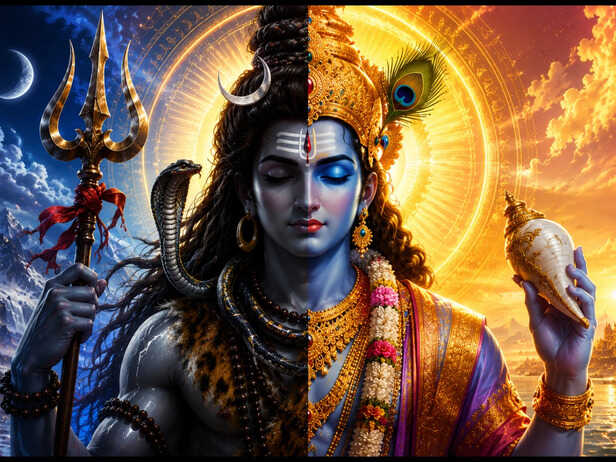
Shiva and Vishnu represented in devotional traditions
Image credit : CHATGPT(AI)
One of the most striking features of the Puranas is that different texts may present different deities as supreme. A Shaiva text naturally gives special prominence to Shiva, while Vaishnava traditions place Vishnu or his manifestations at the centre. This can be understood as a devotional focus. If a person is studying Shiva through the Shiva Purana, the narrative repeatedly directs attention toward Shiva's qualities, stories and teachings. The same principle works in Vaishnava traditions centred on Vishnu. Rather than viewing this only as competition, it can be understood as a way of developing deep devotion through a chosen form of the divine.
The Three Gunas Add Another Layer
Could Different Cosmic Ages Explain It?
So, Are the Puranas Contradictory?
The Bigger Lesson Behind the Stories
The Mystery Is Bigger Than One Story
Unlock insightful tips and inspiration on personal growth, productivity, and well-being. Stay motivated and updated with the latest at My Life XP.