A few white rice marks at the entrance of a home may look like simple decoration, but in Odisha, they carry a much deeper meaning. Made with rice paste, these traditional designs are believed to invite Goddess Lakshmi, the goddess of wealth and prosperity, into the home. But what connects these delicate patterns to the story of the Samudra Manthan, the birth of Goddess Lakshmi and the forgotten lesson of Gaja Lakshmi? The answer lies in an ancient story about pride, abundance and the true meaning of prosperity.
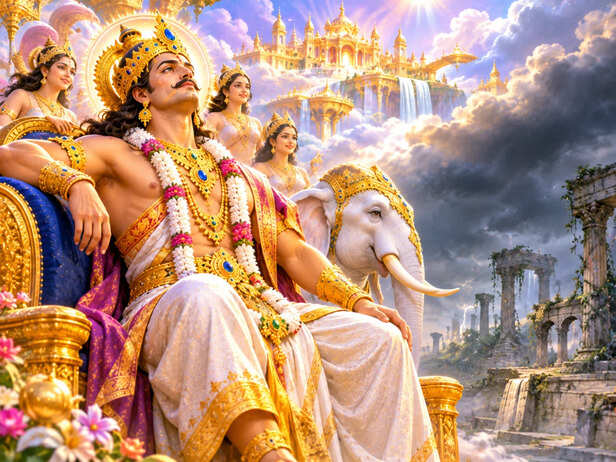
The Day Indra Lost His Prosperity
![Indra’s Glorious Heavens and Ruins]()
Indra’s Glorious Heavens and Ruins
Image credit : CHATGPT
When Devraj Indra’s pride grew, he began to lose the grace and prosperity associated with his kingdom. According to the traditional story, the glory of heaven started fading, the natural balance was disturbed and abundance seemed to disappear. The gods realised that prosperity could not be taken for granted. Indra’s story carries a simple lesson: wealth and power do not always stay with those who become arrogant. Humility, gratitude and respect are equally important to preserve what we have.
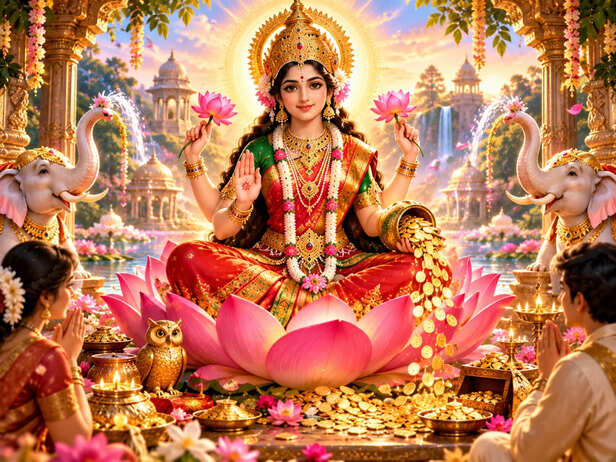
The Birth of Goddess Lakshmi
![Goddess Lakshmi’s]()
Goddess Lakshmi’s
Image credit : CHATGPT(AI)
To restore balance, the gods and asuras joined hands to churn the Kshira Sagar, the cosmic ocean of milk. This event is known as the Samudra Manthan. Among the divine treasures that emerged was Goddess Lakshmi, radiant and seated on a pink lotus. Her appearance brought renewed hope of abundance and well-being. She came to represent more than material wealth. Her presence also symbolised beauty, harmony, good fortune and the prosperity needed to sustain life.
The Divine Form of Gaja Lakshmi
One of the most beautiful forms of Goddess Lakshmi is Gaja Lakshmi. In this form, she is often shown seated on a lotus, with elephants standing on either side and pouring water over her from sacred vessels. This ritual is known as Gaja Abhishek. The elephants represent royal power, dignity and abundance, while the water symbolises purity and renewal. The image carries a powerful message: true prosperity is not just about collecting wealth but also about maintaining balance, generosity and dignity.
Indra Bows Before the Goddess
After witnessing the power and grace of Goddess Lakshmi, Indra gave up his pride and bowed before her. He prayed for her blessings and the return of prosperity. The story reminds devotees that arrogance can disturb even the strongest kingdoms, while humility opens the door to grace. Goddess Lakshmi’s blessings are traditionally associated with abundance, but the deeper lesson is about using wealth responsibly. Prosperity becomes meaningful when it brings peace, stability and happiness rather than pride.
Why Rice Matters in Odisha
In Odisha, rice holds a special place in everyday life and cultural traditions. For many families, the harvest represents food security, hard work and hope for the coming year. Its golden fields are a familiar symbol of abundance. This is why rice is closely linked with the worship of Goddess Lakshmi in the region. It represents the basic blessing that every household needs: enough food to feed the family. The tradition connects spiritual faith with the everyday value of farmers and agriculture.
The Sacred Rice Designs at Doorsteps
Odia women create traditional floor and doorstep designs using a paste made from rice flour or rice. These designs are known as Jhoti Chita. They often include footprints, flowers and other sacred patterns. During Lakshmi worship, these designs are believed to welcome the goddess into the home. The footprints are especially meaningful because they symbolise her arrival and blessings. What may look like a simple decoration is actually an expression of devotion, cultural identity and the hope that every household will have food and happiness.
The Real Meaning of Prosperity
The tradition of Jhoti Chita carries a message that goes beyond wealth or beautiful decorations. It connects the blessings of Goddess Lakshmi with the food people grow, the work they do and the well-being of their families. The story of Gaja Lakshmi also reminds us that prosperity should come with humility and responsibility. Odisha’s rice traditions express a simple belief: abundance is most meaningful when everyone has enough to live with dignity. True prosperity is not limited to one household; it grows when the whole community flourishes.
Unlock insightful tips and inspiration on personal growth, productivity, and well-being. Stay motivated and updated with the latest at
My Life XP.