Goddess Lakshmi is widely worshipped as the deity of wealth, prosperity, good fortune and abundance. She appears in several forms in Hindu traditions, each representing a different aspect of well-being.One of these forms is Gajalakshmi, whose name combines two Sanskrit words:
Gaja, meaning elephant, and
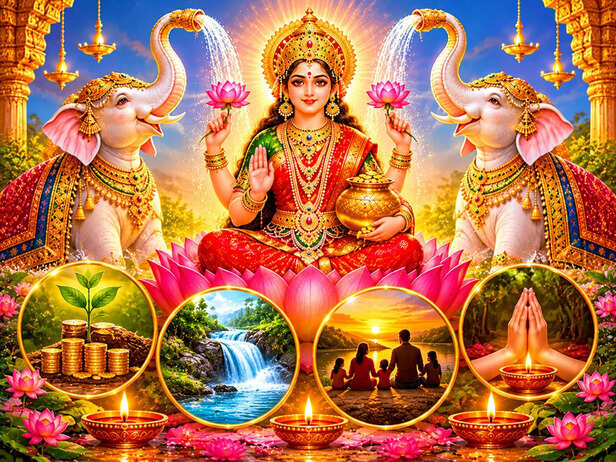
Lakshmi, referring to the goddess of prosperity.In traditional images, Gajalakshmi is usually shown seated on a fully bloomed lotus. Two elephants stand on either side of her, often holding decorated pots or pouring water over her.
This image is also known as Gajalakshmi Abhisheka, referring to the ceremonial bathing of the goddess. The elephants appear to honour her by performing a sacred water offering.Unlike an ordinary picture of Lakshmi holding lotus flowers and gold coins, Gajalakshmi's image places special emphasis on elephants and their association with abundance and dignity.
Why Are Two Elephants Shown Beside Goddess Lakshmi?
The elephants in Gajalakshmi's image have several symbolic meanings.
1. Elephants Represent Royal Power and Dignity
In ancient Indian traditions, elephants were associated with kings, royal processions and military strength. Having elephants in a royal setting was often considered a sign of authority and prestige.Their presence beside Goddess Lakshmi therefore represents more than material wealth. It also suggests dignity, influence and the ability to maintain prosperity.The image presents Lakshmi as a goddess whose blessings extend beyond money to a stable and flourishing life.
2. Elephants Symbolise Abundance and Rain
Elephants are also connected with water, clouds and fertility in several Indian cultural and religious traditions.In Gajalakshmi images, the elephants pouring water over the goddess can symbolise nourishment, fertility and abundance. Water is essential for crops, plants and human survival, making it an important symbol of prosperity.This connection is particularly meaningful in an agricultural society, where rainfall and fertile land were closely linked to people's well-being.
3. The Elephants Represent Auspiciousness
Elephants are considered auspicious animals in many Hindu traditions. Their presence in religious art often conveys blessings, strength and good fortune.
When they appear beside Lakshmi, they reinforce the idea that prosperity should be accompanied by stability and auspiciousness.The two elephants also create a balanced composition around the goddess, making her appear honoured and celebrated.
What Is the Story Behind Gajalakshmi?
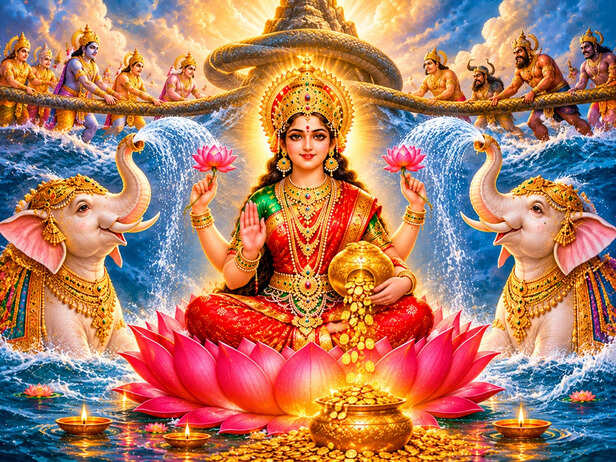
![Goddess Lakshmi Amidst Samudra Manthan]()
Goddess Lakshmi Amidst Samudra Manthan
Image credit : ChatGPT
The image of Gajalakshmi is connected with the wider Hindu tradition of worshipping Lakshmi as the goddess of abundance.One popular mythological association links her with Samudra Manthan, the churning of the cosmic ocean.According to Hindu mythology, the gods and demons churned the ocean of milk to obtain Amrita, the nectar of immortality. During this event, several divine beings and treasures emerged from the ocean.Goddess Lakshmi appeared seated on a lotus and was welcomed by the gods. Her appearance represented prosperity, beauty and auspiciousness.
Elephants also have an important place in Hindu mythology. Airavata, the divine white elephant, emerged during Samudra Manthan and later became the vehicle of Lord Indra, the king of the gods.The association of elephants with divine power, rain and royal dignity helps explain why they became prominent symbols in images of Gajalakshmi.However, it is important to understand that the image of Gajalakshmi does not have just one universally accepted origin story. Its symbolism developed through different religious, artistic and regional traditions.
Why Do the Elephants Pour Water Over Goddess Lakshmi?
One of the most distinctive features of Gajalakshmi images is the elephants holding water pots and pouring water over the goddess.This act is known as
Abhisheka, a ritual bathing that is performed to honour a deity.In Hindu worship, Abhisheka is often performed using water, milk and other sacred substances. It represents purification, respect and devotion.
In Gajalakshmi imagery, the elephants performing Abhisheka symbolise the honour given to the goddess. The water also represents fertility, nourishment and the flow of abundance.The scene is therefore not simply about elephants standing beside Lakshmi. It portrays a divine celebration of prosperity and auspiciousness.
Why Is Gajalakshmi Worshipped During Diwali?
Diwali is one of the most important occasions for worshipping Goddess Lakshmi. Families clean their homes, decorate entrances, light diyas and perform Lakshmi Puja to seek blessings for prosperity and happiness.
Gajalakshmi is one of the forms of the goddess that devotees may remember during this period.Her image is particularly meaningful because it represents prosperity in a broader sense. Wealth is important, but so are health, nourishment, stability and the ability to live with dignity.However, not every household specifically worships Gajalakshmi during Diwali. Many families follow their own regional and traditional forms of Lakshmi Puja.
Where Can You Find Gajalakshmi Images in India?
Gajalakshmi is not limited to modern calendars or Diwali decorations. Her image has appeared in Indian temple architecture, sculpture and religious art for centuries.Some temples and historical monuments feature Gajalakshmi above entrances or on important architectural panels. These images are often interpreted as symbols of auspiciousness and protection.One famous example is the Gajalakshmi panel at the entrance of the Udayagiri caves in Odisha, where the goddess is depicted with elephants.
The image also appears in different regional artistic traditions, including stone sculptures, bronze figures, paintings and household devotional artwork.Its presence in temple architecture shows that Gajalakshmi has been an important religious and artistic symbol beyond the festival of Diwali.
What Does Gajalakshmi Teach Us About Prosperity?
![Radiant Goddess of Prosperity and Blessings]()
Radiant Goddess of Prosperity and Blessings
Image credit : ChatGPT
The image of Gajalakshmi carries lessons that go beyond wealth and possessions.
1. Prosperity needs stability: Elephants symbolise strength and dignity, reminding devotees that lasting prosperity requires a stable foundation.
2. Nature supports abundance: The water poured by the elephants represents nourishment and fertility. It reminds people of the importance of natural resources.
3. Wealth should bring well-being: Lakshmi's blessings are associated with a flourishing life, not simply the accumulation of money.
4. Gratitude is important: The worship of Gajalakshmi encourages devotees to appreciate the resources, opportunities and relationships that support their lives.
The Deeper Meaning Behind the Two Elephants
The next time you see Goddess Lakshmi seated on a lotus with two elephants beside her, remember that the animals are not simply part of an attractive religious painting.They represent royal dignity, strength, nourishment, fertility and auspiciousness. Together with Lakshmi, they create an image of prosperity that extends beyond financial wealth.
That is what makes Gajalakshmi special. Her image reminds devotees that true abundance includes stability, nature's blessings, good fortune and a life filled with well-being.
Unlock insightful tips and inspiration on personal growth, productivity, and well-being. Stay motivated and updated with the latest at
My Life XP.