During Diwali, many families decorate their entrances with rangoli, flowers, lamps and colourful patterns. Among these decorations, one detail often catches the eye: tiny footprints drawn on the floor.
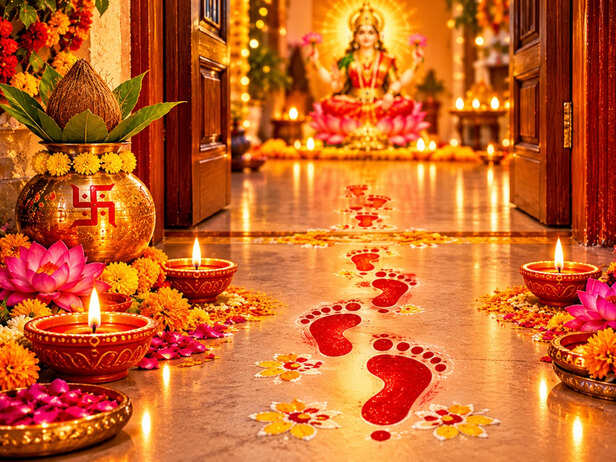
These footprints are traditionally believed to represent the arrival of Goddess Lakshmi into the home. They are usually drawn with their toes pointing towards the inside of the house, creating the impression that the goddess is walking in and blessing the family.The footprints are commonly made using red vermilion, kumkum, alta or a rice-flour mixture. In some households, families use white footprints, while others create them with coloured rangoli powder.
The idea is simple: just as people welcome guests into their homes, they symbolically welcome Goddess Lakshmi during Diwali.
Why Are Lakshmi Footprints Drawn From the Entrance to the Puja Room?
![Diwali Lakshmi Shrine with Rangoli Footprints]()
Diwali Lakshmi Shrine with Rangoli Footprints
Image credit : ChatGPT
One interesting part of this tradition is the direction of the footprints.In many households, the marks begin near the main entrance and continue towards the place where Lakshmi Puja will take place. This arrangement symbolises the goddess entering the home and moving towards the prayer area.
Some families draw only a few footprints near the doorway, while others create a longer trail across the floor.The practice is not exactly the same everywhere. In certain regions, footprints are drawn during Lakshmi Puja, while other households make them during the days leading up to Diwali.Regardless of the design, the intention remains similar: to welcome prosperity, happiness and auspiciousness into the household.
Why Are Lakshmi's Footprints Usually Drawn in Red?
Red is an important colour in many Hindu rituals. It is associated with auspiciousness, celebration, energy and good fortune.That is why families often use kumkum, vermilion or alta to create Lakshmi's footprints.The red colour also makes the tiny marks stand out against the floor, especially when drawn on a freshly cleaned surface or a white rangoli background.However, red is not compulsory. Depending on regional customs and family preferences, footprints may also be created using rice flour, white powder or other traditional materials.
The Connection Between Goddess Lakshmi and Diwali
Goddess Lakshmi is worshipped during Diwali as the symbol of prosperity, abundance and well-being.According to a popular Hindu mythological account, Lakshmi emerged from the cosmic ocean during Samudra Manthan, the churning of the ocean of milk. She appeared seated on a lotus and chose Lord Vishnu as her divine consort.
Over time, Diwali became closely associated with Lakshmi Puja in many parts of India. Families clean and decorate their homes, light diyas and offer prayers to seek her blessings.The tradition of drawing footprints fits naturally into this celebration. It turns the entrance into a symbolic welcome for the goddess and expresses the family's hope for a prosperous year ahead.
Is There a Story Behind the Lakshmi Footprints?
Unlike some well-known festival customs that are linked to a specific mythological story, the practice of drawing Lakshmi's footprints is primarily a devotional and symbolic tradition.There is no single universally accepted ancient story explaining exactly when or where this custom began.
Instead, it has developed through household worship and regional traditions over generations. The footprints represent the belief that Goddess Lakshmi visits homes that are prepared to welcome her with devotion and respect.This is also why the marks are often placed at the entrance rather than drawn randomly around the house. The doorway represents the point through which the goddess is symbolically invited inside.
How Do Families Draw Lakshmi Footprints Before Diwali?
The method can differ from one household to another, but the traditional process is quite simple.
- Clean the entrance: Families first sweep and clean the main doorway and the surrounding floor.
- Prepare the material: Kumkum, red rangoli powder, alta or rice-flour paste may be used.
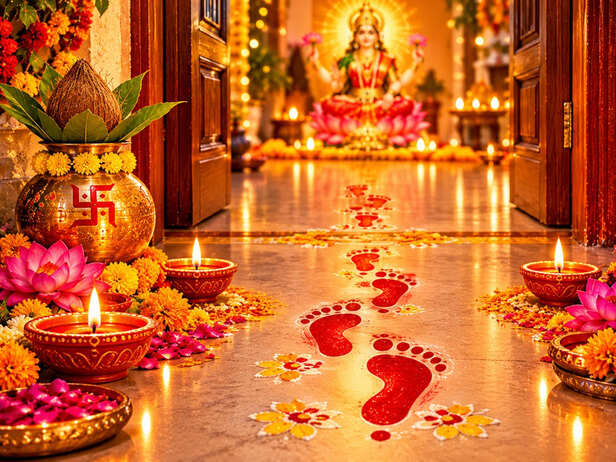
- Make small footprints: Two tiny foot shapes are drawn, usually with toes clearly visible.
- Point them inward: The footprints are arranged to look as if Goddess Lakshmi is entering the home.
- Decorate the surroundings: Some families add flowers, diyas and rangoli patterns to make the entrance festive.
Many people perform this ritual before Lakshmi Puja on Diwali evening, although the timing varies by family and region.
What Is the Deeper Meaning of This Diwali Tradition?
![Diwali Lakshmi Shrine with Rangoli Footprints]()
Diwali Lakshmi Shrine with Rangoli Footprints
Image credit : ChatGPT
The tiny footprints carry a message that goes beyond inviting wealth into the home.
1. A symbol of welcome: The footprints express respect and devotion towards Goddess Lakshmi, just as people prepare their homes for an honoured guest.
2. A reminder to keep the home welcoming: Cleaning and decorating the entrance symbolise the desire to create a positive and peaceful environment.
3. Hope for prosperity: The marks represent prayers for financial stability, good health, happiness and family well-being.
4. A tradition passed through generations: Children often learn to draw these footprints by watching their parents and grandparents, keeping a small but meaningful Diwali custom alive.
A Small Diwali Ritual With a Beautiful Meaning
Those tiny footprints at the doorway may look like simple rangoli designs, but they carry a special place in many Diwali celebrations. They symbolise the arrival of Goddess Lakshmi and the hope that prosperity, peace and happiness will enter the household.As families light their diyas and prepare for Lakshmi Puja, these little marks add another layer of meaning to the festival. They remind everyone that welcoming good fortune is also about creating a home filled with warmth, gratitude and kindness.
Unlock insightful tips and inspiration on personal growth, productivity, and well-being. Stay motivated and updated with the latest at
My Life XP.