Why do women observe Karwa Chauth, look at the Moon before breaking their fast, and listen to a sacred story as part of the ritual? The festival is often linked to the popular tale of Veeravati, but its traditional roots go beyond one folk story. References to Karak Chaturthi, the earthen karwa and the worship of Lord Ganesha offer another way to understand the observance. From its connection with married life to the influence of Indian cinema, Karwa Chauth has a history that brings together religious traditions, regional customs and changing cultural practices.
The Story Behind Karwa Chauth
![Golden Diya-Lit Palace Ritual]()
Golden Diya-Lit Palace Ritual
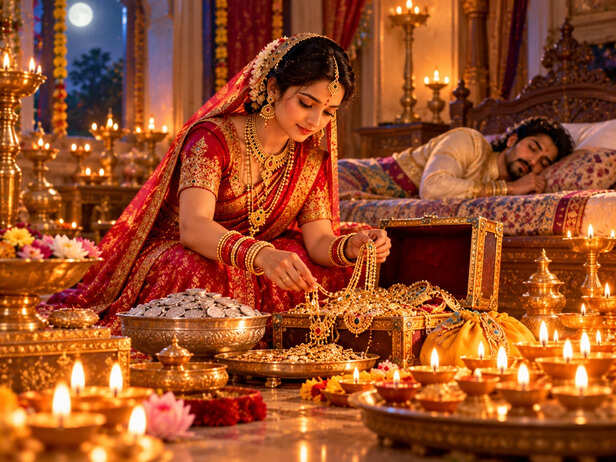
Many people associate Karwa Chauth with the story of Veeravati, who breaks her fast after mistaking an artificial Moon for the real one. This tale is widely known in North Indian folk tradition, but it should not be treated as the only explanation for the festival's origins. Religious observances often develop through several layers of scripture, regional customs and oral storytelling. Understanding this distinction helps explain why the popular story and the ritual's religious background do not always describe the same thing.
Why the Earthen Karwa Matters
![A Pregnant Woman Observes Karwa Chauth]()
A Pregnant Woman Observes Karwa Chauth
Image credit : chatgpt(ai)
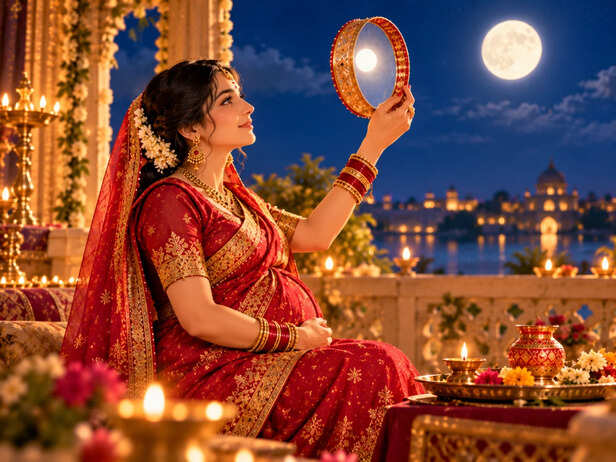
The word karwa refers to an earthen pot used in the festival's rituals. One interpretation connects the observance with the agricultural life of North India, where the seasonal cycle and community customs shaped everyday traditions. Women exchanging earthen pots and participating in shared rituals are part of the cultural explanations associated with Karwa Chauth. The practice also includes prayers for marital well-being and the long life of husbands. These customs show how a festival can bring together household rituals, community bonds and religious beliefs over generations.
What the Narada Purana Says
Karwa Chauth is also known as Karak Chaturthi, and the Narada Purana is often cited in discussions of its religious significance. Traditional descriptions connect the observance with women's prayers for good fortune, marital happiness and well-being. The use of a karwa and the offering of water to the Moon are also important parts of the ritual. Claims about specific scriptural instructions should be checked against the relevant passage and edition, since popular explanations may combine textual references with later customs. The festival's religious meaning is therefore best understood by considering both scripture and living tradition.
Why Women Offer Water to the Moon
The Moon is one of the most recognisable symbols of Karwa Chauth. In the traditional ritual, women view the Moon and offer arghya, a respectful water offering, before breaking their fast. The moment is associated with prayers for their husbands' well-being and the happiness of married life. The ceremony also gives the evening a shared rhythm, as families wait for moonrise and come together for the ritual. Although customs differ between households and regions, the Moon offering remains one of the festival's most familiar practices.
The Spiritual Connection With Ganesha
Karwa Chauth is associated not only with the Moon but also with Lord Ganesha. In the religious tradition described in the source narrative, women worship Kapardishwar, a name linked to a form of Ganesha, and seek blessings for good fortune and freedom from obstacles. Listening to the prescribed vrat katha is another important part of the observance. These practices give the fast a devotional dimension beyond abstaining from food and water. For many devotees, the prayers express hope for harmony, protection and happiness within the family.
How Films Popularised Karwa Chauth
Religious and regional traditions can become more widely recognised when they appear in popular entertainment. Karwa Chauth has featured in Hindi cinema, including Bahu Beti (1965) and the much-loved Dilwale Dulhania Le Jayenge (1995). Such films helped bring the imagery of the fast, the Moon and married couples into mainstream conversations about romance and family life. Cinema did not create the festival, which has older ritual traditions, but it helped shape how many modern viewers imagine and celebrate it.
The Meaning Behind the Sacred Fast
Karwa Chauth is part of a wider Indian tradition of observances associated with the well-being of a spouse. Different regions follow different customs, including Vat Savitri and Vat Purnima. The source narrative also mentions Ashvini Shayana Vrat as a fast observed by husbands for their wives, though its precise textual basis should be verified before presenting it as a direct counterpart. These varied practices show that Indian traditions around marriage are not limited to one festival or one region. Their meanings are shaped by faith, family customs and the choices of the people who observe them.
Unlock insightful tips and inspiration on personal growth, productivity, and well-being. Stay motivated and updated with the latest at
My Life XP.