Why Does Hanuman Ji Sit at Lord Rama’s Feet? The Spiritual Meaning
Noopur Kumari | Aug 22, 2026, 07:00 IST
Hanuman Ji is remembered for extraordinary strength, courage and intelligence. Yet when he stood before Lord Rama, none of those qualities became a source of pride. Instead, Hanuman chose the position of a servant and devotee. This seemingly simple image hides a profound lesson about the difference between having power and knowing how to use it. Why did Hanuman place himself at Rama’s feet? What does the gesture actually represent? And what can this ancient relationship teach someone struggling with ego, stress and the need for recognition today?

Hanuman Ji Sit at Rama’s Feet
Image credit : ChatGPT(AI)
There is a beautiful image of Hanuman Ji that devotees have seen countless times: sitting humbly at Lord Rama’s feet, with folded hands and complete devotion. But have you ever wondered why the mighty Hanuman Ji, who could lift mountains and cross oceans, chose to sit at the feet of Rama? The answer is much deeper than simple humility. In the Ramayana tradition, Hanuman’s relationship with Rama represents devotion, service, surrender and the complete absence of ego. His posture carries a powerful spiritual message that remains relevant even today.
![Hanuman Ji’s Strength and Humility Before Rama]()
Hanuman Ji is described in the Ramayana tradition as extraordinarily powerful. He crossed the ocean, fought powerful warriors and carried the Sanjeevani-bearing mountain when the need arose. Yet his strength never became a reason to consider himself greater than others. Before Lord Rama, Hanuman’s power became service. Sitting at Rama’s feet symbolises this humility. It shows that true strength does not always need to stand at the centre. Sometimes the greatest expression of power is knowing when to step back, serve someone you love and allow devotion to guide your actions.
![Hanuman Ji Bowing at Rama’s Feet]()
In Hindu spiritual traditions, touching or sitting near the feet of a revered figure is associated with humility, respect and surrender. Hanuman Ji’s position near Rama’s feet can therefore be understood as a visual expression of complete devotion. He does not approach Rama demanding recognition for his achievements. His attitude is one of service. This is what makes the image so powerful. Hanuman had extraordinary abilities, yet his greatest identity was not his strength. It was his devotion to Rama. The gesture reminds devotees that surrender does not mean weakness. It can mean placing ego beneath a higher purpose.
Hanuman Chose Service Over Recognition
Hanuman’s actions throughout the Ramayana show a remarkable focus on Rama’s mission. He did not appear to seek praise for his accomplishments. When faced with difficult tasks, his attention remained on what needed to be done. This is the deeper meaning behind his humble posture. Sitting at Rama’s feet represents the attitude of a sevak, one who serves without constantly asking, “What will I receive?” In modern life, this lesson feels surprisingly relevant. We often want recognition for every effort. Hanuman’s example suggests another path: let your actions speak when the purpose behind them is meaningful.
Imagine possessing extraordinary strength, intelligence and courage, yet refusing to let those qualities define your worth. That is one reason Hanuman Ji remains such a powerful spiritual symbol. His devotion to Rama was greater than his pride in his own abilities. The famous stories surrounding Hanuman repeatedly place his abilities in the service of Rama’s purpose. His humility was therefore not an inability to recognise his strength. It was the conscious decision not to make personal power the centre of his identity. That distinction makes his devotion particularly inspiring.
The relationship between Rama and Hanuman is often remembered as one of the most powerful examples of devotion in Hindu tradition. Hanuman did not simply admire Rama from a distance. He became deeply involved in Rama’s mission and repeatedly placed himself in difficult situations to serve him. Their relationship combines devotion with trust. Rama recognised Hanuman’s courage, wisdom and loyalty, while Hanuman saw his greatest fulfilment in serving Rama. The image of Hanuman at Rama’s feet captures this relationship beautifully. It shows that genuine devotion can create a bond where strength and humility exist together.
The most powerful lesson may not be about where Hanuman Ji sits at all. It may be about what he leaves behind when he sits there: ego. Modern life often encourages people to prove their worth through achievements, money, status and recognition. Hanuman offers a different perspective. His extraordinary abilities were meaningful because they served something greater than himself. His story suggests that achievement becomes truly valuable when it does not make us arrogant. Strength without humility can create distance, but strength guided by devotion can become a source of service and protection.
The image of Hanuman Ji at Rama’s feet can become a simple reminder for everyday life. Before reacting with pride, pause. Before demanding recognition, ask whether the work itself has value. Before using your strength to prove yourself, consider whether it can help someone else. Hanuman’s example teaches that humility is not about thinking you are worthless. It is about understanding that your abilities have a purpose beyond personal glory. That lesson can transform relationships, work and personal growth. The strongest person in the room does not always need to prove that they are strong.
Hanuman Ji sitting at Lord Rama’s feet is far more than a devotional image.
It represents strength without arrogance, devotion without expectation and service without the hunger for recognition.
Hanuman could perform extraordinary feats, yet his heart remained devoted to Rama. That contrast is what makes his character so inspiring.
Perhaps that is why the image continues to touch devotees after centuries.
It quietly asks us a difficult question:
If we had Hanuman’s strength, would we also have his humility?
His answer was not found in words.
It was found in where he chose to sit.
Unlock insightful tips and inspiration on personal growth, productivity, and well-being. Stay motivated and updated with the latest at My Life XP.
Hanuman’s Strength Never Became His Ego
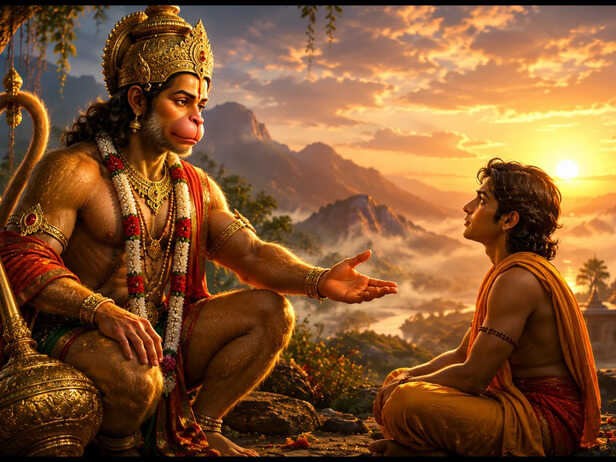
Hanuman Ji’s Strength and Humility Before Rama
Image credit : CHATGPT(AI)
Hanuman Ji is described in the Ramayana tradition as extraordinarily powerful. He crossed the ocean, fought powerful warriors and carried the Sanjeevani-bearing mountain when the need arose. Yet his strength never became a reason to consider himself greater than others. Before Lord Rama, Hanuman’s power became service. Sitting at Rama’s feet symbolises this humility. It shows that true strength does not always need to stand at the centre. Sometimes the greatest expression of power is knowing when to step back, serve someone you love and allow devotion to guide your actions.
The Feet Symbolise Complete Surrender
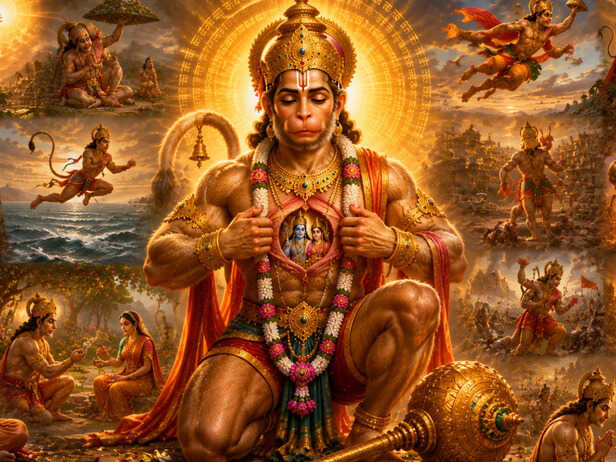
Hanuman Ji Bowing at Rama’s Feet
Image credit : CHATGPT(AI)
In Hindu spiritual traditions, touching or sitting near the feet of a revered figure is associated with humility, respect and surrender. Hanuman Ji’s position near Rama’s feet can therefore be understood as a visual expression of complete devotion. He does not approach Rama demanding recognition for his achievements. His attitude is one of service. This is what makes the image so powerful. Hanuman had extraordinary abilities, yet his greatest identity was not his strength. It was his devotion to Rama. The gesture reminds devotees that surrender does not mean weakness. It can mean placing ego beneath a higher purpose.
Hanuman Chose Service Over Recognition
Hanuman’s actions throughout the Ramayana show a remarkable focus on Rama’s mission. He did not appear to seek praise for his accomplishments. When faced with difficult tasks, his attention remained on what needed to be done. This is the deeper meaning behind his humble posture. Sitting at Rama’s feet represents the attitude of a sevak, one who serves without constantly asking, “What will I receive?” In modern life, this lesson feels surprisingly relevant. We often want recognition for every effort. Hanuman’s example suggests another path: let your actions speak when the purpose behind them is meaningful.
His Devotion Was Stronger Than His Pride
Rama and Hanuman Represent a Unique Bond
The Real Lesson Is About Ego
What Hanuman’s Posture Teaches Us Today
The Hidden Meaning Behind the Image
It represents strength without arrogance, devotion without expectation and service without the hunger for recognition.
Hanuman could perform extraordinary feats, yet his heart remained devoted to Rama. That contrast is what makes his character so inspiring.
Perhaps that is why the image continues to touch devotees after centuries.
It quietly asks us a difficult question:
If we had Hanuman’s strength, would we also have his humility?
His answer was not found in words.
It was found in where he chose to sit.
Unlock insightful tips and inspiration on personal growth, productivity, and well-being. Stay motivated and updated with the latest at My Life XP.