Why Does Maa Parvati Reside in Hanuman Ji’s Tail?
Noopur Kumari | Aug 30, 2026, 08:00 IST
Hanuman Ji’s burning tail is one of the most unforgettable moments of the Ramayana. But there is a lesser-known devotional belief that makes this episode even more fascinating. Why is Maa Parvati said to reside in Hanuman Ji’s tail? And did Ravan unknowingly set Lanka on fire by attacking something divine? The story connects Lord Shiva’s incarnation as Hanuman Ji, Maa Parvati’s desire to accompany him, and Ravan’s decision to punish the messenger of Shri Ram. Here is the fascinating belief behind Hanuman Ji’s tail and the deeper meaning devotees associate with the Lanka Dahan episode.

Maa Parvati and Hanuman Ji
Image credit : ChatGPT(ai)
Ravan thought he had found the perfect way to humiliate Hanuman Ji. He ordered his soldiers to wrap cloth around the Vanar’s tail, soak it in oil and set it on fire. But there was one thing Ravan did not understand. The tail he wanted to use as a weapon of humiliation would become the very instrument of Lanka’s destruction. A popular devotional tradition adds an even deeper layer to this episode. It says that Hanuman Ji’s tail was not ordinary because Maa Parvati was believed to accompany Lord Shiva in his Vanar form through it. This belief makes Ravan’s decision to burn the tail appear even more significant But where does this belief come from, and what does the episode actually tell us?
![Lord Shiva as Hanuman Ji]()
Hanuman Ji is widely revered in Hindu tradition as a powerful devotee of Shri Ram and is also traditionally associated with Lord Shiva. According to devotional traditions, Lord Shiva took the form of Hanuman Ji to participate in Shri Ram’s divine mission. Hanuman Ji’s life was not about personal power, comfort or recognition. His strength had one purpose: serving Shri Ram. This is why his character is remembered not only for extraordinary physical power but also for complete devotion. His Vanar form allowed him to become an essential part of Shri Ram’s journey while remaining deeply connected with the divine purpose of the Ramayana.
![Maa Parvati and Hanuman Ji]()
A popular devotional belief says that when Lord Shiva took the form of Hanuman Ji, Maa Parvati also wished to accompany him. However, Hanuman Ji’s role was that of a devoted Brahmachari whose entire existence was dedicated to serving Shri Ram. According to this belief, Maa Parvati therefore remained symbolically connected with him through his tail. It is important to understand that this particular detail is a devotional tradition rather than a clearly stated episode in the core narrative of Valmiki’s Ramayana. Yet for devotees, the belief carries a beautiful message: where there is divine devotion, divine Shakti is never truly separate from it.
When Hanuman Ji entered Lanka, he did not come as an ordinary enemy soldier. He came as Shri Ram’s messenger. After being captured, Ravan wanted to punish and humiliate him. Vibhishan reminded Ravan that killing a messenger was against accepted principles, so another punishment had to be chosen. Ravan then ordered that Hanuman Ji’s tail be wrapped in cloth soaked with oil and set on fire. The plan was meant to make Hanuman Ji suffer in front of Lanka. But Ravan completely underestimated the person standing before him. What he considered a source of humiliation soon became the reason his golden city would burn.
The moment the fire touched Hanuman Ji’s tail, the situation changed dramatically. Hanuman Ji expanded his form, moved across Lanka and used his burning tail to set different parts of the city ablaze. The punishment Ravan had designed against him became the very means through which Lanka was destroyed. Devotees often see this as a powerful example of divine justice. Ravan believed that he was controlling the situation, but his own decision became the cause of his downfall. The deeper message is striking: arrogance can make a person create the very circumstances that eventually destroy everything they worked so hard to build.
Ravan was powerful, learned and highly accomplished, but his pride repeatedly prevented him from recognising the truth before him. Hanuman Ji had already demonstrated extraordinary strength in Lanka, yet Ravan continued to treat him as an ordinary Vanar. The burning of the tail became another example of this arrogance. According to the popular devotional interpretation, Ravan was unknowingly attacking something carrying a divine connection with Maa Parvati. However, the deeper lesson does not depend only on that belief. Hanuman Ji’s conduct shows that true strength does not need arrogance. His power remained completely devoted to Shri Ram, while Ravan’s power was ultimately consumed by his own ego.
The Lanka Dahan episode can be understood as more than a dramatic moment in the Ramayana. Hanuman Ji’s burning tail represents the transformation of an insult into strength. Ravan tried to make Hanuman Ji helpless, but Hanuman Ji turned the situation around without abandoning his devotion. This is why the episode continues to inspire devotees. Problems sometimes arrive in forms we never expect, and our first reaction may be fear or anger. Hanuman Ji’s example suggests another possibility: remain focused, remember your purpose and use your strength wisely. What appears to be a weakness can sometimes become the very source of your greatest strength.
The story of Hanuman Ji’s tail ultimately takes us beyond the question of whether Maa Parvati literally resided there. The central message is about devotion and divine purpose. Ravan had power, wealth and an enormous kingdom, yet his pride blinded him. Hanuman Ji had no kingdom to rule, but his devotion made him fearless. The popular belief about Maa Parvati adds another layer to this symbolism by presenting Shakti as eternally connected with Shiva’s divine manifestation. Whether one approaches the story as scripture, tradition or devotional symbolism, its message remains powerful: arrogance destroys, while sincere devotion gives a person the courage to face even the greatest danger.\
Unlock insightful tips and inspiration on personal growth, productivity, and well-being. Stay motivated and updated with the latest at My Life XP.
Why Hanuman Ji Took a Vanar Form
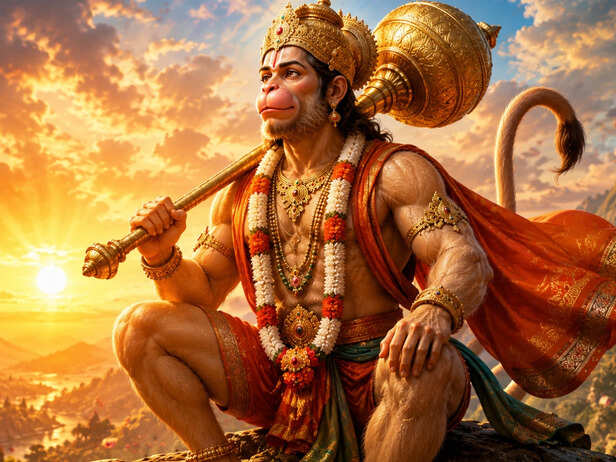
Lord Shiva as Hanuman Ji
Image credit : chatgpt(ai)
Hanuman Ji is widely revered in Hindu tradition as a powerful devotee of Shri Ram and is also traditionally associated with Lord Shiva. According to devotional traditions, Lord Shiva took the form of Hanuman Ji to participate in Shri Ram’s divine mission. Hanuman Ji’s life was not about personal power, comfort or recognition. His strength had one purpose: serving Shri Ram. This is why his character is remembered not only for extraordinary physical power but also for complete devotion. His Vanar form allowed him to become an essential part of Shri Ram’s journey while remaining deeply connected with the divine purpose of the Ramayana.
The Belief About Maa Parvati
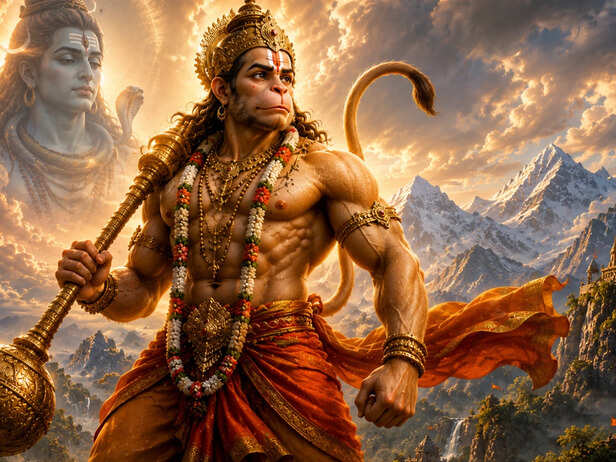
Maa Parvati and Hanuman Ji
Image credit : chatgpt (ai)
A popular devotional belief says that when Lord Shiva took the form of Hanuman Ji, Maa Parvati also wished to accompany him. However, Hanuman Ji’s role was that of a devoted Brahmachari whose entire existence was dedicated to serving Shri Ram. According to this belief, Maa Parvati therefore remained symbolically connected with him through his tail. It is important to understand that this particular detail is a devotional tradition rather than a clearly stated episode in the core narrative of Valmiki’s Ramayana. Yet for devotees, the belief carries a beautiful message: where there is divine devotion, divine Shakti is never truly separate from it.
Ravan Made One Dangerous Mistake
The Tail Became Lanka’s Weapon of Destruction
Did Ravan Know the Power He Was Attacking?
What the Burning Tail Really Represents
The Real Lesson Behind Hanuman Ji’s Tail
Unlock insightful tips and inspiration on personal growth, productivity, and well-being. Stay motivated and updated with the latest at My Life XP.