What happens when Lord Shiva visits Lord Vishnu in Vaikuntha, and the two deities exchange their most sacred offerings? This beautiful tradition is at the heart of Vaikuntha Chaturdashi, a festival that celebrates the divine bond between Hari and Har. On this occasion, Belpatra is offered to Lord Vishnu, while Tulsi leaves are offered to Lord Shiva. The midnight ritual is especially famous in Ujjain, where the celebration of Harihar Milan brings together two forms of divine worship.
Why Vaikuntha Chaturdashi Is So Special
![Lord Shiva Meets Lord Vishnu in Vaikuntha]()
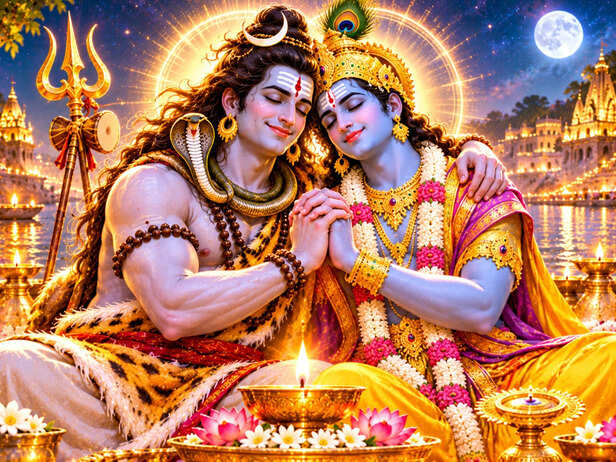
Lord Shiva Meets Lord Vishnu in Vaikuntha
Image credit : CHATGPT(AI)
Vaikuntha Chaturdashi falls on the Shukla Paksha Chaturdashi of the Hindu month of Kartik. In 2026, it will be observed on Monday, November 23. According to a popular religious belief, Lord Vishnu resumes the responsibility of maintaining the universe after Lord Shiva takes care of its affairs during Chaturmas. This is why the night is associated with the divine meeting of Hari (Vishnu) and Har (Shiva). Devotees consider it a special occasion to worship both deities together.
The Story Behind Shiva and Vishnu's Meeting
![Shiva and Vishnu’s Moonlit Offering]()
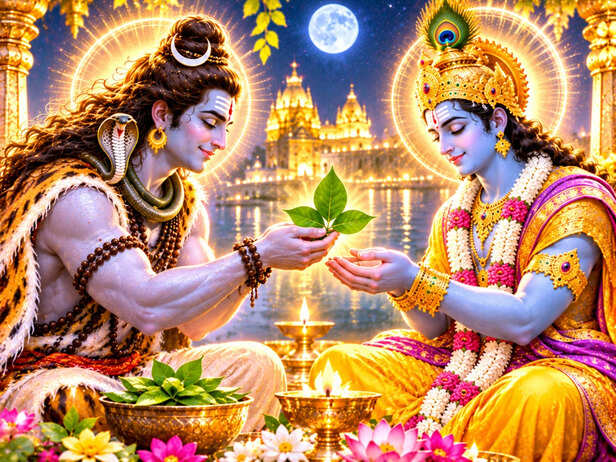
Shiva and Vishnu’s Moonlit Offering
Image credit : CHATGPT(AI)
According to a popular tradition, Lord Vishnu enters a period of cosmic rest on Devshayani Ekadashi, while Lord Shiva takes responsibility for the universe during the four months of Chaturmas. After Lord Vishnu awakens on Devutthana Ekadashi, the two deities meet on Vaikuntha Chaturdashi. During this meeting, Lord Shiva symbolically hands the responsibility of maintaining creation back to Lord Vishnu. The tradition is remembered as Harihar Milan, celebrating the belief that Shiva and Vishnu are different forms of the same supreme divine reality.
Why Shiva Offers Belpatra to Vishnu
One of the most fascinating customs of Vaikuntha Chaturdashi is the exchange of sacred offerings. Belpatra is closely associated with Lord Shiva, but on this occasion, Shiva is traditionally believed to offer it to Lord Vishnu. In return, Vishnu offers Tulsi, which is especially dear to him, to Lord Shiva. This exchange carries a beautiful message: devotion to one deity does not mean separation from another. Instead, the ritual celebrates mutual respect and the spiritual unity of Hari and Har.
The Special Midnight Ritual in Ujjain
Ujjain celebrates Vaikuntha Chaturdashi with a unique midnight tradition. Around 11 PM, Lord Mahakal's ceremonial procession leaves the Mahakaleshwar Temple and travels towards Gopal Mandir. Devotees gather along the route to witness this special occasion. Around midnight, Lord Shiva and Lord Vishnu symbolically meet at the temple. Belpatra and Tulsi garlands are exchanged, and the responsibility of maintaining the universe is symbolically handed back to Vishnu. This centuries-old local tradition is one of the most distinctive features of Ujjain's Vaikuntha Chaturdashi celebrations.
The Connection With Kashi's Sacred Temples
Kashi also holds a special place in Vaikuntha Chaturdashi celebrations. The city is closely associated with Lord Shiva through the Kashi Vishwanath Temple, while its Vaishnava traditions connect devotees with Lord Vishnu at temples such as Bindu Madhav and Adi Keshav. Religious traditions associated with Kartik Purnima include holy bathing in the Ganga, prayers and offerings to the deities. These observances bring together the Shaiva and Vaishnava traditions that have shaped Kashi's spiritual identity.
How to Perform the Belpatra and Tulsi Ritual
Devotees can observe the occasion by worshipping both Lord Shiva and Lord Vishnu at home or in a temple. According to the popular ritual, offer a Belpatra to Lord Vishnu and Tulsi leaves to Lord Shiva. While making the offerings, devotees may chant 'Om Hariharabhyam Namah' with devotion. Some traditions also suggest tying the two offerings in a yellow cloth after the puja as a symbolic expression of faith and prayer. These are devotional customs, and the offerings should be made with respect and sincerity.
The Message Behind Harihar Milan
The deeper message of Vaikuntha Chaturdashi goes beyond the exchange of Belpatra and Tulsi. It reminds devotees that different forms of worship can exist together without conflict. Lord Shiva and Lord Vishnu are honoured through separate traditions, yet this festival brings them together in one celebration. Their symbolic meeting teaches respect, harmony and devotion. Rather than focusing only on fulfilling wishes, devotees can use this occasion to pray for peace, wisdom and the well-being of their families.
Unlock insightful tips and inspiration on personal growth, productivity, and well-being. Stay motivated and updated with the latest at
My Life XP.