Imagine visiting a Hindu temple where the goddess holds a fish in one hand and a skull cup in the other. Even more surprising, fresh fish is offered to her every day as part of the worship tradition. This is not a fictional scene but a living ritual at the ancient Maa Varahi Temple in Chaurasi village, Odisha. Known as Matsya Varahi, the goddess has a rare form and a fascinating connection with Tantric traditions. There is also a belief that Lord Jagannath's Mahaprasad reaches this temple. But what makes this shrine so different from other temples?
The Ancient Temple of Maa Varahi
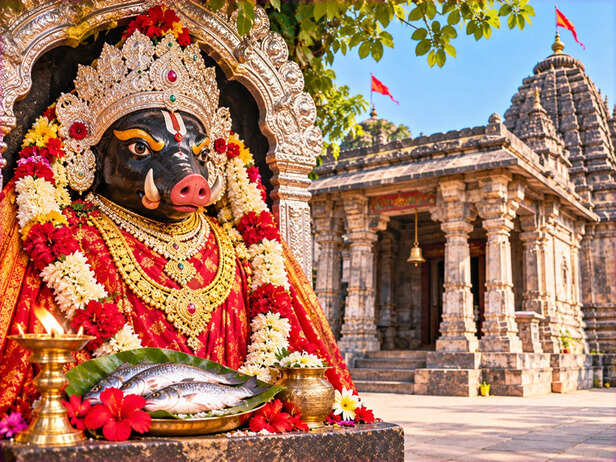
![Maa Varahi Temple in Chaurasi, Odisha]()
Maa Varahi Temple in Chaurasi, Odisha
Image credit : CHATGPT(AI)
The Maa Varahi Temple is located in Chaurasi village in Odisha's Puri district, in the historic Prachi Valley. Dedicated to Goddess Varahi, the shrine is generally dated to the 9th or 10th century, although historians differ on its exact period. Its architecture belongs to the rare Khakhara style, traditionally associated with goddess temples in Odisha. The shrine is also known for its Tantric worship practices. Despite its relatively quiet village setting, it preserves an unusual form of goddess worship that has continued for centuries.
Why Is the Goddess Called Matsya Varahi?
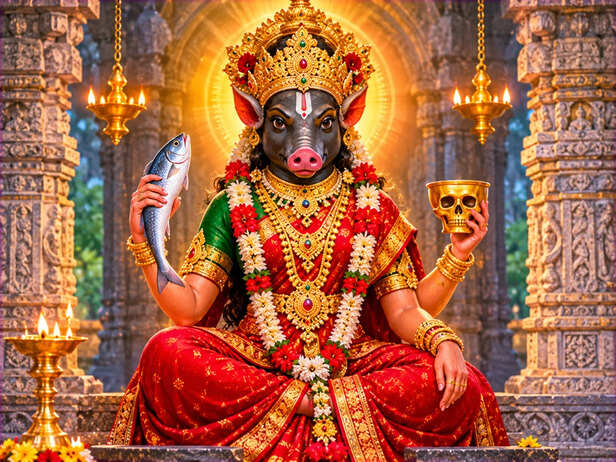
![The Unique Idol of Matsya Varahi]()
The Unique Idol of Matsya Varahi
Image credit : CHATGPT(AI)
The main attraction of the temple is its unusual black-stone idol of Goddess Varahi. She has the face of a boar and the body of a divine woman. In her right hand, she holds a fish, while her left hand carries a skull cup known as a kapala. She is also shown seated with one foot resting on a buffalo, her vehicle. This rare iconography matches the description of Matsya Varahi in Tantric tradition. The fish held by the goddess is also closely connected with the temple's daily offering.
Why Is Fresh Fish Offered Every Day?
Unlike many temples where fruits, sweets and vegetarian food are common offerings, Maa Varahi's shrine is known for its daily fish offering. The tradition is connected with her Matsya Varahi form and the Tantric practices followed at the temple. The fish is not treated as an ordinary food item but as a ritual offering to the goddess. This practice makes the Chaurasi shrine distinctive among Odisha's temples. It also shows how different forms of Hindu worship can follow different ritual traditions.
The Story of Varahi and the Battle Against Demons
Goddess Varahi is one of the Saptamatrikas, the group of seven mother goddesses associated with divine power. In Hindu traditions, these goddesses appear to help the Divine Mother fight destructive forces. Varahi is linked with Varaha, the boar incarnation of Lord Vishnu, and represents his divine energy in feminine form. Some mythological accounts also describe the Saptamatrikas joining Lord Shiva in the battle against the demon Andhakasura. In these stories, the goddesses help stop the demon's blood from creating more enemies, bringing the battle closer to its end.
The Skull Cup Has a Deeper Meaning
The skull cup held by Maa Varahi is known as a kapala and is an important symbol in several Tantric traditions. It is associated with the fierce forms of divine power and the idea of overcoming fear, ego and the cycle of destruction. Along with the fish, it gives the goddess an unusual appearance that sets her idol apart from familiar forms of Durga or Lakshmi. Her large belly is also traditionally interpreted as a symbol of her power to contain the universe. Every detail of the idol carries religious and symbolic meaning.
The Connection With Lord Jagannath’s Mahaprasad
One of the most interesting beliefs associated with the temple is that Lord Jagannath's Mahaprasad is brought here. Mahaprasad is the sacred food offered to Lord Jagannath at the famous temple in Puri and holds a special place in Odisha's religious life. The reported tradition of its arrival at the Varahi shrine connects two different forms of worship: Jagannath's Vaishnava tradition and the Tantric worship of Maa Varahi. This connection makes the temple especially fascinating for devotees interested in Odisha's diverse religious heritage.
A Rare Temple Where Ancient Traditions Continue
The Varahi Temple is more than a place known for an unusual food offering. Its Khakhara-style architecture, rare Matsya Varahi idol and continuing Tantric rituals make it an important part of Odisha's heritage. The shrine also reflects the Prachi Valley's long history of religious activity and temple building. For devotees, it is a place of faith; for history and art lovers, it offers a glimpse into early medieval Odisha. Its traditions remind visitors that India's temples preserve many forms of worship, some of which are rarely seen elsewhere.
Unlock insightful tips and inspiration on personal growth, productivity, and well-being. Stay motivated and updated with the latest at
My Life XP.