Have you ever noticed that devotees do not always complete a full circle around a Shivling? There is a traditional reason behind this practice, and it is connected to the sacred water outlet of the Shivling. Hindu worship also has different parikrama traditions for different deities. But are the numbers fixed rules, or do they vary across temples and traditions? The story of Lord Ganesha offers a beautiful reminder that devotion is not measured by distance or the number of steps.
Why Shiva’s Parikrama Is Half
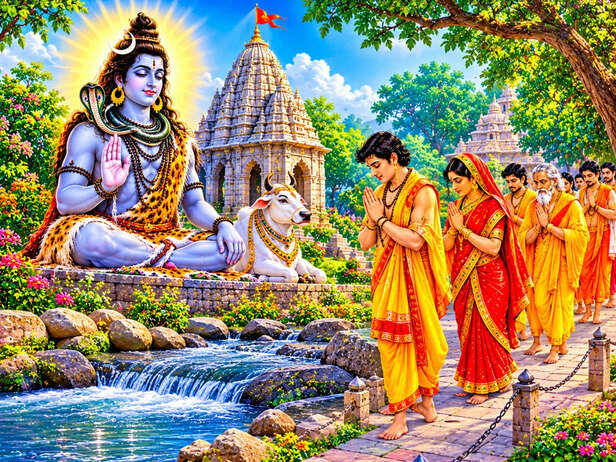
![The Sacred Shivling and Its Gomukhi]()
The Sacred Shivling and Its Gomukhi
Image credit : chatgpt(ai)
Lord Shiva’s parikrama follows a special tradition. Devotees walk around the Shivling until they reach the outlet through which water from the abhishek flows. This opening is commonly called the Gomukhi or Somasutra. They do not step across it because the water offered to Mahadev is treated as sacred. Instead, they turn back and follow the prescribed route. This practice is known as Ardha Pradakshina or Somasutra Pradakshina.
Goddess Durga: One Parikrama
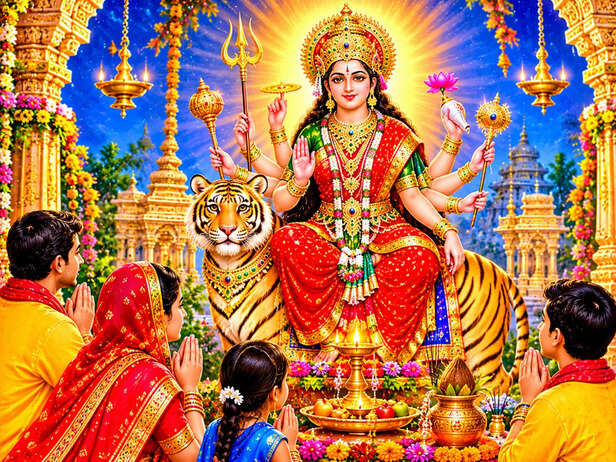
![Goddess Durga Worshipped by Devotees]()
Goddess Durga Worshipped by Devotees
Image credit : chatgpt(ai)
In a commonly followed ritual tradition, devotees perform one parikrama around Goddess Durga. The act represents reverence and surrender to the Divine Mother. However, the number of rounds can differ according to the temple, festival and family tradition. During Navratri, devotees may also perform additional rounds as part of their personal prayers or vows. What matters is approaching the Goddess with respect and a sincere heart.
Lord Ganesha: Three Parikramas
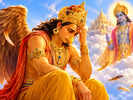
Lord Ganesha is traditionally associated with three parikramas in this practice. His famous story gives the ritual a deeper meaning. When Lord Shiva and Goddess Parvati asked their sons to circle the world, Ganesha walked around his parents three times. He explained that his parents were his entire universe. His wisdom won him the challenge, reminding devotees that love, respect and understanding can matter more than physical distance.
Lord Hanuman: Three Parikramas
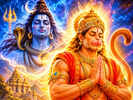
Devotees traditionally perform three parikramas around Lord Hanuman. He is worshipped for his courage, strength, loyalty and complete devotion to Lord Rama. Walking around his idol while remembering Hanuman’s name is a way to express faith and seek the strength to face life's difficulties. Some temples and devotees follow different counts, so it is best to respect the practice followed at the particular shrine.
Lord Vishnu, Rama and Krishna: Four Parikramas
Four parikramas are traditionally associated with Lord Vishnu and his forms, including Lord Rama and Lord Krishna. In Hindu belief, circumambulating the deity is an act of placing the divine at the centre of one's life. Devotees walk clockwise, keeping the deity to their right, while remembering the Lord's name. The practice is also linked with the idea of seeking guidance and keeping one's thoughts focused on the divine.
Surya Dev: Seven Parikramas
Surya Dev is traditionally associated with seven parikramas. The Sun holds a special place in Hindu worship as the source of light, energy and life. Devotees offer water to the rising Sun and pray for good health, strength and well-being. The number seven is also associated with the seven horses of Surya's chariot in Hindu tradition. This makes the seven-round practice especially meaningful to devotees who follow it.
What If You Cannot Complete a Parikrama?
Not every temple has enough space for devotees to walk around the deity. In such situations, some worshippers perform Atma Pradakshina, turning around themselves while offering their prayers. However, this should not be treated as a compulsory replacement for every temple's ritual. Follow the instructions of the temple and priest whenever possible. The story of Ganesha also reminds us that devotion is not simply about counting steps. A sincere prayer carries its own meaning.
Unlock insightful tips and inspiration on personal growth, productivity, and well-being. Stay motivated and updated with the latest at
My Life XP.