Why Do Hindus Celebrate Tulsi Vivah?
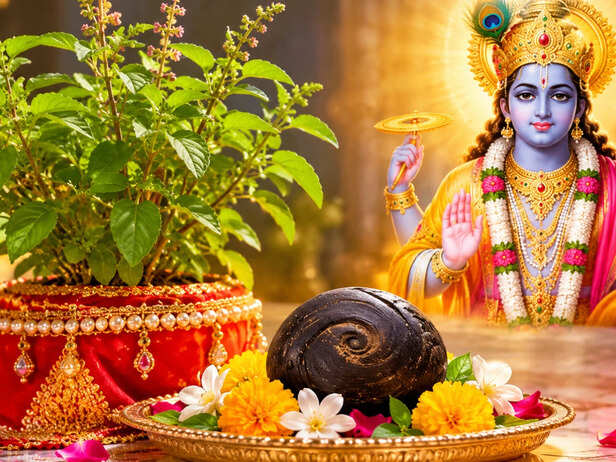
![Tulsi, Shaligram, and Lord Vishnu Altar]()
Tulsi, Shaligram, and Lord Vishnu Altar
Image credit : ChatGPT AI
Every year, after Diwali, many Hindu households celebrate Tulsi Vivah with flowers, diyas, prayers and traditional wedding rituals. During this ceremony, the Tulsi plant is dressed like a bride and married to Lord Vishnu in his Shaligram form.For devotees, this is not simply a symbolic wedding. It represents the union of devotion, faith and divine blessings.Tulsi Vivah is generally observed on Devuthani Ekadashi or Dwadashi during the Shukla Paksha of the Kartik month, depending on regional traditions and the calendar followed. The occasion also marks the end of Chaturmas, the four-month period during which Lord Vishnu is believed to remain in divine sleep.But have you ever wondered why a plant is married to Lord Vishnu every year? The answer lies in an ancient story involving a devoted woman named Vrinda, a powerful demon king and a promise that became part of Hindu religious tradition.
Who Was Goddess Vrinda and Why Was Her Husband So Powerful?
According to a popular Hindu mythological account, Vrinda was a deeply devoted woman and the wife of Jalandhar, a powerful demon king.Jalandhar was born from the fiery energy of Lord Shiva, according to the legend. Because of his extraordinary strength, he became powerful enough to challenge the gods.However, his greatest protection did not come from his physical strength alone. It came from his wife's devotion.Vrinda was known for her unwavering loyalty and religious dedication to her husband. Her spiritual power, known as
Pativrata Dharma, protected Jalandhar and made him extremely difficult to defeat.As long as Vrinda's devotion remained unbroken, Jalandhar could not be defeated. Even the gods found it difficult to overcome him.This created a serious problem for the divine world, as Jalandhar's growing power began threatening the balance of the universe.
Why Did Lord Vishnu Disguise Himself as Jalandhar?
When the gods realised that Jalandhar's strength was connected to Vrinda's devotion, they approached Lord Vishnu for help.According to the popular legend, Lord Vishnu decided to take an unusual step to end the demon king's protection.He assumed the appearance of Jalandhar and appeared before Vrinda while her husband was away fighting the gods.Believing that the person standing before her was her husband, Vrinda's spiritual vow was broken.At that moment, Jalandhar lost the protection that had made him nearly invincible. Lord Shiva was then able to defeat him in battle.
However, when Vrinda discovered the truth, she was devastated. She realised that Lord Vishnu had deceived her and that her devotion had been used to bring about her husband's death.
Why Did Vrinda Curse Lord Vishnu?
After discovering the deception, Vrinda became furious and heartbroken.She confronted Lord Vishnu and cursed him for using his divine powers to deceive her.According to the popular version of the story, she cursed Lord Vishnu to turn into a stone.Lord Vishnu accepted her curse, and this is associated with the origin of the sacred Shaligram stone, which devotees worship as a representation of the deity.The story also has another important development.Overcome by grief after losing her husband and discovering the truth, Vrinda gave up her physical body. According to the legend, a sacred Tulsi plant emerged from her remains.Lord Vishnu then blessed Tulsi and declared that she would always hold a special place in his worship.
He also promised that no worship of his would be considered complete without Tulsi leaves in traditions that follow this belief.This is why Tulsi is considered especially sacred in Vaishnav Hindu traditions.
Why Is Tulsi Married to Lord Vishnu in His Shaligram Form?
The connection between Tulsi and Shaligram is central to the celebration of Tulsi Vivah.Shaligram is a naturally occurring sacred stone, traditionally associated with the Gandaki River region of Nepal. Devotees worship it as a representation of Lord Vishnu.According to the Vrinda legend, Lord Vishnu's transformation into Shaligram became connected with the promise he made to Tulsi.Their symbolic marriage is celebrated every year to honour this divine relationship.During Tulsi Vivah, families decorate the Tulsi plant with flowers, colourful cloth, jewellery and traditional wedding decorations. The Shaligram stone is placed beside the plant, and the marriage ceremony is performed with mantras, offerings and prayers.Some families also perform the ceremony using an idol of Lord Vishnu or Krishna instead of Shaligram.
Why Is Tulsi Vivah Celebrated After Diwali?
Tulsi Vivah usually takes place during the Kartik month, shortly after Diwali.Its timing is connected with Devuthani Ekadashi, also known as Prabodhini Ekadashi. Hindu belief holds that Lord Vishnu awakens from his cosmic sleep on this day.During Chaturmas, many auspicious ceremonies, including traditional Hindu weddings, are avoided in communities that follow this practice.With the arrival of Devuthani Ekadashi, the period of divine rest comes to an end. Tulsi Vivah is therefore seen as an auspicious occasion that marks the beginning of the traditional Hindu wedding season.For many families, the ceremony also represents the arrival of prosperity, happiness and positive energy in the household.
What Happens During Tulsi Vivah?
Tulsi Vivah is celebrated with rituals that resemble a traditional Hindu wedding.Although customs differ from one region and family to another, some common practices include:
- Decorating the Tulsi plant: The plant is cleaned and decorated with flowers, a chunari, ornaments and colourful decorations.
- Preparing the mandap: A small wedding pavilion is created around the Tulsi plant.
- Placing Shaligram: Lord Vishnu is represented by a Shaligram stone or an idol of Vishnu or Krishna.
- Performing the wedding rituals: Devotees perform prayers, offer flowers, apply tilak and conduct symbolic wedding ceremonies.
- Offering bhog: Fruits, sweets and other traditional food offerings are presented to the deities.
- Performing aarti: The ceremony concludes with prayers and aarti, followed by prasad distribution.
In some households, family members perform the rituals just as they would during a traditional wedding, including symbolic exchanges and the tying of a sacred thread.
Why Is Tulsi Considered So Sacred in Hindu Households?
Tulsi holds a special place in Hindu religious and cultural traditions.Many households grow a Tulsi plant in their courtyard or near the entrance of their homes. It is often worshipped daily, particularly in the morning and evening.The plant is associated with purity, devotion and the blessings of Lord Vishnu. Tulsi leaves are also offered during prayers and religious ceremonies.Beyond its religious significance, Tulsi has a long history in traditional Indian household practices and Ayurveda.However, its importance in Hinduism goes beyond its traditional uses. For many devotees, Tulsi represents Vrinda's unwavering devotion and the belief that sincere faith has a lasting place in the divine world.
The Deeper Meaning Behind Tulsi Vivah
The story of Tulsi Vivah is remembered for more than the symbolic marriage between a plant and a deity.It carries themes of devotion, sacrifice, forgiveness and divine promises. Vrinda's story also raises questions about the relationship between divine responsibility and personal suffering.For devotees, the annual ceremony honours the promise made by Lord Vishnu and celebrates Tulsi's special place in Hindu worship.It also marks an important transition in the religious calendar, bringing the Chaturmas period to an end and welcoming a season of auspicious ceremonies.
A Sacred Union That Continues Through Generations
Tulsi Vivah remains an important tradition in Hindu households, connecting ancient mythology with everyday religious practices. What appears to be a simple wedding ceremony has a much deeper story involving Goddess Vrinda, Lord Vishnu and the sacred Shaligram stone.Every year, when families decorate their Tulsi plants and perform the wedding rituals, they remember the legend that gave this tradition its meaning. For devotees, Tulsi Vivah is a celebration of faith, devotion and the enduring connection between Tulsi and Lord Vishnu.
Unlock insightful tips and inspiration on personal growth, productivity, and well-being. Stay motivated and updated with the latest at
My Life XP.