Why Krishna Was Called Madhav, Not Just Madhusudan
Noopur Kumari | Aug 27, 2026, 12:00 IST
The journey from Madhu to Madhubana, Madhupura and finally Mathura is one of the most intriguing narrative threads associated with Krishna's story.
According to this traditional account, a land once associated with sweetness eventually became a place of oppression. Generations later, Krishna was born in Mathura and ultimately ended the tyranny of Kamsa. But why did Krishna become known as Madhav? The answer takes us back much further than Krishna's birth.
According to this traditional account, a land once associated with sweetness eventually became a place of oppression. Generations later, Krishna was born in Mathura and ultimately ended the tyranny of Kamsa. But why did Krishna become known as Madhav? The answer takes us back much further than Krishna's birth.

Madhav and Madhusudan do not carry the same meaning.
Image credit : ChatGPT(ai)
Have you ever wondered why someone suddenly reminds you of your grandfather or looks exactly like their grandmother? It is a familiar experience. We often notice small traces of our ancestors in our faces, voices and even certain habits. Indian mythology also carries stories where lineage, memory and identity pass from one generation to another. One fascinating tradition connects this idea with Shri Krishna and the ancient Madhu lineage. The story begins with King Madhu, continues through the rise and fall of Madhupura, and eventually reaches Krishna, who is said in the traditional narrative to restore the lost glory of the land. But there is a surprising detail many people confuse. Madhav and Madhusudan do not carry the same meaning. Madhusudan is famously understood as the slayer of the demon Madhu, while Madhav is traditionally interpreted in several ways, including as a name connected with Madhu's lineage in the story presented here.
![King Madhu and the Origins of Madhubana]()
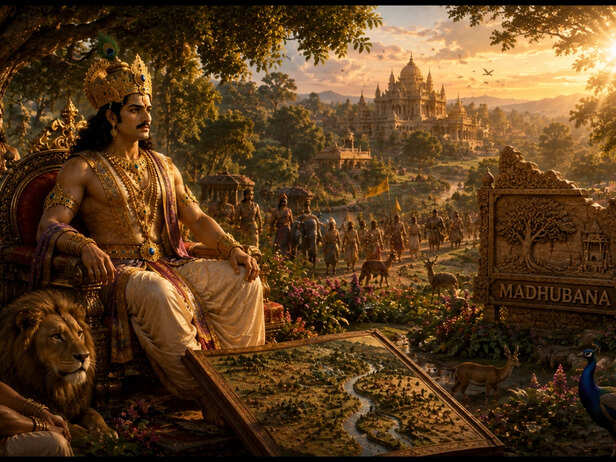
The story begins with King Madhu, whose very name is associated with sweetness, like honey. Tradition describes him as a powerful ruler whose kingdom flourished near the Yamuna. The forest he established became known as Madhubana, taking its name from the king. It was imagined as a prosperous and beautiful place under his rule. But the story soon takes an unexpected turn. After Madhu withdrew from worldly life, his son Lavana came to power. The sweetness associated with Madhubana gradually gave way to fear and oppression, setting the stage for a dramatic transformation.
![Lavanasura and the Fall of Madhubana]()
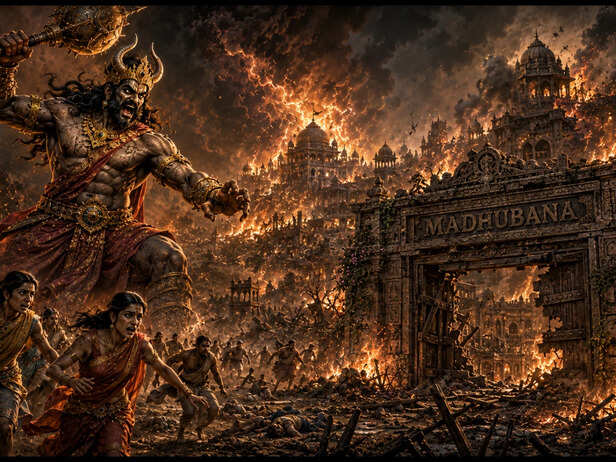
Lavana, also known as Lavanāsura in the traditional narrative, became a feared ruler. His name is connected with the Sanskrit word for salt, creating a striking contrast with his father Madhu, whose name evokes sweetness. His rule became oppressive, and the once peaceful Madhubana lost its earlier character. The turning point came when Shatrughna, the younger brother of Lord Rama, confronted Lavanasura and defeated him. After this victory, Shatrughna established a new city in the region, traditionally associated with the name Madhupura. The story of the land was about to enter another chapter.
Over time, the region came to be associated with Madhupura and eventually Mathura, one of the most important sacred places connected with Krishna. The city became part of the wider traditions surrounding the Yadu lineage and Krishna's family. Yet the story says that prosperity and power do not always remain with one generation. A later ruler seized the throne through betrayal and imprisoned his own father. The atmosphere of Mathura changed once again. What had once been connected with sweetness and prosperity was now overshadowed by fear. Then came a prophecy that would change everything.
Kamsa's tyranny had spread throughout Mathura when a terrifying prophecy reached him. The prediction declared that a child from his own family would eventually become the cause of his downfall. Fear consumed the ruler, and the story of Krishna's birth unfolded under extraordinary circumstances. On the night of Krishna Janmashtami, Krishna was born in the prison where his parents, Devaki and Vasudeva, were held. His birth was not an ordinary royal arrival. It became the beginning of a divine story that would eventually bring an end to Kamsa's oppression and transform Mathura forever.
Years after his miraculous birth, Krishna returned to Mathura. The confrontation everyone had feared finally arrived. Krishna faced Kamsa, the ruler who had terrorised his family and kingdom. In the traditional story, Krishna defeated and killed Kamsa, ending his tyranny. The victory carried a meaning larger than one king's defeat. The city that had been overshadowed by fear could once again move toward peace. This is where the connection with the earlier story of Madhu becomes especially interesting. A land once linked with sweetness had, through generations of conflict, finally witnessed the return of hope.
Here comes the detail many people miss. Madhav is a revered name of Krishna and has multiple traditional explanations in Hindu literature and devotional traditions. In the particular lineage-based story presented here, the name is connected with Madhu's lineage, giving the idea of Krishna as a descendant of Madhu. However, this is not the only traditional meaning of Madhav. The name is also associated with meanings such as Lord of Lakshmi and is connected with the word Madhu in different Sanskrit traditions. So it is better not to treat one explanation as the only definitive etymology.
This is where the story becomes especially interesting. Many people assume that Madhav means Krishna because he killed the demon Madhu. But the famous name for Krishna as the slayer of Madhu is Madhusudan, meaning the one who destroyed Madhu. Madhav has different traditional interpretations, including those connected with Lakshmi and the Madhu lineage in certain narratives. Both names point toward different aspects of Krishna. One recalls his divine identity and lineage, while the other highlights his role as the destroyer of evil. Together, they show why Krishna has so many meaningful names.
The story of Krishna and the name Madhav becomes even more beautiful when we look beyond a single word.
From Madhu and Madhubana to Madhupura and Mathura, the traditional story traces a long journey of sweetness, power, oppression and renewal.
He defeats Kamsa and restores hope to Mathura, giving the old land a new chapter.
And perhaps that is why the idea of ancestors feels so powerful. Sometimes, when someone reminds us of our grandparents, we see more than a familiar face. We see a connection to a story that began long before us.
So the next time you hear the name Madhav, remember that Krishna has many names, and each one opens a different door into his story.
Madhusudan tells us about the destruction of evil. Madhav carries other layers of meaning, including those found in traditions of divine identity and lineage.
And that makes Krishna's names not just names, but stories waiting to be discovered.
Unlock insightful tips and inspiration on personal growth, productivity, and well-being. Stay motivated and updated with the latest at My Life XP.
King Madhu and the Sweet Beginning
King Madhu and the Origins of Madhubana
Image credit : ChatGPT (ai)
The story begins with King Madhu, whose very name is associated with sweetness, like honey. Tradition describes him as a powerful ruler whose kingdom flourished near the Yamuna. The forest he established became known as Madhubana, taking its name from the king. It was imagined as a prosperous and beautiful place under his rule. But the story soon takes an unexpected turn. After Madhu withdrew from worldly life, his son Lavana came to power. The sweetness associated with Madhubana gradually gave way to fear and oppression, setting the stage for a dramatic transformation.
Lavana Turns Sweetness Into Fear
Lavanasura and the Fall of Madhubana
Image credit : ChatGPT (ai)
Lavana, also known as Lavanāsura in the traditional narrative, became a feared ruler. His name is connected with the Sanskrit word for salt, creating a striking contrast with his father Madhu, whose name evokes sweetness. His rule became oppressive, and the once peaceful Madhubana lost its earlier character. The turning point came when Shatrughna, the younger brother of Lord Rama, confronted Lavanasura and defeated him. After this victory, Shatrughna established a new city in the region, traditionally associated with the name Madhupura. The story of the land was about to enter another chapter.
Madhupura Eventually Became Mathura
The Prophecy That Changed Mathura
Krishna Ends Kamsa's Tyranny
Why Krishna Is Called Madhav
Madhav and Madhusudan Are Different
The Sweetness Hidden in Krishna's Name
From Madhu and Madhubana to Madhupura and Mathura, the traditional story traces a long journey of sweetness, power, oppression and renewal.
Then Krishna appears.
And perhaps that is why the idea of ancestors feels so powerful. Sometimes, when someone reminds us of our grandparents, we see more than a familiar face. We see a connection to a story that began long before us.
So the next time you hear the name Madhav, remember that Krishna has many names, and each one opens a different door into his story.
Madhusudan tells us about the destruction of evil. Madhav carries other layers of meaning, including those found in traditions of divine identity and lineage.
And that makes Krishna's names not just names, but stories waiting to be discovered.
Unlock insightful tips and inspiration on personal growth, productivity, and well-being. Stay motivated and updated with the latest at My Life XP.