Have you ever been stopped by an elder when trying to pluck a Tulsi leaf after sunset? Many Hindu households follow this rule, but the reason behind it goes far beyond a daily ritual. According to a fascinating story from the Devi Bhagavata Purana, Tulsi was once a devoted woman named Vrinda, whose husband Shankhchuda was protected by her spiritual power. Her story involves Lord Vishnu, a curse and the origin of the sacred Tulsi plant. But how did this tale become connected to the tradition of not plucking Tulsi leaves at night?
Why Grandmothers Stop Us From Plucking Tulsi at Night
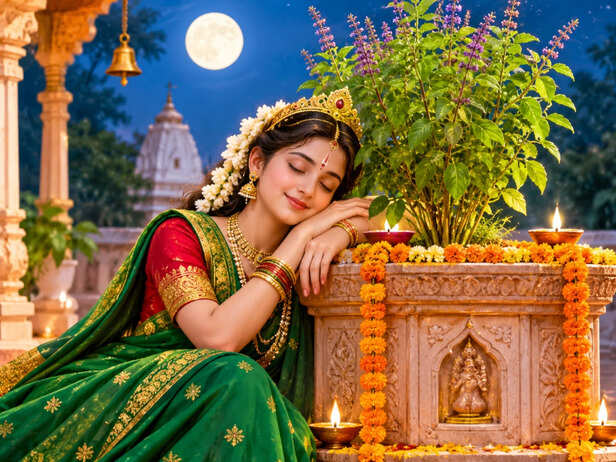
![Moonlit Tulsi Courtyard Devotion]()
Moonlit Tulsi Courtyard Devotion
Image credit : CHATGPT(AI)
Have you ever noticed how elders immediately stop someone from plucking Tulsi leaves after sunset? In many Hindu households, this is considered an important religious rule. Tulsi is not treated as an ordinary plant but is worshipped as a manifestation of Goddess Tulsi and is especially dear to Lord Vishnu. According to traditional beliefs, plucking its leaves during the evening or at night is avoided out of respect for the goddess. However, the reason behind this practice becomes more fascinating when we learn the story of Tulsi and Shankhchuda.
Tulsi Was Once Shankhchuda's Devoted Wife
![Tulsi Devotion with Lord Shiva]()
Tulsi Devotion with Lord Shiva
Image credit : CHATGPT(AI)
According to the Devi Bhagavata Purana, Tulsi was a deeply devoted woman who married Shankhchuda, a powerful asura. Her devotion and chastity were believed to protect her husband from death. Shankhchuda had received a divine protective boon, and as long as Tulsi's marital virtue remained intact, he could not be defeated. This made him extremely difficult for the gods to overcome. When his growing power began troubling the celestial world, the gods sought Lord Vishnu's help to restore balance.
Lord Vishnu Took Shankhchuda's Form
To end Shankhchuda's protection, Lord Vishnu took a difficult decision. According to the Puranic account, he first obtained Shankhchuda's protective armour through deception and then assumed his appearance. He approached Tulsi's palace looking like her husband. Believing that Shankhchuda had returned safely from the battlefield, Tulsi welcomed him with love and devotion. She washed his feet and became emotional with happiness. However, she soon realised that the person standing before her was not her husband but Lord Vishnu himself.
Tulsi Cursed Lord Vishnu to Become Stone
When Tulsi discovered the truth, she was devastated. She realised that Lord Vishnu had deceived her and that her husband's death was connected to this act. Overwhelmed by grief and anger, she questioned how the protector of the universe could resort to such deception. She then cursed Lord Vishnu to become a stone, expressing that only someone with a heart of stone could have caused such pain. Lord Vishnu accepted her curse, and this moment became central to the story of the sacred Shaligram.
How Tulsi Became a Sacred Plant
Seeing Tulsi's sorrow, Lord Vishnu offered her a divine blessing. According to the Devi Bhagavata Purana, her body would become the sacred Gandaki River, while her hair would transform into the Tulsi plant. He also assured her that she would remain deeply connected with him and receive a special place in religious worship. From then on, Tulsi became one of the most sacred plants in Hindu tradition. Her leaves are considered especially dear to Lord Vishnu and are regularly offered during his worship.
Why Tulsi and Shaligram Are Worshipped Together
Tulsi's curse also became part of the origin story of Shaligram Shila. Lord Vishnu accepted her curse and promised to reside in the form of sacred stones along the banks of the Gandaki River. These stones became known as Shaligram and are worshipped as a form of Lord Vishnu. This is why Tulsi leaves are traditionally offered to Shaligram during religious rituals. Their connection represents the divine promise that Tulsi and Lord Vishnu would never be separated.
Why Tulsi Leaves Should Not Be Plucked at Night
The story of Tulsi explains her sacred status, while traditional Hindu practices prescribe specific rules for plucking her leaves. Many religious traditions advise against plucking Tulsi after sunset, at night, on Dwadashi, Amavasya and Purnima. Some traditions also avoid plucking leaves on Sankranti. Devotees are generally advised to collect the required leaves during daylight and avoid damaging the plant. If leaves are needed for evening worship, they can be collected beforehand and kept respectfully. The exact customs may differ between families and regional traditions.
Unlock insightful tips and inspiration on personal growth, productivity, and well-being. Stay motivated and updated with the latest at
My Life XP.