Why Uttarakhand Treats Nanda Devi Like Its Own Daughter
Noopur Kumari | Sept 10, 2026, 15:00 IST
Why does Uttarakhand celebrate a journey that feels more like a daughter’s farewell than an ordinary pilgrimage? Every 12 years, devotees gather for the Nanda Devi Raj Jat, traditionally understood as Nanda Devi’s journey from her maternal home toward her divine home in the mountains. At the centre of the procession is a four-horned ram, adding an extraordinary mystery to this centuries-old Himalayan tradition.

This Goddess Leave Her Home Every 12 Years
Image credit : ChatGPT (ai)
Imagine an entire region preparing to send its beloved daughter away.
Not for a day. Not for a festival. But on a sacred journey through the mountains that traditionally takes place once every 12 years. In Uttarakhand, Nanda Devi is revered not only as a goddess but also as a daughter of the hills. The Nanda Devi Raj Jat turns this belief into an emotional pilgrimage filled with devotion, ancient customs and Himalayan mystery
![Nanda Devi and the Himalayan Villages]()
For many people in Uttarakhand, Nanda Devi is not seen only as a distant divine figure. She is lovingly regarded as the daughter of the mountains. This makes the Nanda Devi Raj Jat deeply personal for local communities. The tradition connects the goddess with the emotional relationship between a daughter and her maternal home. When the great procession begins, devotees do not simply feel that they are attending a religious event. They see themselves as accompanying their daughter on an important journey. This emotional connection is one reason the Raj Jat continues to hold such a powerful place in Uttarakhand’s cultural heritage.
![Nanda Devi Raj Jat Procession]()
The Nanda Devi Raj Jat is not an annual event. It is traditionally held once every 12 years, which makes each edition especially significant for devotees. Uttarakhand Tourism lists Nanda Raj Jat among the state’s important pilgrimage and cultural traditions. The long wait adds another emotional layer to the journey. Generations may experience only a few Raj Jat pilgrimages in their lifetime. That rarity helps explain why the procession is treated with such reverence. For local communities, it is not simply another date on the calendar. It is a rare moment when an old tradition becomes alive again.
A Daughter’s Farewell to
The most emotional idea behind the Raj Jat is the farewell. Traditional belief presents Nanda Devi as leaving her maternal home and travelling toward her divine abode associated with the Himalayas and Kailash. The imagery is powerful because it mirrors a familiar Indian family tradition: a daughter leaving her parents’ home after marriage. Incredible India describes the procession as representing the goddess returning to her celestial abode in Kailash. This transforms the mountain pilgrimage into something deeply human. The people are not simply watching a deity depart. They are symbolically sending their daughter home.
Perhaps the most fascinating element of the Raj Jat is the special ram associated with the procession. The four-horned animal has become one of the most recognisable symbols of this Himalayan tradition. Its presence adds an unusual layer of mystery to the journey and has fascinated visitors and devotees alike. In the traditional understanding of the procession, the animal is connected with the goddess’s journey toward her divine destination. For devotees, it is not merely an animal accompanying a pilgrimage. It represents a sacred part of the ritual and helps give the Raj Jat its distinctive identity.
The Raj Jat is powerful partly because of where it takes place. The Himalayan landscape becomes part of the experience, with devotees moving through remote mountain regions, villages, forests and high-altitude terrain. The journey combines faith, endurance and the cultural traditions of Garhwal. Uttarakhand Tourism describes Nanda Raj Jat as one of the state’s important pilgrimage and cultural events. For participants, walking through these landscapes can feel like entering another world. Every mountain path, song and ritual adds another layer to the story of Nanda Devi’s farewell.
As the pilgrimage reaches its remote high-altitude stages, the emotional meaning of the journey becomes even stronger. Homkund is associated with the Raj Jat route and lies in the high Himalayan landscape. Uttarakhand tourism material also identifies Homkund in the wider trekking region connected with Nanda Devi’s mountains. Traditional accounts connect the final rituals with Nanda Devi’s onward journey. For devotees, this is not simply about reaching a destination. It represents the completion of a farewell that began much earlier, when the goddess was symbolically prepared to leave her maternal home.
The most touching part of the tradition may be what the farewell represents. Sending Nanda Devi toward her divine home is not viewed simply as an ending. It also carries the emotional hope that she will return again. That feeling makes the Raj Jat different from a journey that ends when pilgrims reach their destination. The people of Uttarakhand are symbolically saying goodbye to their daughter while keeping the bond alive. Perhaps that is why the tradition has survived across generations. The mountains may change, roads may improve and the world may become modern, but the emotion behind a daughter’s farewell remains remarkably timeless.
The Nanda Devi Raj Jat is extraordinary because it brings together faith and family emotion.
It is a grand Himalayan pilgrimage, but at its heart lies a remarkably simple feeling: a daughter leaving home.
For devotees, Nanda Devi is not only worshipped. She is loved.
And every 12 years, the mountains become the setting for that emotional farewell. The procession, the rituals, the remote Himalayan landscape and the traditional four-horned ram all become part of a story that connects generations.
Perhaps that is the real mystery of Nanda Devi Raj Jat. It does not simply ask people to worship a goddess. It asks them to feel the pain, love and hope of saying goodbye to someone they never want to lose.
Unlock insightful tips and inspiration on personal growth, productivity, and well-being. Stay motivated and updated with the latest at My Life XP.
Not for a day. Not for a festival. But on a sacred journey through the mountains that traditionally takes place once every 12 years. In Uttarakhand, Nanda Devi is revered not only as a goddess but also as a daughter of the hills. The Nanda Devi Raj Jat turns this belief into an emotional pilgrimage filled with devotion, ancient customs and Himalayan mystery
Nanda Devi Is More Than a Goddess
Nanda Devi and the Himalayan Villages
Image credit : ChatGPT(ai)
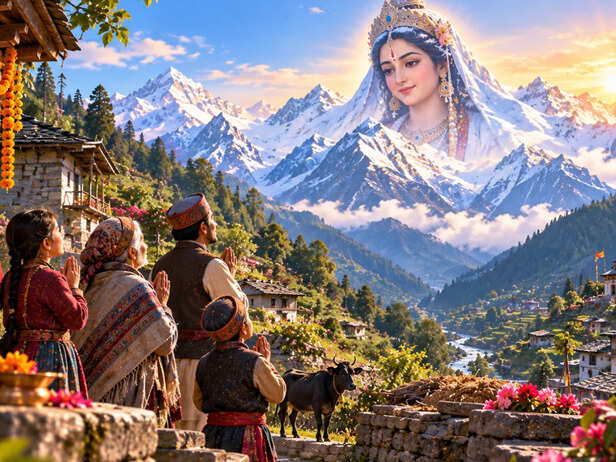
For many people in Uttarakhand, Nanda Devi is not seen only as a distant divine figure. She is lovingly regarded as the daughter of the mountains. This makes the Nanda Devi Raj Jat deeply personal for local communities. The tradition connects the goddess with the emotional relationship between a daughter and her maternal home. When the great procession begins, devotees do not simply feel that they are attending a religious event. They see themselves as accompanying their daughter on an important journey. This emotional connection is one reason the Raj Jat continues to hold such a powerful place in Uttarakhand’s cultural heritage.
The Journey Happens Once in 12 Years
Nanda Devi Raj Jat Procession
Image credit : ChatGPT(ai)
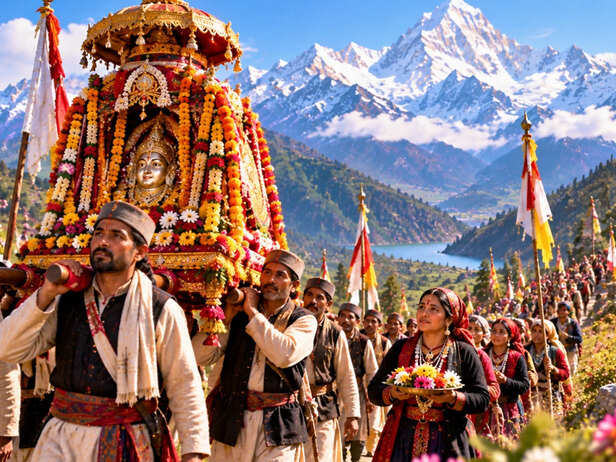
The Nanda Devi Raj Jat is not an annual event. It is traditionally held once every 12 years, which makes each edition especially significant for devotees. Uttarakhand Tourism lists Nanda Raj Jat among the state’s important pilgrimage and cultural traditions. The long wait adds another emotional layer to the journey. Generations may experience only a few Raj Jat pilgrimages in their lifetime. That rarity helps explain why the procession is treated with such reverence. For local communities, it is not simply another date on the calendar. It is a rare moment when an old tradition becomes alive again.
A Daughter’s Farewell to Kailash
The Four-Horned Ram Leads the Way
The Mountains Become Part of the Story
Homkund Marks a Powerful Moment
The Farewell Is Also a Promise
The Real Meaning Behind the Raj Jat
It is a grand Himalayan pilgrimage, but at its heart lies a remarkably simple feeling: a daughter leaving home.
For devotees, Nanda Devi is not only worshipped. She is loved.
And every 12 years, the mountains become the setting for that emotional farewell. The procession, the rituals, the remote Himalayan landscape and the traditional four-horned ram all become part of a story that connects generations.
Perhaps that is the real mystery of Nanda Devi Raj Jat. It does not simply ask people to worship a goddess. It asks them to feel the pain, love and hope of saying goodbye to someone they never want to lose.
Unlock insightful tips and inspiration on personal growth, productivity, and well-being. Stay motivated and updated with the latest at My Life XP.