Why Was Karna Served Gold in Heaven? The Secret
Noopur Kumari | Sept 29, 2026, 16:00 IST
Karna is remembered in the Mahabharata as one of the greatest examples of generosity. He was known for giving away gold, jewels and wealth without hesitation. But according to a popular traditional legend associated with Pitru Paksha, something shocking happened after his death. When Karna reached heaven, the food placed before him was not ordinary food. He was given gold and precious objects instead.

Karna Got Gold Instead of Food
Image credit : ChatGPT(ai)
Karna is remembered in the Mahabharata as one of the greatest examples of generosity. He was known for giving away gold, jewels and wealth without hesitation. But according to a popular traditional legend associated with Pitru Paksha, something shocking happened after his death. When Karna reached heaven, the food placed before him was not ordinary food. He was given gold and precious objects instead. The reason behind this strange fate revealed a lesson even the great Karna had overlooked: giving wealth is not the same as remembering your ancestors.
![Karna’s Journey After the Mahabharata War]()
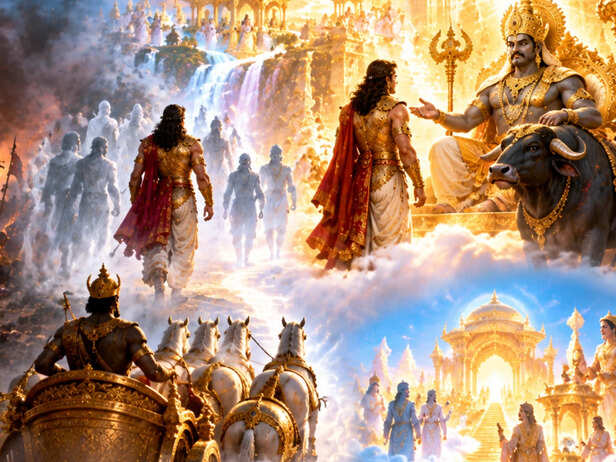
Karna’s life was filled with extraordinary generosity, difficult choices and tragedy. After the Mahabharata war, traditional retellings describe his soul reaching the heavenly realm. Karna had spent his life giving away wealth whenever someone asked, earning a reputation as a great Daanveer Karna. Yet his experience after death was completely unexpected. When food was served to him, he did not receive the meal he expected. Instead, the story says that gold and precious objects appeared before him. For a man surrounded by wealth throughout his life, this was perhaps the strangest reward imaginable.
![Karna Finds Gold Instead of Food]()
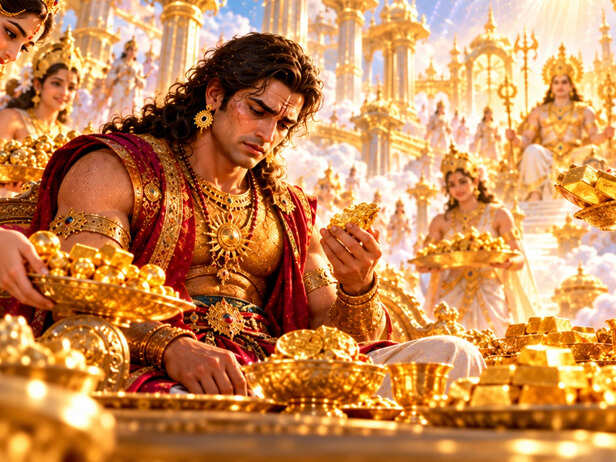
Karna could not understand why gold and jewels were being offered when he needed nourishment. He asked about the reason behind this unusual situation. According to the popular Karna Pitru Paksha legend, the answer was connected to his charity. Karna had donated gold, silver and other valuables generously, but he had not knowingly offered food or water in the name of his ancestors. The story says that he had never known the complete truth about his birth and lineage. Therefore, he had missed a form of charity that the tradition considers deeply connected with remembering and honouring one’s Pitru.
This is where the story takes its emotional turn. Karna was not portrayed as someone who deliberately ignored his ancestors. He simply did not know enough about his birth and family lineage to perform the offerings associated with them. That detail makes the legend more than a story about punishment. It becomes a lesson about remembrance. Pitru Paksha is traditionally observed as a period for honouring departed family members through rituals such as Shraddha and Tarpan. The Karna story highlights why food, water and remembrance hold a special place in these ancestral traditions.
According to the widely circulated legend, Karna was given an opportunity to correct what he had missed. He was allowed to return to Earth for a limited period and perform Shraddha, Tarpan and food offerings for his ancestors. Different retellings describe the duration as 15 or 16 days, but the central idea remains the same. Karna used that period to remember his ancestors and offer food and water in their name. This traditional story is often connected with the origin and significance of Pitru Paksha, the period when Hindu families perform rituals to honour their departed ancestors.
The Karna legend gives a simple emotional meaning to Pitru Paksha: remembering those who came before us. During this period, many Hindu families perform Shraddha, Tarpan, Pind Daan and Anna Daan according to their family traditions. These rituals are expressions of remembrance, gratitude and respect for departed ancestors. The Karna story is often used to explain why offering food and water is given importance alongside other forms of charity. It also reminds us that charity is not only about giving valuable things. Sometimes, the simplest offering, when made with genuine faith and remembrance, carries the deepest meaning.
The idea of Pitru Rina, or the ancestral debt, adds another layer to the story. Hindu philosophical traditions often discuss responsibilities toward the divine, teachers and ancestors, though the exact formulation varies across texts and traditions. Pitru Paksha focuses specifically on remembering and honouring ancestors through Shraddha and related practices. That is why the period holds such importance in many Hindu households. The Karna story turns this broader spiritual idea into a memorable lesson: our lives are connected to those who came before us, and gratitude can be expressed through remembrance, charity, food and water.
The most powerful message of the Karna and Pitru Paksha story is not that gold has no value. It is that generosity should not become disconnected from gratitude. Karna gave wealth freely, yet the legend suggests that he had overlooked the simple act of remembering his ancestors. That is why the story continues to resonate during Pitru Paksha 2026 and beyond. Whether someone follows every ritual or simply remembers departed loved ones with respect, the underlying message is deeply human: never let the pursuit of success make you forget the people and generations whose lives helped shape your own.
Unlock insightful tips and inspiration on personal growth, productivity, and well-being. Stay motivated and updated with the latest at My Life XP.
Karna Reached Heaven After the War
Karna’s Journey After the Mahabharata War
Image credit : ChatGPT (ai)
Karna’s life was filled with extraordinary generosity, difficult choices and tragedy. After the Mahabharata war, traditional retellings describe his soul reaching the heavenly realm. Karna had spent his life giving away wealth whenever someone asked, earning a reputation as a great Daanveer Karna. Yet his experience after death was completely unexpected. When food was served to him, he did not receive the meal he expected. Instead, the story says that gold and precious objects appeared before him. For a man surrounded by wealth throughout his life, this was perhaps the strangest reward imaginable.
Why Did Karna Receive Gold?
Karna Finds Gold Instead of Food
Image credit : ChatGPT(ai)
Karna could not understand why gold and jewels were being offered when he needed nourishment. He asked about the reason behind this unusual situation. According to the popular Karna Pitru Paksha legend, the answer was connected to his charity. Karna had donated gold, silver and other valuables generously, but he had not knowingly offered food or water in the name of his ancestors. The story says that he had never known the complete truth about his birth and lineage. Therefore, he had missed a form of charity that the tradition considers deeply connected with remembering and honouring one’s Pitru.
Karna Realised What He Had Missed
Karna Returned to Earth
This Is How Pitru Paksha Became Significant
The Three Traditional Debts
The Real Lesson of Karna’s Story
Unlock insightful tips and inspiration on personal growth, productivity, and well-being. Stay motivated and updated with the latest at My Life XP.