At first glance, this ancient Vishnu idol appears to have three faces: a calm human face in the centre, a lion's face on one side and a boar's face on the other. But turn the sculpture around, and an entirely different face emerges from the back. Fierce, unusual and unlike the other three, this hidden face has puzzled many viewers. Known as Vaikuntha Chaturmurti, this remarkable form of Lord Vishnu became especially popular in Kashmir around the 8th century. But why did artists carve a fourth face where most people would never see it?
The Three Faces Everyone Notices
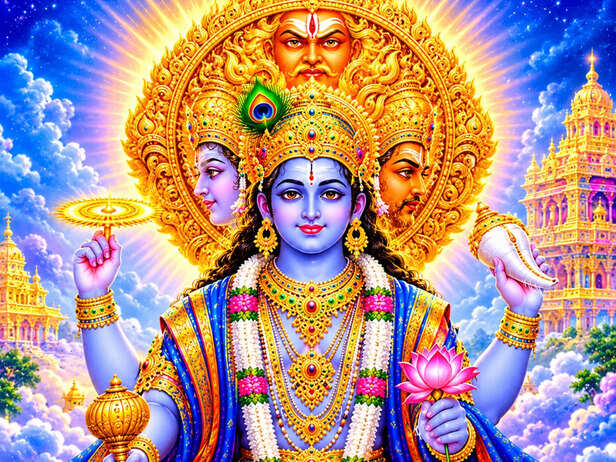
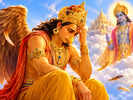
![Radiant Vishnu with Celestial Halo]()
Radiant Vishnu with Celestial Halo
Image credit : chatgpt(ai)
The front of Vaikuntha Chaturmurti has three distinct faces, each carrying a different identity. At the centre is the peaceful human face of Vasudeva, representing Lord Vishnu. On one side appears Narasimha, the powerful man-lion incarnation, while the other side shows Varaha, the divine boar incarnation. These are not random artistic additions. They connect the sculpture with two important incarnations of Vishnu, known for protecting the universe from powerful forces of evil. Together, the three visible faces make this idol very different from an ordinary representation of Vishnu.
The Fourth Face Is Hidden Behind
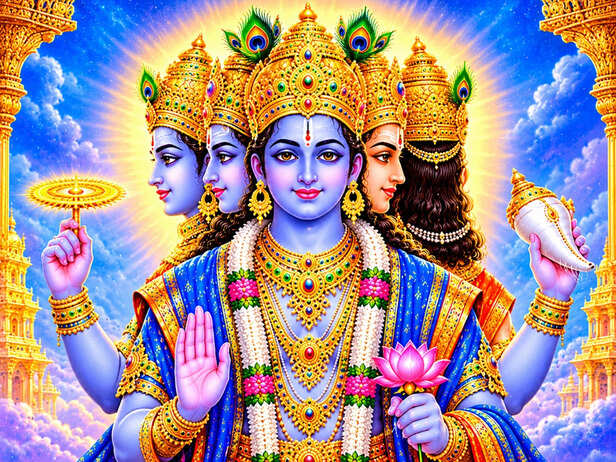
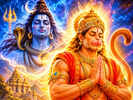
![Four-Faced Deity in Celestial Temple]()
Four-Faced Deity in Celestial Temple
Image credit : chatgpt(ai)
The biggest surprise appears when the sculpture is viewed from behind. A fourth face is carved on the rear of the halo, with an intense expression, prominent fangs and a third eye. Unlike Vishnu's peaceful central face, this one looks fierce and almost frightening. It is commonly identified as Kapila or the Raudra aspect. The National Museum in New Delhi also describes this fourth face as a fierce being. Its unusual placement makes the sculpture especially intriguing because the most mysterious part is not immediately visible to someone standing in front.
Why Was the Fourth Face Placed at the Back?
The fourth face was not added simply to surprise viewers. It forms an essential part of the deity's four-faced iconography. Vaikuntha Chaturmurti represents Vishnu as a divine presence extending in different directions, rather than as a figure meant to be understood from just one viewpoint. The rear face completes this four-sided representation. It also gives the sculpture a more complex identity, combining peaceful and fierce aspects within one divine form. The placement makes the viewer look beyond the familiar appearance of Vishnu to understand the complete icon.
What Does the Fierce Kapila Face Represent?
The fourth face is often identified with Kapila, the ancient sage associated with Samkhya philosophy, or with a fierce Raudra aspect. Its fangs, intense expression and third eye give it a very different appearance from the peaceful central face. However, interpretations of this face vary across art-historical and religious traditions. It should not be treated simply as another incarnation like Narasimha or Varaha. Instead, it forms part of the complex symbolism of Vaikuntha Vishnu, where different divine qualities come together in a single image.
Look Closely at the Small Figure Below
There is another detail that many people miss when looking at this sculpture. Between Vishnu's feet, a small female figure can be seen emerging near the base. This is Goddess Prithvi, the personification of the Earth. Her presence is especially meaningful because Varaha, one of the faces of the sculpture, is associated with rescuing the Earth from the cosmic waters. The small figure adds another layer to the artwork, connecting Vishnu's different forms with his role as the protector and preserver of the universe.
Why Kashmir Became the Centre of This Art
Vaikuntha Chaturmurti became especially important in Kashmir between the 8th and 10th centuries. This distinctive form of Vishnu was closely associated with the region's religious and artistic traditions. The National Museum in New Delhi preserves a ninth-century bronze image from Kashmir, while the Metropolitan Museum of Art displays an eighth-century stone sculpture of Vaikuntha Vishnu. These examples show how artists developed this complex four-faced form in different materials. It was not merely an unusual sculpture but an important representation of Vishnu's divine identity in Kashmir.
The Deeper Meaning Behind Four Faces
The real beauty of Vaikuntha Chaturmurti lies in the fact that no single face tells the entire story. The peaceful human face, the strength of Narasimha, the protective power of Varaha and the mysterious fourth aspect come together in one divine form. The sculpture invites devotees to understand Vishnu beyond the appearance they usually recognise. Perhaps that is why the fourth face remains so fascinating even after centuries. What looks like a hidden detail at first is actually an essential part of the complete representation of Lord Vishnu.
Unlock insightful tips and inspiration on personal growth, productivity, and well-being. Stay motivated and updated with the latest at
My Life XP.