Why Yudhishthira Cursed All Women After Karna’s Death
Noopur Kumari | Aug 19, 2026, 16:00 IST
The story of Karna and Yudhishthira is one of the Mahabharata's most heartbreaking examples of how a hidden truth can change everything. Kunti knew Karna's identity long before the war, yet the Pandavas did not. After Karna's death, the truth was finally revealed to Yudhishthira. The discovery forced him to look back at years of rivalry, family conflict and the devastating war through completely different eyes. His reaction, including the famous curse associated with women concealing secrets, reflects the emotional weight of that moment in the epic tradition.

Karna Was His Brother
Image credit : ChatGPT(AI)
What if the greatest shock of the Kurukshetra war came after one of its most tragic deaths?
For years, Yudhishthira and his brothers had regarded Karna as their bitter enemy. Karna stood with Duryodhana, fought against the Pandavas and became one of the most formidable warriors on the battlefield.
But after Karna's death, Yudhishthira learned a truth that completely shattered his understanding of the war.
Karna was not merely an enemy. He was Kunti's firstborn son and the Pandavas' elder brother.
The revelation transformed grief into something far more painful: regret.
![Karna facing the Pandavas on the battlefield]()
Karna's identity was one of the deepest secrets surrounding the Mahabharata. Kunti became the mother of Karna before her marriage to Pandu through a boon that allowed her to invoke a deity. She later abandoned the infant, who was raised by Adhiratha and Radha. Years later, Karna became closely associated with Duryodhana and eventually stood against the Pandavas. The tragedy lies in the fact that the brothers fought without fully knowing the blood relationship between them. For Yudhishthira, discovering this after Karna's death meant realising that the man he had considered an enemy had actually been his elder brother.
![Kunti revealing Karna's identity]()
Kunti knew Karna's true identity, but the circumstances surrounding his birth were complicated by social fears and the realities of the time. Before the war, she eventually approached Karna and revealed that she was his mother. She asked him to join the Pandavas. Karna, however, refused to abandon Duryodhana, the friend who had stood by him when others rejected him. He promised Kunti that he would not kill all five Pandavas, but his loyalty remained with Duryodhana. The war therefore continued toward a tragedy that Kunti had desperately hoped to prevent.
After Karna's death, the Pandavas learned the truth about his birth from Kunti. Imagine the emotional impact of that moment. The warrior they had fought for years was their own brother. Worse still, he was their eldest brother, born before Yudhishthira. Victory suddenly carried a painful new meaning. The war had been won, but the cost could no longer be viewed simply through the lens of defeating an enemy. Yudhishthira had to confront the possibility that the family he had fought to protect had also lost one of its own.
The discovery reportedly devastated Yudhishthira. In the traditional narrative, his grief turned into anger toward the concealment of the truth, leading to his famous curse that women would no longer be able to keep secrets. This episode should be understood within the context of the epic narrative rather than as a literal statement about all women. Its emotional purpose is clearer: Yudhishthira was reacting to the unbearable consequences of a secret that had remained hidden for too long. One revelation had changed how he understood his family, his enemy and even the war itself.
Karna's tragedy was not simply that he died on the battlefield. His entire life was shaped by questions of identity and belonging. He was born a royal prince but raised away from his birth family. He possessed extraordinary ability but repeatedly faced rejection. When Duryodhana offered him recognition and friendship, Karna remained fiercely loyal to him. That loyalty eventually placed him opposite his own brothers. His story shows how complicated human choices can become when love, gratitude, identity and duty pull in different directions.
The most haunting part of this story is not simply the secret itself. It is the timing of the revelation. If Yudhishthira had known Karna was his brother before the war, would everything have changed? Could Karna have been brought back into the family? Would the conflict with Duryodhana still have happened? The Mahabharata does not offer an easy answer. That uncertainty is precisely what makes the story so powerful. Some truths arrive when they can no longer change the past. They can only change how we understand it.
Unlock insightful tips and inspiration on personal growth, productivity, and well-being. Stay motivated and updated with the latest at My Life XP
For years, Yudhishthira and his brothers had regarded Karna as their bitter enemy. Karna stood with Duryodhana, fought against the Pandavas and became one of the most formidable warriors on the battlefield.
But after Karna's death, Yudhishthira learned a truth that completely shattered his understanding of the war.
Karna was not merely an enemy. He was Kunti's firstborn son and the Pandavas' elder brother.
The revelation transformed grief into something far more painful: regret.
The Enemy Was Family
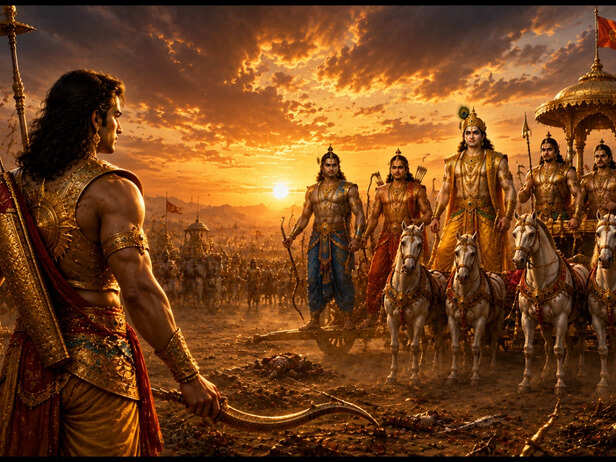
Karna facing the Pandavas on the battlefield
Image credit : ChatGPT(AI)
Karna's identity was one of the deepest secrets surrounding the Mahabharata. Kunti became the mother of Karna before her marriage to Pandu through a boon that allowed her to invoke a deity. She later abandoned the infant, who was raised by Adhiratha and Radha. Years later, Karna became closely associated with Duryodhana and eventually stood against the Pandavas. The tragedy lies in the fact that the brothers fought without fully knowing the blood relationship between them. For Yudhishthira, discovering this after Karna's death meant realising that the man he had considered an enemy had actually been his elder brother.
Kunti Carried the Secret
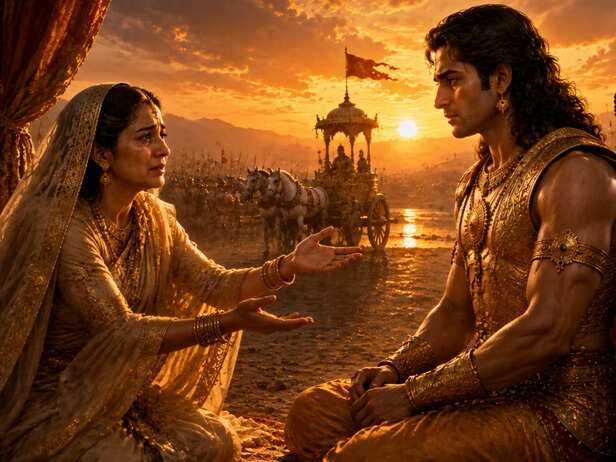
Kunti revealing Karna's identity
Image credit : ChatGPT(AI)
Kunti knew Karna's true identity, but the circumstances surrounding his birth were complicated by social fears and the realities of the time. Before the war, she eventually approached Karna and revealed that she was his mother. She asked him to join the Pandavas. Karna, however, refused to abandon Duryodhana, the friend who had stood by him when others rejected him. He promised Kunti that he would not kill all five Pandavas, but his loyalty remained with Duryodhana. The war therefore continued toward a tragedy that Kunti had desperately hoped to prevent.
The Truth Came Too Late
Yudhishthira's Grief Became Anger
What Karna's Story Really Reveals
The Pain of Knowing Too Late
Unlock insightful tips and inspiration on personal growth, productivity, and well-being. Stay motivated and updated with the latest at My Life XP