
10 Days of Onam You Never Knew: From Atham to Thiruvonam and Their Hidden Meanings
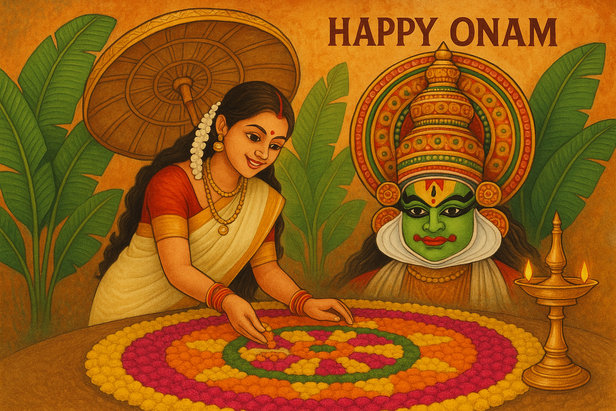
Onam, Kerala’s most cherished festival, is more than just flower carpets and feasts, it’s a 10-day journey of rituals, traditions, and spirituality. Rooted in the legend of King Mahabali, Onam celebrates prosperity, unity, and gratitude. Each day, from Atham to Thiruvonam, carries its own unique customs and symbolic meanings that weave together culture, devotion, and joy. Let’s take a closer look at the 10 days of Onam you probably didn’t know in detail.
Day 1 – Atham
The festival of Onam begins with Atham, a day filled with fresh beginnings and anticipation. Families create the first Pookalam (floral carpet), often using simple yellow blossoms like Thumbapoo. Though modest in design, this floral arrangement marks the arrival of Onam and is believed to invoke the spirit of King Mahabali, whose yearly visit is at the heart of the celebration. Atham symbolizes purity, new opportunities, and the start of a ten-day journey of joy and gratitude.
Day 2 – Chithira
On the second day, Chithira, the Pookalam expands as more flowers are added, making it brighter and more elaborate. Alongside this, homes are thoroughly cleaned, a ritual that represents clearing away negativity and creating space for auspicious energies. Spiritually, Chithira is about purification, both of the physical environment and the inner self, ensuring that families are ready to welcome blessings with open hearts.
Day 3 – Chodhi
Chodhi, the third day, brings excitement as families begin shopping for essentials and new clothes in preparation for Onam. The Pookalam grows richer in color and complexity, reflecting the festive mood. This day symbolizes abundance and preparation, a reminder to express gratitude for the harvest while preparing to share prosperity with loved ones. It reflects the balance between material readiness and spiritual fulfillment.
Day 4 – Visakam
By the fourth day, Visakam, the festive spirit reaches new heights. Competitions for the most creative Pookalams begin, filling neighborhoods with friendly enthusiasm. Families also start preparing ingredients for the grand Onam Sadhya feast. The day represents joy in creativity, cooperation, and collective celebration. Spiritually, Visakam teaches that prosperity and happiness are magnified when shared through togetherness.
Day 5 – Anizham
Anizham is marked by the thrilling Vallamkali, or snake boat races, on Kerala’s rivers. These magnificent events showcase teams rowing in unison, their rhythm reflecting perfect discipline and unity. Beyond being a spectacle, Vallamkali embodies the strength of community and the beauty of collective effort. Spiritually, Anizham emphasizes harmony, cooperation, and the idea that great achievements are possible when people move together with a shared purpose.
Day 6 – Thriketa
On Thriketa, the sixth day, the focus turns to family and relationships. Relatives visit each other, gifts are exchanged, and joy is spread through togetherness. Children especially look forward to receiving presents during this time. Thriketa symbolizes bonding, love, and familial unity, reminding everyone that festivals are as much about nurturing relationships as they are about rituals.
Day 7 – Moolam
The seventh day, Moolam, brings community celebrations to the forefront. Local temples come alive with small feasts, cultural performances, and gatherings. Early versions of the Onam Sadhya are prepared, with a few traditional dishes served to devotees and neighbors. This day highlights sharing, inclusiveness, and joy in community living, reflecting the festival’s spirit of generosity and hospitality.
Day 8 – Pooradam
Pooradam holds a special spiritual significance. On this day, families craft clay pyramids known as Onathappan, representing Lord Vamana and King Mahabali, and place them in courtyards. This ritual honors humility, dharma, and divine presence. Pooradam teaches that true greatness lies not in power but in humility and righteousness, values embodied by both Vamana and Mahabali in Onam’s mythology.
Day 9 – Uthradam
Known as “First Onam,” Uthradam is the ninth day and is filled with eager anticipation. Families make last-minute purchases and prepare their homes for the grand festivities. Tradition holds that King Mahabali begins his journey to visit his people on this day, and households ready themselves to welcome him with love and devotion. Uthradam represents joy, excitement, and readiness for the blessings that come with Thiruvonam.
Day 10 – Thiruvonam
Thiruvonam, the tenth and most important day of Onam, is the festival’s climax. Homes are adorned with the most elaborate Pookalams, and families gather for the grand Onam Sadhya, a vegetarian feast of up to 26 dishes served on banana leaves. Cultural festivities fill the day, but at its heart lies the belief that King Mahabali visits every household to bless his people with prosperity and happiness. Spiritually, Thiruvonam is a celebration of gratitude, humility, and the eternal bond between the beloved king and his people.
The Spiritual Symbolism Behind 10 Days of Onam
Flowers (Pookalam): Represent growth, beauty, and harmony in diversity.
Feast (Sadhya): Teaches equality, as everyone sits together and eats the same meal on a banana leaf.
King Mahabali’s Visit: Symbolizes humility—though he lost his kingdom, he won immortality in his people’s hearts.
Boat Races and Community Events: Remind us of collective strength and unity.
Onam is not just a festival of feasts and flowers, it’s a 10-day spiritual journey. Each day layers meaning upon meaning: from preparation and unity to joy, gratitude, and humility. Together, they tell a story that goes beyond Kerala, offering a timeless reminder for all of us true prosperity lies not in wealth but in togetherness, compassion, and gratitude This Onam, as you admire the Pookalam or share a meal, remember: every ritual is a thread in a tapestry of love that has held Kerala’s culture strong for centuries.
Unlock insightful tips and inspiration on personal growth, productivity, and well-being. Stay motivated and updated with the latest at My Life XP