5 Mamas, 5 Lessons: Mahabharata's Hidden Wisdom
Noopur Kumari | Jun 29, 2026, 16:00 IST
The Mahabharata introduces us to five unforgettable maternal uncles, each representing a different kind of love and responsibility. From Shakuni's destructive attachment to Krishna's selfless guidance, every uncle leaves behind a lesson that remains relevant today. Once you notice this hidden pattern, you'll realize that the Mahabharata is also a story about how one person's influence can build or destroy a family.

When people think of the Mahabharata, they remember mighty warriors, legendary battles, and timeless teachings. But hidden beneath the grand story is another powerful thread the influence of maternal uncles. Some guided with wisdom. Some protected with their lives. Some made painful choices. And one changed the fate of an entire generation. Their stories reveal that a maternal uncle is not just a relative. He can shape destiny itself.
![Shakuni and the Kauravas]()
Shakuni loved his nephews deeply, but his love lacked wisdom. Instead of teaching the Kauravas humility, patience, and righteousness, he encouraged jealousy, revenge, and greed. His constant manipulation pushed Duryodhana toward decisions that eventually led to the Kurukshetra war. The Mahabharata reminds us that affection without values can become dangerous. True love does not fulfill every desire it teaches the difference between right and wrong.
![King Shalya in Batt]()
King Shalya, the maternal uncle of Nakula and Sahadeva, wished for the Pandavas' victory but was compelled by his word to fight for the Kauravas. Throughout the war, he remained trapped between loyalty and duty. His story teaches that promises carry responsibility, yet difficult choices often leave emotional scars. Sometimes, even righteous people must face painful circumstances beyond their control.
Dhrishtadyumna, the brother of Draupadi, served as the commander of the Pandava army and stood as the maternal uncle of the Upapandavas. He defended their cause throughout the eighteen-day war. On the final night, Ashwatthama attacked the camp, and Dhrishtadyumna lost his life while protecting the Pandava side. His story reflects the kind of guardian who stands with his family until his very last breath.
Lord Krishna was the maternal uncle of Abhimanyu through his sister Subhadra. Although he did not prevent Abhimanyu's tragic death in battle, he ensured that the larger purpose of dharma prevailed. Later, Krishna saved the unborn Parikshit, preserving the Pandava lineage. His role shows that true care is not always about preventing pain it is about protecting the future and guiding loved ones through destiny.
Kripacharya, the maternal uncle of Ashwatthama, treated his nephew with the same discipline and principles that he showed every student. He never allowed family ties to outweigh righteousness. While Ashwatthama received the curse of immortality, Kripacharya became one of the revered Chiranjeevis. Their contrasting destinies reveal that wisdom is earned through one's actions, not through family relationships alone.
In Indian tradition, the maternal uncle holds a unique place in family life. The Sanskrit word Matula reflects someone who extends a mother's affection while offering a father's protection. The Mahabharata presents different examples of this role, showing that influence matters more than blood alone. A good maternal uncle nurtures character, offers guidance, and stands beside the family during life's greatest challenges.
The stories of these five maternal uncles teach that relationships are built through responsibility, wisdom, and selfless action. Some characters remind us what to avoid, while others show the power of sacrifice and guidance. Their lives prove that family members shape each other's future through everyday choices. That is why the Mahabharata remains more than an epic it is a timeless guide to human relationships.
Unlock insightful tips and inspiration on personal growth, productivity, and well-being. Stay motivated and updated with the latest at My Life XP.
1. Why do some people call the Mahabharata "Mamabharata"?
The term "Mamabharata" is a creative interpretation that highlights the significant roles played by several maternal uncles (mamas) in the Mahabharata. While it is not an official name of the epic, it draws attention to how these characters influenced the lives and destinies of their nephews.
2. Who are the five important maternal uncles in the Mahabharata?
The five notable maternal uncles often discussed are Shakuni, Shalya, Lord Krishna, Dhrishtadyumna (maternal uncle of the Upa andavas, Draupadi's sons), and Kripacharya. Each represents a different aspect of guidance, protection, loyalty, or responsibility.
3. What lesson does Shakuni's story teach?
Shakuni's story illustrates that love without wisdom can become destructive. His blind support for the Kauravas encouraged jealousy and revenge, ultimately contributing to the Kurukshetra War. The lesson is that true care includes teaching values and accountability.
4. Why is Lord Krishna considered an ideal maternal uncle?
Lord Krishna, the maternal uncle of Abhimanyu, guided and protected the Pandavas throughout the Mahabharata. Although he did not prevent every tragedy, he safeguarded the future of their lineage by saving Parikshit, demonstrating that true guidance often focuses on long-term well-being rather than temporary comfort.
5. What does the Mahabharata teach about the role of a maternal uncle?
The Mahabharata suggests that a maternal uncle is more than just a family member. Through different characters, it shows that a mama can be a mentor, protector, teacher, or guide whose influence shapes the values, decisions, and future of the next generation
When Love Turns Into Blind Attachment
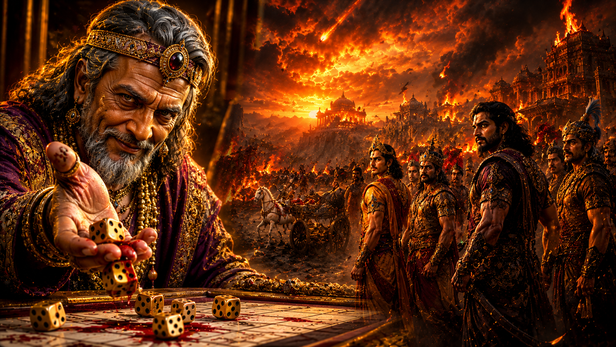
Shakuni and the Kauravas
Shakuni loved his nephews deeply, but his love lacked wisdom. Instead of teaching the Kauravas humility, patience, and righteousness, he encouraged jealousy, revenge, and greed. His constant manipulation pushed Duryodhana toward decisions that eventually led to the Kurukshetra war. The Mahabharata reminds us that affection without values can become dangerous. True love does not fulfill every desire it teaches the difference between right and wrong.
Bound by Duty, Torn by the Heart
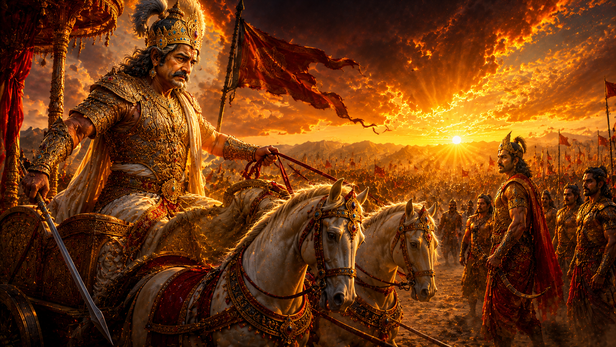
King Shalya in Batt
King Shalya, the maternal uncle of Nakula and Sahadeva, wished for the Pandavas' victory but was compelled by his word to fight for the Kauravas. Throughout the war, he remained trapped between loyalty and duty. His story teaches that promises carry responsibility, yet difficult choices often leave emotional scars. Sometimes, even righteous people must face painful circumstances beyond their control.
A Protector Until the Final Breath
Krishna Redefined What It Means to Be a Mama
A Guru Who Never Played Favorites
The Real Meaning of a Maternal Uncle
The Hidden Lesson Modern Families Can Learn
Unlock insightful tips and inspiration on personal growth, productivity, and well-being. Stay motivated and updated with the latest at My Life XP.
Frequently Asked Questions (FAQs)
The term "Mamabharata" is a creative interpretation that highlights the significant roles played by several maternal uncles (mamas) in the Mahabharata. While it is not an official name of the epic, it draws attention to how these characters influenced the lives and destinies of their nephews.
2. Who are the five important maternal uncles in the Mahabharata?
The five notable maternal uncles often discussed are Shakuni, Shalya, Lord Krishna, Dhrishtadyumna (maternal uncle of the Upa andavas, Draupadi's sons), and Kripacharya. Each represents a different aspect of guidance, protection, loyalty, or responsibility.
3. What lesson does Shakuni's story teach?
Shakuni's story illustrates that love without wisdom can become destructive. His blind support for the Kauravas encouraged jealousy and revenge, ultimately contributing to the Kurukshetra War. The lesson is that true care includes teaching values and accountability.
4. Why is Lord Krishna considered an ideal maternal uncle?
Lord Krishna, the maternal uncle of Abhimanyu, guided and protected the Pandavas throughout the Mahabharata. Although he did not prevent every tragedy, he safeguarded the future of their lineage by saving Parikshit, demonstrating that true guidance often focuses on long-term well-being rather than temporary comfort.
5. What does the Mahabharata teach about the role of a maternal uncle?
The Mahabharata suggests that a maternal uncle is more than just a family member. Through different characters, it shows that a mama can be a mentor, protector, teacher, or guide whose influence shapes the values, decisions, and future of the next generation