
7 Hidden Meanings in Hanuman’s Idol That Few Notice
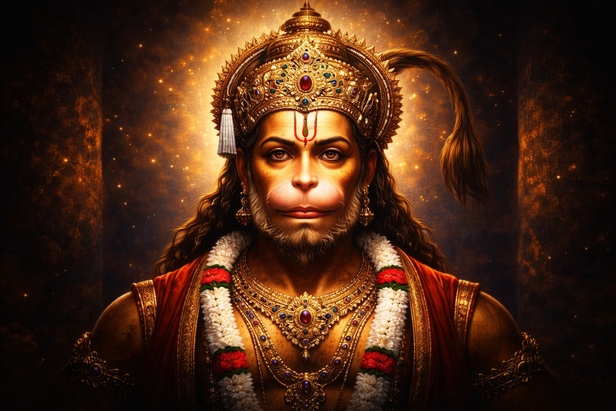
In temples and homes across India, Hanuman stands as a symbol of strength and devotion. Many people pray to him for courage, protection, and success. But beyond his warrior image lies deep spiritual symbolism rooted in the Ramayana, yoga philosophy, and Vedic tradition. An idol in Hinduism is not just art. It is a visual scripture. Every color, posture, and expression carries meaning. When you understand these hidden signs, the idol stops being a statue. It becomes a teacher. Let us explore the deeper messages hidden in Hanuman’s form.
The Red Sindoor: Total Surrender
Many Hanuman idols are fully covered in red sindoor. This connects to a story from the Ramayana. When Hanuman saw Sita applying sindoor for Rama’s long life, he covered his entire body in it for Rama’s protection. The red color symbolizes complete surrender and love. It shows that devotion is not partial. It is total. Spiritually, it teaches that when ego disappears, divine love fills every part of life. The idol reminds devotees to internalize faith, not just display it outwardly.
The Gada Facing Down: Power with Humility
Hanuman’s mace, or gada, represents strength and the ability to destroy evil. But in many idols, the gada rests on the ground. This posture is important. It shows that even immense power must remain humble. Strength without humility becomes arrogance. Spiritually, this symbolizes self control. The message is clear: real warriors do not show off their power. They use it only when needed. The grounded mace teaches balance between force and wisdom.
The Open Chest: God Lives Within
One of the most powerful depictions shows Hanuman tearing open his chest to reveal Rama and Sita inside. This image symbolizes egoless devotion. It means the divine does not live outside but within the heart. In spiritual psychology, this represents self realization. When ego dissolves, divine consciousness becomes visible. The idol teaches that strength is not physical muscle alone. It is inner purity and unwavering faith.
The South Facing Form: Guardian Energy
Many Hanuman idols face south, known as Dakshinamukhi. In Vastu Shastra, the south direction is associated with challenges and negative energies. Hanuman facing south symbolizes protection from fear, misfortune, and unseen forces. Devotees believe this posture guards homes and temples. Spiritually, it teaches courage in facing darkness. Instead of avoiding fear, Hanuman stands toward it. The message is clear: protection comes from confronting negativity, not running from it.
Panchamukhi Form: Master of the Five Senses
The Panchamukhi Hanuman idol shows five faces: Hanuman, Narasimha, Garuda, Varaha, and Hayagriva. This form symbolizes control over the five senses and five directions. Each face represents a divine quality such as courage, protection from negativity, prosperity, and wisdom. In yogic symbolism, mastering the senses leads to spiritual freedom. The idol teaches inner discipline. When senses are controlled, mind becomes steady. A steady mind leads to strength.
The Chiranjivi Presence: Eternal Energy
Hanuman is one of the seven Chiranjivis, meaning immortals who live through ages. His idol represents ever present divine energy. In Kali Yuga, devotees believe Hanuman actively protects those who remember him. This immortality symbolizes hope. No matter how dark times become, strength and devotion remain alive. Spiritually, it reminds believers that courage is timeless. Divine support does not expire. Faith keeps it active.
Ashta Siddhi and Nava Nidhi: Inner and Outer Wealth
Hanuman is called Ashta Siddhi Nava Nidhi Ke Data, the giver of eight spiritual powers and nine forms of wealth. These powers include abilities like lightness, expansion, and mastery over mind. Symbolically, they represent self discipline and mental clarity. The nine treasures represent abundance in life. The idol subtly reminds devotees that true wealth begins with inner strength. When character grows, success follows naturally.
The Giver of Divine Powers
Hanuman’s idol is not just a symbol of physical strength. It is a spiritual guide carved in stone. The sindoor teaches surrender. The gada teaches humility. The open chest teaches devotion. The south facing form teaches protection. The five faces teach control. The immortal presence teaches hope.
The siddhis teach mastery. When you stand before Hanuman next time, look deeper. The idol is silent. But its lessons speak loudly to those who truly observe.
Unlock insightful tips and inspiration on personal growth, productivity, and well-being. Stay motivated and updated with the latest at My Life XP.
Frequently Asked Questions (FAQs)
1. Why is Hanuman covered in red sindoor?
The red sindoor represents total surrender and pure devotion. According to tradition, Hanuman covered himself in sindoor for Lord Rama’s long life. It symbolizes complete love without ego or selfish desire.
2. What does the gada in Hanuman’s hand symbolize?
The gada, or mace, represents strength and the power to destroy negativity. When shown resting on the ground, it also teaches humility and controlled power.
3. Why is Hanuman shown opening his chest?
In this form, Hanuman reveals Rama and Sita in his heart. It symbolizes that true devotion means keeping the divine within and living without ego.
4. What is the meaning of Panchamukhi Hanuman?
The five faced form represents control over the five senses and directions. Each face stands for qualities like courage, protection, knowledge, and prosperity.
5. Why do some Hanuman idols face south?
South facing idols are believed to protect against negative energies and fear. In Vastu belief, this direction represents challenges, and Hanuman stands as a guardian.
6. What does “Ashta Siddhi Nava Nidhi Ke Data” mean?
It means Hanuman is believed to bless devotees with eight spiritual powers and nine forms of wealth, symbolizing both inner strength and outer success.