
7 Hindu Festivals You Never Knew Came From One Story
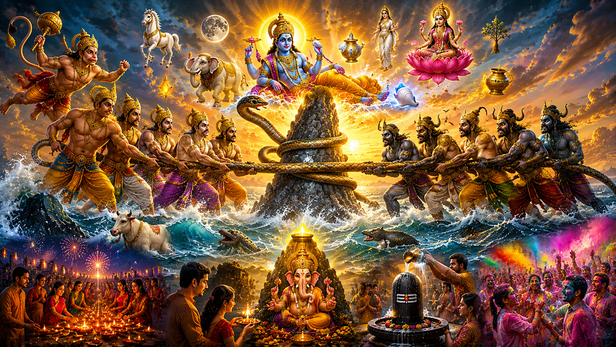
Every year, millions celebrate Diwali, Mahashivratri, Dhanteras, Kumbh Mela, and many other sacred occasions. But very few people realize that many of these festivals are connected by a single cosmic event. An event so extraordinary that it involved gods, demons, poison powerful enough to destroy creation, divine treasures, celestial beings, and the nectar of immortality. This event was Samudra Manthan the Churning of the Ocean. What emerged from that divine churning did not just shape mythology. It shaped the spiritual calendar of Sanatan Dharma itself. And the story is far more fascinating than most people imagine.
When the Universe Was Churned for Immortality
The story begins when the Devas and Asuras joined forces to obtain Amrit, the nectar of immortality. Using Mount Mandara as the churning rod and Vasuki as the rope, they began churning the cosmic ocean. To support the mountain, Lord Vishnu took the Kurma Avatar and carried the entire weight on his back. What appeared to be a search for nectar soon became a source of countless divine treasures. Every object, deity, and blessing that emerged carried a deeper spiritual meaning. Many festivals celebrated today find their origins in these miraculous moments.
The Poison That Gave Birth to Mahashivratri
Before any treasure emerged, a deadly poison called Halahala surfaced from the ocean. Its destructive power threatened all existence. To protect creation, Lord Shiva consumed the poison and held it in his throat, turning it blue and earning the name Neelkanth. This act of selfless sacrifice remains one of the most powerful moments in Hindu mythology. The spirit of devotion, surrender, and gratitude associated with Shiva is celebrated through Mahashivratri and throughout the sacred month of Shravan, reminding devotees of his immense compassion.
The Divine Gifts That Entered Daily Worship
As the churning continued, Kamadhenu, the divine cow, emerged from the ocean. Revered as a symbol of nourishment and abundance, her presence is reflected in many rituals and traditions. Soon after, the Moon appeared and was placed on Lord Shiva's forehead, giving him the title Chandrashekhar. Even today, lunar cycles guide countless Hindu fasts, festivals, and rituals. Whether it is worship linked to the Moon or reverence toward the cow, these practices carry echoes of the treasures that emerged during the great cosmic churning.
The Arrival of Dhanteras and Divine Healing
Among the most celebrated moments of Samudra Manthan was the appearance of Lord Dhanvantari. Emerging from the ocean with a pot of Amrit, he became known as the divine physician and the source of Ayurvedic wisdom. His arrival is commemorated through Dhanteras, which marks the beginning of the Diwali celebrations. Beyond wealth and prosperity, the day also symbolizes health and well-being. It reminds devotees that true abundance includes physical, mental, and spiritual wellness, making Dhanteras much more meaningful than a simple shopping festival.
How Goddess Lakshmi Created the Festival of Lights
One of the most awaited treasures to emerge from the ocean was Goddess Lakshmi. Her appearance symbolized prosperity, harmony, and divine fortune. According to tradition, she chose Lord Vishnu as her eternal consort, bringing balance to the cosmos. Her emergence is deeply connected to Diwali, the Festival of Lights. Every year, devotees welcome her blessings into their homes through prayers, lamps, and celebrations. The festival is not only about wealth but also about inviting positivity, gratitude, and spiritual abundance into one's life.
The Nectar That Became Kumbh Mela
After the appearance of Amrit, a fierce struggle began between the Devas and Asuras. During the chase, drops of the nectar are believed to have fallen at four sacred locations on Earth. These places later became the sites of the Kumbh Mela, one of the largest spiritual gatherings in human history. Millions of pilgrims gather there seeking purification and spiritual merit. What began as a celestial battle transformed into a living tradition that continues to inspire faith, devotion, and unity among devotees across generations.
Why Samudra Manthan Still Matters Today
The greatest lesson of Samudra Manthan is that both poison and nectar emerge from life's struggles. Every challenge carries the potential for transformation. Just as Halahala and Amrit came from the same ocean, pain and blessings often arise from the same journey. This is why the story continues to resonate deeply. It is not simply mythology. It is a reflection of human life itself. Through festivals like Mahashivratri, Dhanteras, Diwali, and Kumbh Mela, people continue to celebrate the treasures that emerged from one of the most extraordinary events in Sanatan tradition.
Festivals Celebrated Across India Throughout the Year
Samudra Manthan happened once. Yet its impact is remembered every year through some of India's most sacred festivals. From Shiva's sacrifice to Lakshmi's blessings. From Dhanvantari's healing wisdom to the nectar that inspired Kumbh Mela. Each celebration is a reminder that life's greatest treasures often emerge after intense struggle. Perhaps that is why this story remains timeless. Because every human being experiences their own Samudra Manthan. And somewhere within that churning, both poison and nectar await discovery.
Hari Om Tat Sat.
Unlock insightful tips and inspiration on personal growth, productivity, and well-being. Stay motivated and updated with the latest at My Life XP.
Frequently Asked Questions (FAQs)
1. What was Samudra Manthan?
Samudra Manthan was the cosmic churning of the ocean performed by the Devas and Asuras to obtain Amrit, the nectar of immortality.
2. Why did Lord Vishnu take the Kurma Avatar?
Kurma supported Mount Mandara during the churning, preventing it from sinking into the ocean.
3. How is Mahashivratri connected to Samudra Manthan?
Mahashivratri is linked to Lord Shiva consuming the deadly Halahala poison that emerged during the churning, saving the universe from destruction.
4. What is the connection between Dhanteras and Samudra Manthan?
Dhanteras is associated with the appearance of Dhanvantari, who emerged carrying the pot of Amrit.
5. How is Diwali related to Samudra Manthan?
Diwali is connected to the emergence of Goddess Lakshmi from the cosmic ocean, symbolizing prosperity and divine blessings.