
Hanuman Was Not Just a Devotee, He Was the 11th Rudra
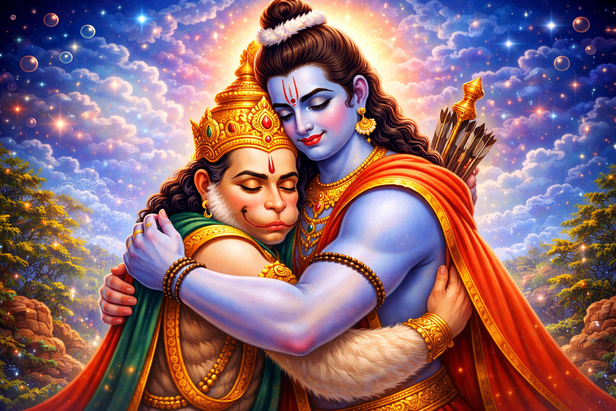
In a time when mythology is often reduced to reels, aesthetics, and surface-level symbolism, Hanuman stands apart not as a decorative deity, but as a living philosophy. The idea of Hanuman as the 11th Rudra, an avatar of Shiva, is not merely a theological claim; it is a civilizational insight into how raw power becomes meaningful only when guided by humility and purpose. Shiva represents limitless energy, destruction of ego, and cosmic balance. Hanuman represents the same force but trained, disciplined, and consciously surrendered. This distinction is why Hanuman feels strikingly modern, even today.
Unlike Shiva, who dissolves into meditation or cosmic rage, Hanuman walks among society. He interacts, serves, corrects himself, and evolves. That is precisely why calling him the 11th Rudra makes sense—he is Shiva’s energy put to ethical work. Rudra is not only about destruction; Rudra is about realignment. Hanuman’s life is a lesson in redirecting immense strength toward collective good, not personal glory.
Rudra Energy in Human Form: Strength with Self-Restraint
The most misunderstood aspect of Hanuman is his strength. We celebrate the mountain-lifting, sea-crossing heroics but often skip the deeper layer Hanuman never uses strength to dominate. In today’s world, power usually screams. Hanuman’s power listens.
A defining moment is when Hanuman forgets his own abilities until reminded by Jambavan. This is not amnesia; it is intentional humility. Shiva’s Rudra form destroys arrogance; Hanuman’s Rudra nature prevents arrogance from forming at all. In psychological terms, Hanuman represents the highest emotional intelligence knowing when to act and when to step back.
Consider modern leadership failures corporate heads, political figures, even influencers who collapse under their own unchecked power. Hanuman offers an alternative leadership model: silent competence. He doesn’t need validation. He doesn’t brand his sacrifice. He simply acts because it is right.
When Hanuman burns Lanka, it is not an act of revenge but measured destruction a warning, not annihilation. This mirrors Shiva’s tandava: destructive, yes, but purposeful. The Rudra within Hanuman is activated only when injustice demands correction, not when ego seeks expression.
Bhakti as the Highest Form of Power
What truly elevates Hanuman as the 11th Rudra is his chosen subordination. Shiva bows to no one, yet Hanuman bows willingly to Rama. This is not weakness; it is clarity. Hanuman understands something modern society often forgets devotion is not submission; it is alignment.
In an age obsessed with “being the main character,” Hanuman is revolutionary for being content as support. He does not chase the throne; he protects the values that make the throne worth having. This is why athletes, soldiers, rescue workers, and even students instinctively relate to Hanuman he embodies purpose without entitlement.
Even today, Hanuman Chalisa is recited not for miracles alone, but for mental strength, discipline, and emotional grounding. People turn to Hanuman during exams, surgeries, wars, and personal breakdowns not because he removes struggle, but because he teaches how to stand inside struggle without breaking. That is pure Rudra energy stability amidst chaos.
When Shiva’s Power Learns to Serve
Hanuman as the 11th Rudra is not about mythology it is about maturity. It is the journey from raw power to responsible strength, from ego-driven action to value-driven service. In Hanuman, Shiva’s fierce energy learns compassion, discipline, and loyalty. In a world drowning in noise, Hanuman reminds us that the strongest force is not domination, but self-mastery. If Shiva is the storm, Hanuman is the wind that chooses direction.