
Have You Seen This 10-Headed Kali in Kashi?
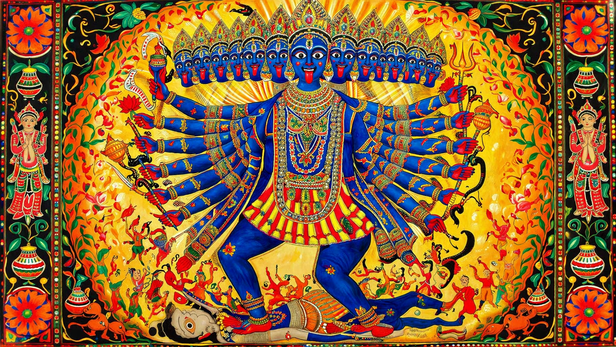
You think you’ve seen all forms of gods? Think again. Because deep within the sacred journey of Panchkroshi Yatra lies a temple so rare most people don’t even know it exists. A place where Kali has ten heads and Shiva appears with five. Sounds unbelievable? But this isn’t just about rare idols. It’s about hidden meanings, powerful symbols, and a presence you can actually feel. Because once you step inside you don’t just see something different You experience something you were never prepared for.
The Second Halt Most People Overlook
On the sacred path of Panchkroshi Yatra, most devotees focus on famous stops and rush through others. But the second halt Bhimchandi Temple is different. It doesn’t attract loud crowds, yet it holds immense spiritual depth. Many pass by without realizing what they’re missing. This temple is not about grandeur it’s about rare presence. The moment you step in, you feel something shift. A quiet शक्ति that doesn’t demand attention, but leaves a lasting impact on those who truly observe.
The Rare 10-Headed Kali You’ve Never Seen
Inside this temple stands a form of Kali that very few have witnessed a ten-headed idol. This is not a common representation. Each head symbolizes a different शक्ति, a different aspect of destruction and protection. It reflects complete control over negativity from all directions. The presence of this idol creates an intense atmosphere one that feels both powerful and protective. It’s not just a statue; it’s a statement of divine शक्ति in its fullest form. Seeing it once is enough to leave a lasting impression.
Shiva’s Five Heads and Ten Arms Meaning
Another rare sight here is Shiva in his five-headed form. Each head represents the पंचतत्व earth, water, fire, air, and space. His ten arms symbolize control over all ten directions. This form is deeply symbolic. It shows balance, creation, and destruction all at once. Unlike the calm meditative Shiva we often see, this form represents total awareness and cosmic power. It reminds us that divinity is not one-dimensional it exists in multiple layers, all working together in perfect harmony.
The Mystery of Bhimchandi as a Virgin Goddess
Bhimchandi is worshipped here as a virgin goddess. This means she is shown in her form before marriage to Shiva pure, independent, and powerful. No vermilion is applied, which is rare in many देवी temples. This form represents untouched शक्ति raw and complete in itself. Devotees believe she protects the entire region and removes deep-rooted negativity. Her presence is calm yet intense. It’s a reminder that power doesn’t always come with noise it often exists silently, in its purest form.
The Hidden World of Gandharvas
Alongside the main deities, you’ll find idols of Gandharvas celestial musicians often forgotten in modern devotion. One such figure is Raktaaksh Gandharva, known for his red, sun-like eyes. These beings are said to exist in divine realms, filling the universe with music and energy. Their presence in this temple adds another layer of mystery. It connects devotion with art, sound, and cosmic harmony. It reminds us that spirituality is not just about prayerit’s also about vibration, rhythm, and the unseen energies around us.
Unlock insightful tips and inspiration on personal growth, productivity, and well-being. Stay motivated and updated with the latest at My Life XP.
Frequently Asked Questions (FAQs)
1. Where is this rare temple located?
This temple is located on the sacred route of the Panchkroshi Yatra, specifically at the second halt near Bhimchandi Temple. It is not widely known, which is why many pilgrims miss it during their journey.
2. Why is the 10-headed Kali idol considered rare?
Most temples show Kali in her traditional form, but a ten-headed representation is extremely uncommon. Each head symbolizes a different शक्ति, representing control over multiple energies and directions, making this form spiritually powerful and unique.
3. What does the 5-headed form of Shiva represent?
The five heads symbolize the पंचतत्व—earth, water, fire, air, and space. His ten arms represent control over all directions. This form reflects balance, creation, and cosmic awareness, making it deeply symbolic.
4. Who is Bhimchandi Devi?
Bhimchandi is worshipped as a powerful and protective goddess of that region. She is believed to appear in her unmarried (virgin) form, symbolizing pure and independent शक्ति.
5. Why don’t many people know about this temple?
This temple is less commercialized and mostly known to locals and dedicated pilgrims. Its hidden nature adds to its mystery, making it a special discovery for those who truly explore Kashi beyond famous spots.