
Hidden Role of Hanuman in Kalyug That Still Shapes Your Life
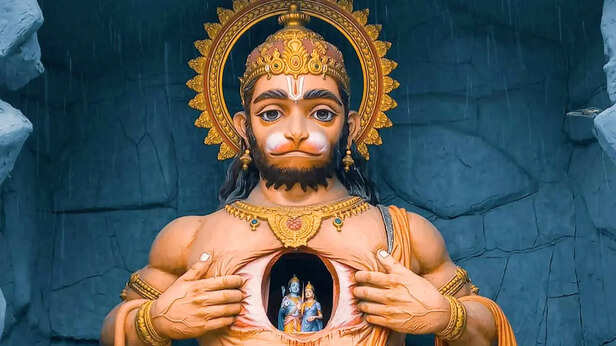
In Hindu spiritual tradition, the idea of Kalyug is not just a description of time, but a description of human consciousness at its most restless, distracted, and emotionally overloaded state, where clarity becomes rare and inner strength is constantly tested by uncertainty, fear, and moral confusion. Within this framework, Hanuman is not seen as a mythological figure locked in the past of the Ramayana, but as a continuing presence whose influence is believed to extend silently into the present age in ways that are subtle, psychological and deeply personal.
What makes Hanuman’s role in Kalyug especially unique in Hindu belief is the idea that he is a Chiranjeevi, an immortal being who is not bound by ordinary cycles of birth and death, and therefore continues to exist across ages, observing, guiding and protecting devotees in ways that are not always visible to the human eye. This belief, supported in multiple devotional traditions, forms the foundation of why millions feel that his presence is still active in their lives today- not as an external intervention, but as an internal transformation of courage, clarity, and resilience during difficult moments.
The Silent Protector in a Mentally Overloaded Age
One of the most powerful interpretations of Hanuman’s hidden role in Kalyug is that he operates not through dramatic miracles, but through psychological strengthening. In an age where people are constantly dealing with anxiety, pressure, comparison, and emotional exhaustion, his symbolic presence is often experienced as sudden mental stability in situations that once felt overwhelming.
Devotees often describe this as a shift that happens internally- fear reducing without explanation, confusion suddenly clearing, or an unexpected ability to face situations that previously felt impossible. In spiritual interpretation, this is not seen as coincidence, but as the “working of grace,” where Hanuman represents the awakening of inner discipline, focus, and fearlessness within the human mind.
Why Hanuman Is Believed to Be Most Active in Kalyug
According to traditional belief, Kalyug is the age where negativity is not external alone, but deeply internal- arising from ego, impatience, emotional imbalance, and disconnection from higher values. In such an environment, Hanuman is seen as the ideal counterforce because his entire being represents absolute devotion, self-control, and unwavering focus on righteousness through his connection with Lord Rama.
Many devotional texts and traditions describe Hanuman as ever-present wherever remembrance of Rama exists, suggesting that his influence is strongest in moments of sincere prayer, repetition of sacred names, or even silent emotional surrender during crisis. This is why his worship is considered especially powerful in Kalyug, not because he changes destiny instantly, but because he strengthens the person going through it.
The Psychological Interpretation: Strength Beyond Physical Power
Beyond mythology, Hanuman’s role in Kalyug is often interpreted through a psychological lens as the embodiment of mental mastery. His life symbolises the transformation of fear into courage, instability into focus, and emotional weakness into disciplined strength.
In modern terms, this reflects what psychology describes as emotional regulation and resilience- the ability to remain stable under stress rather than being consumed by it. When devotees connect with Hanuman’s symbolism, it often translates into increased mental endurance, better decision-making under pressure, and reduced emotional reactivity in difficult situations.
This is why Hanuman is not only seen as a divine warrior but also as a representation of the ideal human mind in its most controlled and awakened state.
Why His Role Feels “Hidden” Instead of Visible
The idea of Hanuman’s hidden presence in Kalyug comes from the belief that divine guidance does not always manifest through physical events, but often through subtle shifts in perception, timing, and internal clarity. Instead of removing obstacles entirely, his influence is believed to strengthen the devotee so they can move through those obstacles with greater awareness and courage.
This is why many experiences associated with Hanuman devotion are described not as external miracles, but as internal transformations- calmness in chaos, clarity in confusion and unexpected emotional strength during life transitions. His role is “hidden” because it works through the human mind rather than outside it.
A Living Symbol of Strength in Modern Life
Ultimately, the belief surrounding Hanuman in Kalyug is not just about mythology, but about how ancient spiritual symbolism continues to mirror modern human experience. In a world filled with uncertainty, rapid change, and emotional overload, Hanuman represents the timeless idea that strength is not the absence of struggle, but the ability to remain steady within it.
This is why his presence is believed to still affect lives today- not by removing every difficulty, but by ensuring that the individual does not lose themselves while facing it. And in that sense, his role in Kalyug is not distant or symbolic alone- it is deeply personal, psychological and continuously unfolding within the human experience itself.
Unlock insightful tips and inspiration on personal growth, productivity, and well-being. Stay motivated and updated with the latest at My Life XP.