
How Chenchu Lakshmi Pacified Lord Narasimha’s Fierce Rage
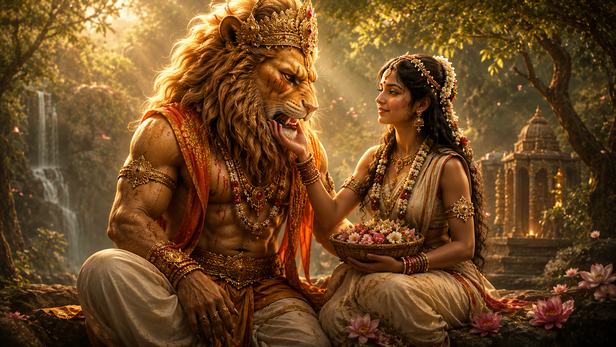
Among the most powerful and emotionally charged episodes in Vaishnava tradition is the manifestation of Lord Narasimha, the fierce half-man, half-lion incarnation of Lord Vishnu. Appearing to protect his devotee Prahlada and destroy the tyrant Hiranyakashipu, Narasimha’s form is described in scriptures as intensely furious, a divine force that shook the three worlds. Yet within devotional traditions, another deeply symbolic and beloved narrative emerges from the sacred geography of Ahobilam and the Nallamala forest. It is the story of how Chenchu Lakshmi, the forest maiden form of Goddess Lakshmi, pacified the uncontrollable rage of Lord Narasimha and transformed his terrifying energy into divine grace.
The Fierce Manifestation of Lord Narasimha
The Narasimha avatar is unique among the incarnations of Lord Vishnu because it represents divine anger in its most concentrated form. After destroying Hiranyakashipu, the Lord’s fury did not immediately subside. According to Vaishnava traditions and Puranic interpretations, even the celestial beings could not approach him as his rage continued to radiate across the cosmos. This moment is often understood in devotion as the cosmic tension between destruction of adharma and restoration of balance. While Prahlada stood as the symbol of unwavering devotion, Narasimha’s energy remained unstoppable, signifying that divine justice had not yet fully settled into peace. It is within this intense divine state that the forest episode of Ahobilam becomes spiritually significant.
The Sacred Forest of Nallamala and the Appearance of Chenchu Lakshmi
In the sacred landscape of Ahobilam and the Nallamala forests, local tradition preserves a beautiful and deeply devotional narrative. After the destruction of Hiranyakashipu, Lord Narasimha is believed to have wandered into the forest in his fierce form. In this setting, a tribal maiden known as Chenchu Lakshmi appears. In many devotional accounts, she is considered an earthly manifestation or extension of Goddess Mahalakshmi herself, born among the Chenchu tribal community. Her presence in the forest is described not as an ordinary meeting but as a divine encounter where simplicity, innocence, and natural devotion meet supreme cosmic power.
How Chenchu Lakshmi Calmed the Divine Fury
The most cherished part of this tradition is the transformation that follows the meeting between Narasimha and Chenchu Lakshmi. As the legend is told in Ahobilam traditions, the fierce energy of Narasimha begins to soften when he encounters the fearless and pure-hearted forest maiden. Her simplicity, devotion, and divine presence act as a calming force upon the overwhelming intensity of his rage.
In some devotional retellings, this moment is described as the divine recognition of love and completeness, where the fierce form of Narasimha gradually transforms into the more peaceful and graceful aspect of Lakshmi Narasimha, symbolizing harmony between power and compassion. This transformation is not portrayed as external control but as an internal shift of divine consciousness, where anger dissolves in the presence of pure devotion.
The Divine Union of Lakshmi Narasimha and Chenchu Lakshmi
In devotional belief systems of Ahobilam, this encounter is often celebrated as a sacred union. Chenchu Lakshmi is regarded as the earthly manifestation of Goddess Lakshmi who merges back into the divine form after fulfilling her role in pacifying Narasimha. From this union emerges the peaceful form of Lakshmi Narasimha, where the Lord is no longer in his terrifying Ugra aspect but appears calm, seated with his divine consort. This transformation is not just mythological storytelling. For devotees, it represents a profound spiritual truth that divine power is always balanced by compassion, and even cosmic fury ultimately resolves into divine love.
Spiritual Meaning Behind the Legend
For devotees of Lord Narasimha, this episode carries deep symbolic meaning. Narasimha represents divine protection and justice, while Chenchu Lakshmi represents compassion, devotion, and the soothing power of divine grace. Together, they symbolize the balance of destruction and preservation, wrath and mercy, strength and love. The forest setting of Nallamala further enhances this meaning, representing the untouched purity of nature where divine transformation naturally unfolds.
Conclusion: From Fury to Grace Through Divine Love
The story of how Chenchu Lakshmi pacified Lord Narasimha’s fierce rage remains one of the most spiritually evocative narratives in Hindu tradition. It reflects a timeless truth that even the most powerful divine force finds its fulfillment in compassion and love. In the transformation from Ugra Narasimha to Lakshmi Narasimha, devotees witness not just a mythological event, but a spiritual teaching that divine energy is complete only when it is balanced by grace. For millions of devotees, this sacred story continues to inspire faith, reminding them that even the fiercest storms of existence ultimately find peace in the presence of divine love.
Unlock insightful tips and inspiration on personal growth, productivity, and well-being. Stay motivated and updated with the latest at My Life XP.