
How One Unborn Child Became 49 Powerful Gods
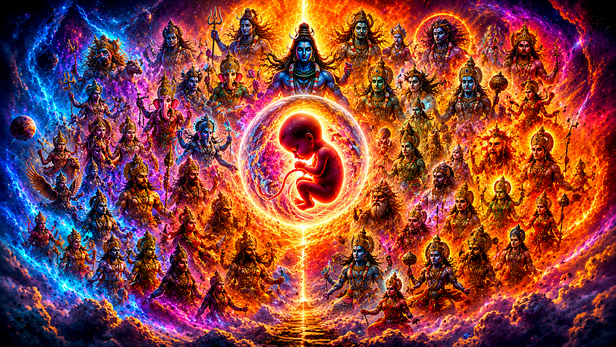
Imagine an unborn child so powerful that even the king of the gods feared its birth. Now imagine that child being divided again and again inside the womb. Most people would expect such a story to end in tragedy. But in one of the most fascinating legends of Hindu mythology, it led to the birth of 49 divine beings who would eventually stand beside Indra himself. This is not just a story about fear and power. It is a story about destiny's unexpected twists and how what appears to be destruction can sometimes become the beginning of something far greater.
A Prophecy That Shook Heaven
The story begins with a powerful desire. A devoted being performed intense penance to obtain a son strong enough to challenge Indra, the ruler of the heavens. When news of this reached Indra, concern quickly turned into fear. Throughout mythology, prophecies often change the fate of gods and kings. This prophecy suggested that a future child could threaten Indra's throne. Faced with this possibility, Indra knew he could not ignore the danger. What followed would become one of the most extraordinary events in Hindu mythology.
Indra's Difficult Decision
Indra was known as a warrior, but he was also bound by dharma. Destroying an innocent unborn child would violate sacred principles. Yet allowing the prophecy to unfold could put the heavens at risk. Caught between fear and responsibility, Indra chose a different path. Rather than ending the child's life, he entered the womb and used his divine weapon, the Vajra, to divide the unborn child into seven parts. It was a decision unlike any other, balancing self-preservation with respect for cosmic law.
The Miracle No One Expected
Something astonishing happened after the division. The seven parts did not perish. Instead, each one remained alive. Surprised by this outcome, Indra divided each section again into seven more parts. The result was forty-nine living beings. What seemed like an act of destruction had transformed into an act of creation. This miracle carried a powerful lesson. Divine destiny could not be erased so easily. Even when broken apart, the life force within those children continued to grow stronger.
The Birth of the Maruts
The forty-nine surviving children became known as the Maruts. These powerful deities were associated with wind, thunder, lightning, and storms. Their energy reflected the fierce and unpredictable forces of nature itself. Unlike many gods who represented calmness and order, the Maruts symbolized movement, transformation, and raw power. Their arrival added a new dimension to the divine world. They were not merely survivors of a miracle. They were destined to become an important force in the cosmic balance.
From Rivals to Allies
The greatest twist in the story came after the Maruts were born. Indra had originally feared them because of a prophecy. Yet instead of becoming his enemies, the Maruts became his companions and supporters. They rode alongside him during battles and helped maintain cosmic order. This transformation from perceived threat to trusted ally is one of the story's most powerful messages. Sometimes our greatest fears do not become our downfall. Instead, they become sources of unexpected strength and support.
The Hidden Meaning Behind the Legend
At its core, this legend is about transformation. The unborn child was divided many times, yet life continued to flourish. The story teaches that setbacks do not always mean failure. What appears broken today may evolve into something stronger tomorrow. It also highlights the importance of dharma, showing how even powerful figures like Indra must respect moral boundaries. These timeless lessons continue to resonate because they mirror the challenges people face in their own lives.
Why This Story Still Matters Today
Modern life often feels filled with uncertainty, disappointment, and unexpected obstacles. The story of the Maruts reminds us that difficult moments can lead to remarkable outcomes. Challenges that seem destructive may actually be preparing us for growth. Just as the divided child became forty-nine powerful gods, people can emerge stronger from hardship. The legend encourages resilience, faith, and trust in the larger journey of life. Its message remains as meaningful today as it was thousands of years ago.
Unlock insightful tips and inspiration on personal growth, productivity, and well-being. Stay motivated and updated with the latest at My Life XP.
Frequently Asked Questions (FAQs)
1. Who were the Maruts?
The Maruts were powerful Vedic deities associated with storms, thunder, wind, and lightning.
2. How many Maruts were born according to the legend?
The unborn child was divided into 49 parts, resulting in the birth of 49 Maruts.
3. Why was Indra afraid of the unborn child?
A prophecy suggested that the child could become powerful enough to challenge Indra's authority.
4. What weapon did Indra use?
Indra used his divine weapon, the Vajra, to divide the unborn child.
5. Did Indra kill the child?
No. Instead of dying, each divided part survived and eventually became a Marut.
6. What do the Maruts represent?
They symbolize storms, winds, energy, strength, and the dynamic forces of nature.
7. Did the Maruts become enemies of Indra?
No. Surprisingly, they later became Indra's companions and allies.