
If Rebirth Exists, Why Don’t We Remember Past Lives?
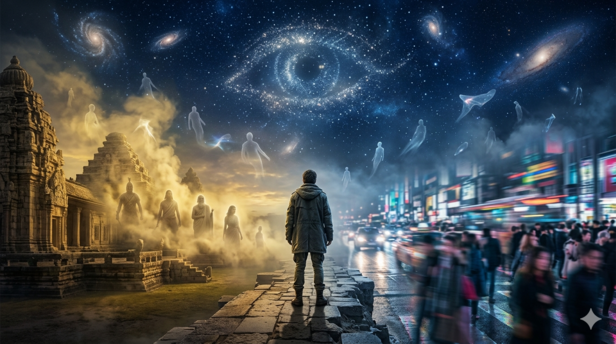
Across cultures, from Hinduism and Buddhism to modern spiritual circles, rebirth is seen as a cycle of life, death, and renewal. It suggests that the soul continues its journey after physical death. However, human memory appears limited to a single lifetime.
This contradiction raises deep curiosity. If identity continues, why does memory reset? Is forgetting part of a divine system, a psychological barrier, or simply a lack of proof that rebirth exists at all? To understand this, we need to look at belief systems, scientific reasoning, and the nature of memory itself.
The Spiritual View: Forgetting as Part of the Soul’s Journey
In many Eastern philosophies, forgetting past lives is not a flaw but a design. According to this view, memory loss is necessary for spiritual growth. If a person remembered every past life, emotional burden and attachment could interfere with new experiences. Each life is meant to feel fresh, allowing the soul to evolve without being trapped by previous identities. Karma also plays a key role. Actions from past lives shape present circumstances, but without direct memory, individuals act freely within their current life. This balance between destiny and free will is central to rebirth beliefs. Some texts suggest that only highly advanced spiritual beings or enlightened individuals may access fragments of past-life memory through meditation or deep awareness.
The Psychological Explanation: The Brain Resets at Death
From a scientific perspective, memory is stored in the brain. When the body dies, the brain stops functioning, and with it, memory storage is erased. If consciousness is tied strictly to brain activity, then there is no physical mechanism to carry memory into another life. This explains why we do not recall previous existences. Psychology also suggests that the human brain is highly adaptive. It builds identity based on continuous experiences from childhood onward. Without stored continuity, a new personality forms from scratch. Some researchers argue that reports of past-life memories, especially in children, may be linked to imagination, suggestion, or cryptomnesia, where forgotten information resurfaces as a “memory.”
The Case of Past-Life Recall: Coincidence or Evidence?
There are documented cases where individuals, especially young children, claim to remember specific details of past lives. These include names, locations, and events that sometimes appear verifiable. Such cases are often studied by researchers interested in reincarnation. However, critics argue that these memories can be influenced by cultural exposure or coincidence.
In some instances, children lose these memories as they grow older. This raises another question: if past-life memory exists, why is it temporary? One explanation is that memory may exist at a subconscious level but becomes inaccessible as the brain develops and absorbs new information.
Philosophical View: Identity Without Memory
Philosophers argue that identity does not depend entirely on memory. Even in a single lifetime, we forget most of what we experience, yet we still remain the same person. If continuity of consciousness exists beyond memory, then forgetting past lives does not necessarily disprove rebirth. Instead, identity may be more about awareness than recall. Some schools of thought suggest that the soul does not “store” memories like a hard drive. Instead, it carries impressions or energies that influence tendencies, emotions, and instincts in the next life. This could explain why some people feel natural affinities, fears, or talents without clear learning experiences.
The Energy Theory: Memory as Frequency, Not Data
A more modern spiritual interpretation suggests that consciousness may function like energy rather than stored information.
In this model, memory is not transferred as exact details but as vibrational patterns. These patterns shape personality traits and emotional responses in new lives. Just as radio waves carry signals without physical storage, consciousness may carry essence without specific memories. This theory attempts to bridge science and spirituality, but it remains speculative. There is no scientific evidence yet to confirm how such energy-based memory transfer would work.
The Silence Between Lives: Why Memory Does Not Follow Rebirth
The question of why we do not remember past lives remains unresolved because it sits at the intersection of belief, science, and mystery. Spiritual traditions suggest forgetting is necessary for growth, while science attributes it to the biological limits of the brain. Philosophy opens another possibility: that identity may not depend on memory at all. Whether rebirth is literal or symbolic, the absence of past-life recall forces us to focus on the present. Perhaps the purpose is not to remember who we were, but to understand who we are becoming.
Unlock insightful tips and inspiration on personal growth, productivity, and well-being. Stay motivated and updated with the latest at My Life XP.