Lesser Known Avatars of Lord Shiva You Should Know
Bindu Mishra | Thu, 16 Apr 2026
Lord Shiva is one of the most powerful and mysterious gods in Hindu relign. He is known as the destroyer, but his role is much deeper than that. He represents transformation, balance, and inner peace. While many people know Shiva in his common form as the calm yogi sitting on Mount Kailash, there are many lesser known avatars that show his different sides. These forms are not always peaceful. Some are fierce, some are emotional, and some are deeply symbolic. Understanding these avatars helps us understand life in a better way. Let us explore some of the lesser known avatars of Lord Shiva that carry deep meaning and powerful stories.

Lesser Known Avatars of Lord Shiva , ( Image Credit: Chat GPT AI)
1. The Fierce Protector Form of Bhairava
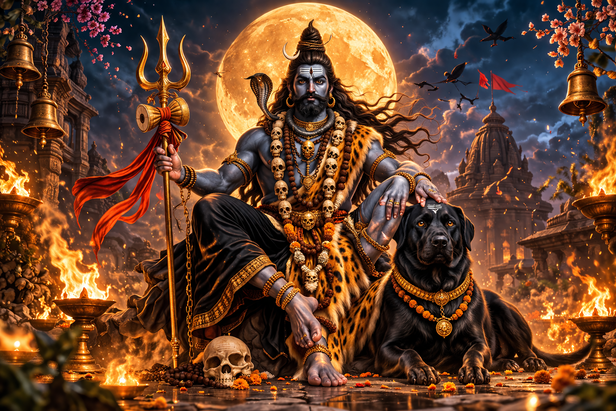
Kaalbhairava Avatar , ( Image Credit: Chat GPT AI)
One of the most intense forms of Shiva is Bhairava. This avatar represents the fierce and protective nature of Shiva. Bhairava is often shown with a terrifying appearance, holding weapons and surrounded by a powerful aura. His form may look frightening, but his purpose is to destroy evil and protect devotees. According to mythology, Bhairava was created when Shiva needed to punish arrogance and ego. There is a famous story where Brahma became proud and claimed superiority. To teach him a lesson, Shiva took the form of Bhairava and removed one of Brahma’s heads. This story shows that no matter how powerful someone is, ego can lead to downfall. Bhairava teaches us an important life lesson. Sometimes, strength and strictness are needed to maintain balance in the world. He reminds us to stay humble and grounded. Even today, many people worship Bhairava for protection from fear and negative energy.
2. Virabhadra The Warrior Born from Anger
Another powerful and lesser known form of Shiva is Virabhadra. This avatar was born out of intense anger and pain. The story begins with Sati, the wife of Shiva, who felt insulted when her father Daksha disrespected Shiva. Unable to bear the insult, Sati sacrificed herself in the fire. When Shiva heard about this, he was filled with grief and rage. From his anger, Virabhadra emerged as a fierce warrior. Virabhadra destroyed Daksha’s yajna and punished those who supported the insult. This avatar shows the emotional side of Shiva. It reminds us that even divine beings feel pain and anger. But it also teaches that anger should be used carefully. Virabhadra’s story is not just about destruction. It is about standing up against disrespect and injustice. It shows that silence is not always the answer when dignity is at stake.
3. Ardhanarishvara The Balance of Masculine and Feminine
One of the most beautiful and meaningful forms of Shiva is Ardhanarishvara. In this form, Shiva and Parvati are combined into one body. Half of the body is male and the other half is female. This form represents the perfect balance between masculine and feminine energies. Ardhanarishvara teaches us that both energies are equally important. Strength and softness, logic and emotion, action and patience all must exist together for harmony. In today’s world, where people often see gender roles in a fixed way, this form gives a powerful message. It tells us that true completeness comes from balance, not dominance. This avatar also reflects the idea that Shiva is not separate from Shakti. Without energy, even the most powerful being cannot act. Ardhanarishvara is a reminder that unity brings strength and peace.
4. Pashupati The Lord of All Living Beings
Pashupati is another lesser known but very important form of Shiva. The word Pashupati means the lord of all animals and living beings. In this form, Shiva is seen as the protector of nature and all creatures. This avatar highlights Shiva’s deep connection with the natural world. He is often shown surrounded by animals, living peacefully among them. This teaches us an important lesson about compassion. Humans are not the only beings on this planet. Every creature has a right to live and be respected. Pashupati reminds us to care for animals and protect the environment. In ancient times, this form was widely worshipped, especially by people who lived close to nature. Even today, this message is very relevant. As we face environmental problems, remembering Pashupati can inspire us to live more responsibly and kindly.
5. Nataraja The Cosmic Dancer of Creation and Destruction
Nataraja is one of the most symbolic forms of Shiva, yet many people do not fully understand its meaning. In this form, Shiva is shown dancing in a circle of fire. This dance is known as the cosmic dance. It represents the cycle of creation, preservation, and destruction. Every step of the dance has meaning. It shows that life is always moving and changing. Nothing stays the same forever. The fire around Shiva represents energy and transformation. His raised foot offers protection and liberation to devotees. Nataraja teaches us to accept change instead of fearing it. Life may bring both joy and pain, but both are part of growth. This form also shows that destruction is not always negative. Sometimes, things must end so that new beginnings can happen. Nataraja’s dance is a reminder that the universe is always in motion, and we must learn to flow with it.
The Hidden Wisdom Behind Shiva’s Many Forms
All these lesser known avatars of Lord Shiva carry deep meaning. They are not just stories from mythology. They reflect real life emotions, struggles, and lessons. Bhairava teaches us to control ego and stand strong against negativity. Virabhadra shows us that anger, when used wisely, can fight injustice. Ardhanarishvara reminds us to embrace balance within ourselves. Pashupati encourages compassion for all living beings. Nataraja teaches us to accept change and trust the flow of life. These forms show that Shiva is not just a god sitting in meditation. He is present in every aspect of life. From peace to chaos, from love to anger, from creation to destruction, Shiva represents it all. Understanding these avatars can help us become more aware, more balanced, and more connected to the world around us. In a fast moving world where people often feel lost, these stories offer guidance in a simple and meaningful way. They remind us that life is not about being perfect. It is about learning, growing, and finding balance within ourselves.
Unlock insightful tips and inspiration on personal growth, productivity, and well-being. Stay motivated and updated with the latest at My Life XP.