
One Night Marriage, Next Day Mourning Why?
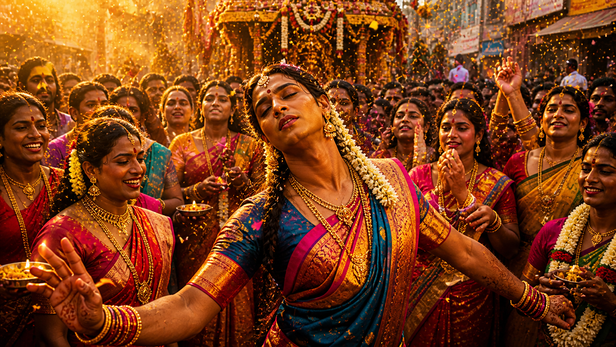
In a quiet village of Koovagam, something extraordinary unfolds every year. Thousands arrive from across the country.
Music echoes through the streets Brides dress in silk, gold, and flowers. For one night, it feels like a celebration of love and belonging. But by morning everything changes. Bangles are broken. Sindoor is wiped away. Tears quietly replace joy. It feels sudden, almost unbelievable. Why would anyone choose happiness, only to accept grief hours later? The answer is not simple. It lives in faith, identity, and a powerful story that continues to give meaning, dignity, and connection to those who experience it.
A Wedding Unlike Any Other
At the heart of the Koovagam festival lies a unique wedding ritual. Thousands of transgender women gather at the Koothandavar Temple to marry Aravan. Dressed in vibrant saris, adorned with jewellery and flowers, they step into the role of brides. Priests tie the sacred thread, making the moment deeply spiritual. For many, this is not just symbolic it is emotional validation. A moment where they feel seen, accepted, and connected to something divine beyond society’s judgment.
The Story Behind the Ritual
This ritual comes from the ancient epic Mahabharata. Aravan agreed to sacrifice his life for victory in war but wished to marry before his death. No woman wanted a one-day marriage until Krishna took the form of Mohini and fulfilled his wish. The festival recreates this moment. Participants become Mohini, reliving the story. It’s not just tradition it’s a powerful link between mythology and lived identity.
From Celebration to Sudden Grief
The next morning brings a dramatic shift. The idol of Aravan is taken in a chariot, symbolising his sacrifice. As the ritual concludes, the brides become widows. Bangles are broken. Thalis are removed. Tears flow freely. This emotional transition is intense and real. It represents loss, sacrifice, and acceptance. What begins as celebration ends in mourning, reminding everyone of life’s fragile nature. It’s a moment that stays with participants long after the festival ends.
A Space of Identity and Belonging
For many transgender individuals, this festival is more than religion it is belonging. In a world that often excludes them, Koovagam becomes a safe space. People travel from across India and even abroad to be part of this experience. Here, they are not judged they are celebrated. Friendships are formed. Stories are shared. For a few days, they live freely, without fear. This sense of identity and community is what makes the festival truly powerful.
A Tradition That Carries Deep Truth
The Koovagam festival is not just about rituals it reflects deeper truths about life. It shows how joy and sorrow can exist together. It highlights the human need for recognition and connection. And it reminds us that identity is not defined by society alone, but also by belief and self-acceptance. This festival continues because it gives meaning, strength, and dignity to those who need it most.
Unlock insightful tips and inspiration on personal growth, productivity, and well-being. Stay motivated and updated with the latest at My Life XP.
Frequently Asked Questions (FAQs
1. What is the Koovagam festival?
The Koovagam festival is an annual event in Koovagam where transgender women gather to take part in rituals based on a legend from the Mahabharata.
2. Why do participants get married during the festival?
They symbolically marry Aravan, fulfilling his wish to be married before his sacrifice, as told in the epic.
3. Why does the celebration turn into mourning?
The next day represents Aravan’s sacrifice. Participants mourn by breaking bangles and removing symbols of marriage, symbolising widowhood.
4. Who participates in this festival?
Mainly transgender women from across India and abroad, along with devotees, tourists, and researchers.
5. What is the role of Krishna in this story?
Krishna took the form of Mohini to marry Aravan, which is why participants reenact this role.
6. Is this festival only religious or also social?
It is both. Along with spiritual significance, it provides a sense of identity, community, and acceptance.